At the end of October, Canada’s Pest Management Regulatory Agency (PMRA) quietly approved a copper sulphate product called Harvest Miracle.
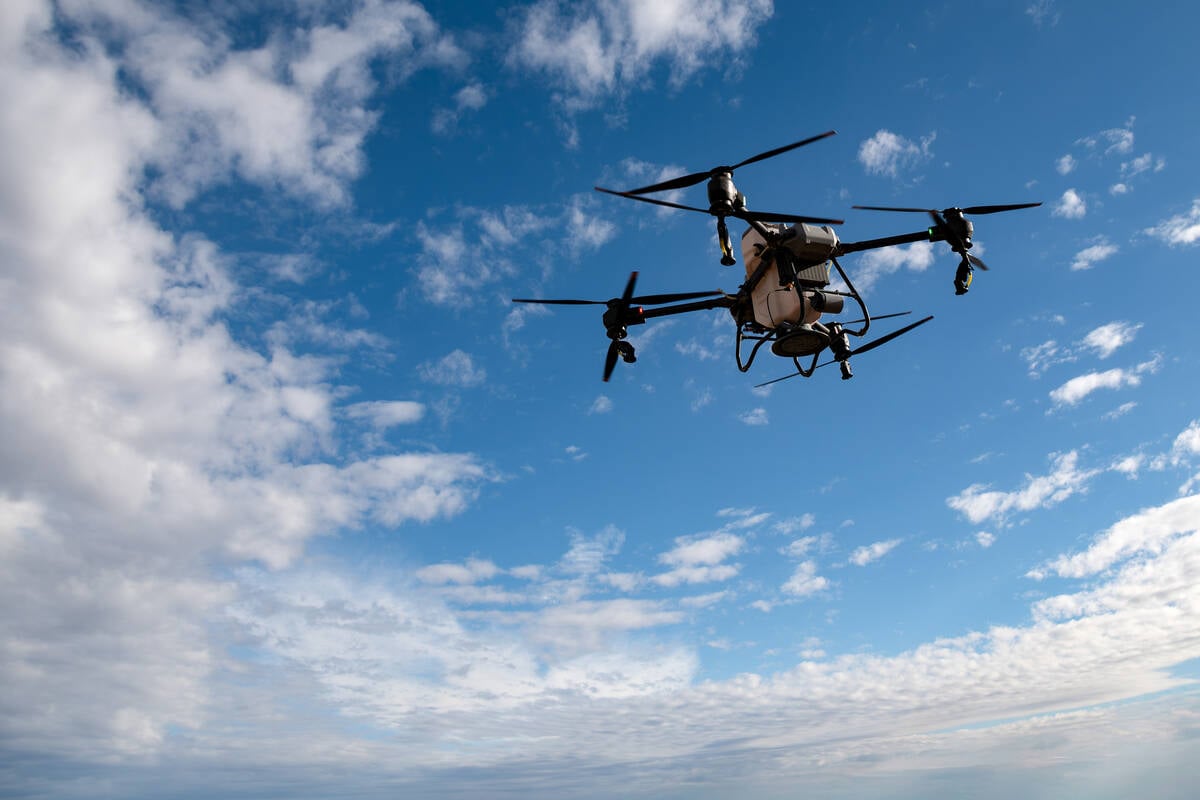
The fungicide remains the only agricultural chemical in Canada available to be applied by drone — legally applied, that is.
It’s an open secret that, with more than a thousand drones already sold in Canada, crop protection products are being applied on the downlow. As the PMRA passes the five-year mark on drone regulation development, groups representing farmers and chemical manufacturers are calling for a clearer pathway to product approval.
The PMRA says to expect something soon.
Read Also

VIDEO: The Italian Job: New Holland reimagines its roots with ‘Il Trattore’ concept
New Holland’s one-off Il Trattore concept tractor, unveiled at Agritechnica 2025, blends modern T5 utility tractor engineering with styling cues from the original 1918 Fiat 702.
WHY IT MATTERS: Canadian farmers have been frustrated with regulations that have held back their ability to spray pesticide via drone. Regulators say they need data to add drone-specific product labels.
The PMRA began studying drone spraying regulations in 2019. This September, members of the federal standing committee on agriculture asked the PMRA’s senior director general Frédéric Bissonette what was taking so long.
“There were scientific issues with drones at the outset,” Bissonette said, e.g. that a drone may not behave in the same way as an airplane.
Drone experts noted this issue early on. In a 2019 Western Producer article, Sprayers 101 writer and researcher Tom Wolf said the agriculture industry didn’t understand the behaviour of droplets emitted from drones.
“In a multi-rotor drone, each individual rotor spins at a unique rate, depending on the place it needs to go. Every time the rotor speeds up or slows down it changes the aerodynamics underneath that aircraft,” Wolf said. By comparison, the aerodynamics of a fixed-wing aircraft is relatively constant.
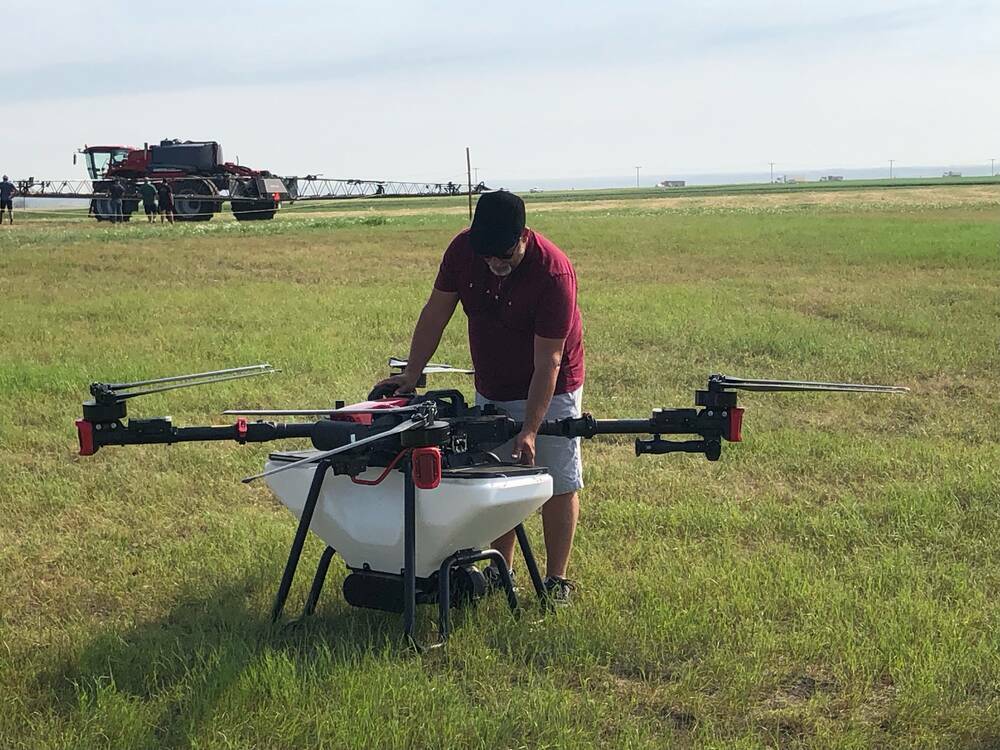
There are other practical considerations. A drone’s tank is much smaller than that of a ground sprayer and will need to be refilled frequently. Operators’ chemical exposure could be greater. In a sector with razor-thin margins, farmers may push the boundaries of what’s on the label for the sake of efficiency said Kevin Falk.
Falk, a field modernization scientist for Corteva, has been conducting drone spraying field trials in Manitoba.
Reducing water volume — i.e. applying a more concentrated product — is one way applicators might try to speed up spraying, Falk said. However, depending on the product they’re using, this can have implications for spray drift and product efficacy.
“That’s something we have to consider … so we’re not creating a label that they can’t follow, or that we’re cutting corners in order to sell more product,” Falk said.
Crop protection companies have set about generating data on drift, efficacy and safety. However, this is an arduous process requiring layers of approvals from the PMRA and Transport Canada.
Avoiding duplication
Drone trials are in progress around the world and crop protection products are being applied by drones in other countries. The PMRA considers some of this information in its assessments.
“The PMRA will accept data generated in countries outside of Canada if use conditions are comparable/applicable,” a spokesperson said in an email.
“For example, the industry-led Unmanned Aerial Pesticide Applications System Task Force is conducting spray drift trials across several continents, and the PMRA is considering the latest data generated for use in drone-specific spray drift models.”
A spokesperson said the agency is reviewing safety and environmental risk data and also advised on a large-scale spray drift trial. Still, there may be more ways avoid duplication according to CropLife Canada, which represents pesticide manufacturers.
“Canada seems to be kind of falling behind other jurisdictions in terms of allowing this type of use,” said CropLife president and CEO Pierre Petelle.
“With these products being used in many other Western-type jurisdictions that there should be ways of coming to conclusions much quicker than we have.”
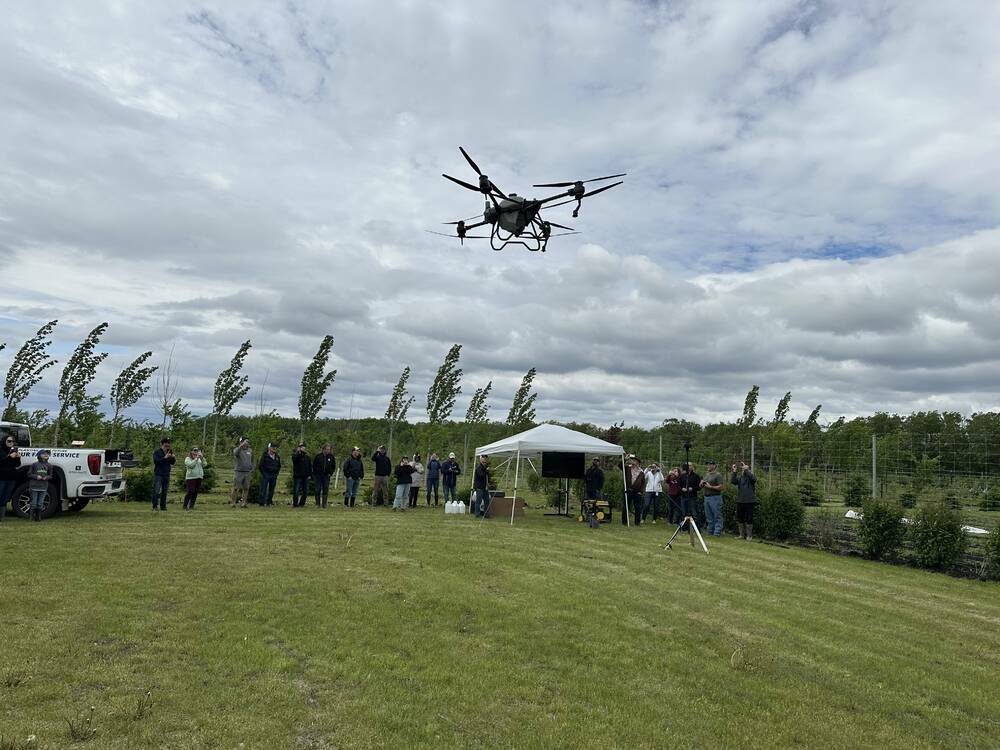
Petelle suggested there should be dialogue between regulators in different jurisdictions.
The PRMA could also go the way of some jurisdictions in the United States and declare that any pesticides already approved for aerial application — i.e. crop duster — could be used in a drone. This approach would be helpful to producers, Catherine Lessard told the Standing Committee on Agriculture and Agri-Food on Sept. 25.
Lessard is the associate executive director of the Association des producteurs maraîchers du Québec.
The PMRA is considering this approach.
Bissonnette told the agriculture committee he was pushing to have “something in place for next year.”
When asked what this meant, the PMRA spokesperson said, “We expect to soon be in a position to issue a regulatory decision regarding drone application of pesticides, where aerial use is already authorized, following the completion of our scientific review.”
Transport Canada’s role
The PMRA isn’t the only federal agency involved in drone regulation. The safety of the actual drones is handled by Transport Canada.
New rules took effect in November that added a Level 1 Complex Operations licensing level for drone pilots. This allows pilots to fly small or medium-sized drones in lower-risk flights beyond visual line of sight if away from populated areas.
This adds a potential additional licensing option for agricultural drone operators.
However, for drone application of chemicals, operators may need a special flight operations certificate (SFOC), said Erika Carrasco.
Carrasco, a partner at law firm MLT Aikins, has expertise in technology law, including drone regulation. She explained special flight operations certificates are Transport Canada’s way of managing drone use cases where they’ve yet to draft specific regulation.
“As we know more about the risk levels, then they can regulate for it,” Carrasco said. “If they can’t regulate for it, then it goes through the customized special flight operation certificate process where Transport Canada basically sits down with the end user and tries to imagine how this will be safe and appropriate.”
When Transport Canada has enough examples of safe drone pesticide application, it may write specific regulations for that type of use. At present, anyone looking to apply pesticides by drone may need to check if they require the certificate.
Not all operations will require a SFOC to conduct agricultural spraying with a drone, a Transport Canada spokesperson said.
“Transport Canada regulates the safe operation of drones via the Canadian Aviation Regulations (CARs) based on aviation and public safety—not the drone’s end use. Depending on the operating environment, a pilot may require specific certification (i.e.: Basic or Advanced or Level 1 Complex), or an SFOC-RPAS for special operations.”
Risks and benefits
Agriculture groups have made the case that Canada’s slow roll on drone regulation is putting farmers at a competitive disadvantage.
“The Americans have access to this technology — they have for several years,” Canadian Grains Council vice president Mac Ross told the Standing Committee on Agriculture and Agri-Food on Oct. 2.
Ross said this illustrated the need to draw on expertise from trusted jurisdictions like the U.S. to speed up the regulatory process.
“We need to be on a level playing field,” Ross said. “Our growers need to have access to the same technologies as growers in other jurisdictions.”
Farmer interest in drone technology is growing if the expanding offerings at farm shows is any indication. Anecdotal evidence also suggests farmers are flouting PMRA rules and spraying anyway.
“Everyone knows it’s happening,” said Adrian Rivard, owner and operations manager of Ontario-based Drone Spray Canada, which sells drones and provides training to operators.
Not that all buyers are looking to spray pesticides. For example, Rivard said some cover crop seed companies offer drone seeding services. Others are interested in using drones to seed pastures or apply fertilizer. However, irresponsible drone use is a concern, Rivard said. He cited a Dicamba spray drift incident in Manitoba.
“It’s certainly not helping the Dicamba chemistry. It’s also not helping the drone stuff,” he said. “(It) certainly does increase that risk for, again, Health Canada to put the brakes on everything and say, ‘You guys are being idiots.’”
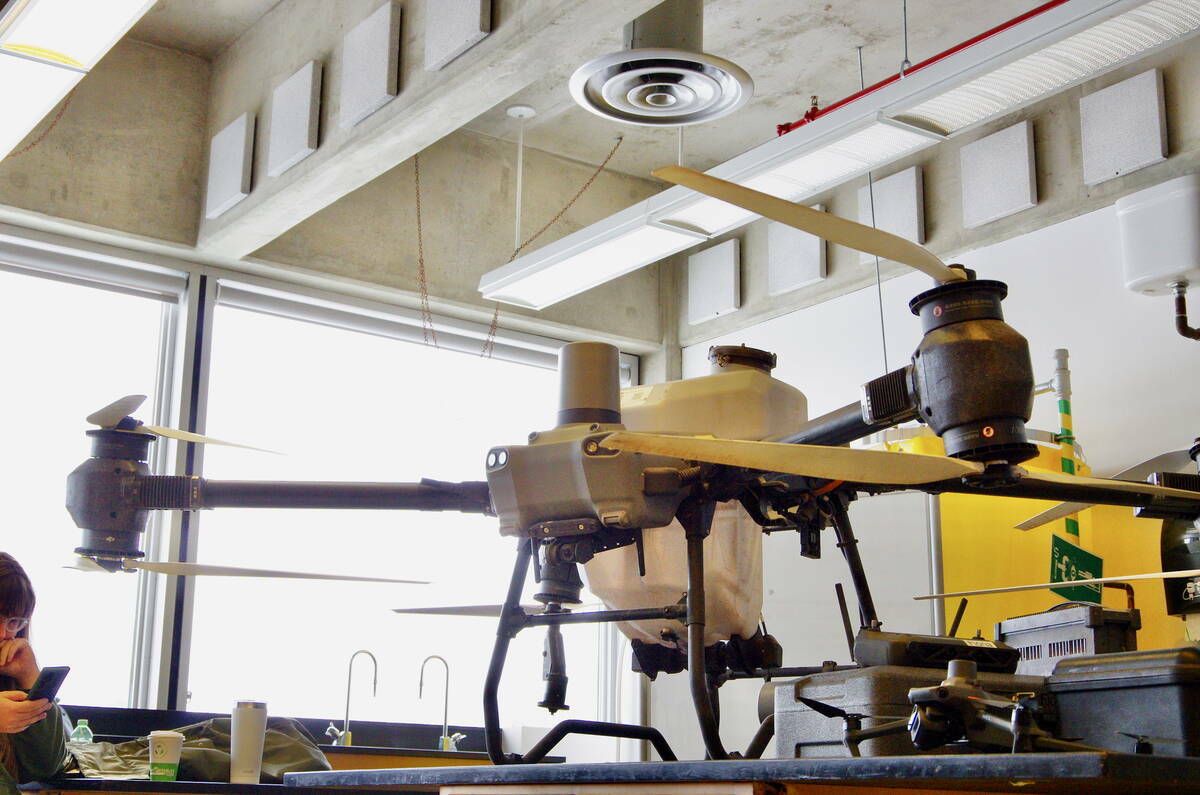
Beyond regulation, misapplication of pesticides can be an agronomic risk, Rivard said. Spraying less than is needed to kill weeds could increase resistance issues.
“It’s not just regulation. It’s stewardship,” he said.
News stories about drones gone wrong may also cause the public to associate drones with their downsides rather than their benefits.
“Those are the stories that in the past have been more publicized,” said Carrasco. “Man gets charged flying drone near airport. Man gets charged flying drone in National Park … All these things which make the public assume that drones are bad.”
“You just need to understand how it’s supposed to be used,” she said.
Do the benefits outweigh the risks? Will the Canadian economy succeed more with drone technology than without?
Carrasco said, “By far, the answer is yes.”