Cattle on pasture in Argentina.  Photo: Laureano Gherardi

Sometimes cattle don’t displace trees — the trees displace cattle

New non-cattle-ranching owners of U.S. rangeland are one reason for brush encroachment

Half of the Earth’s land mass is made up of rangelands, which include grasslands and savannas, yet they are being transformed at an alarming rate. Woody plants, such as trees and shrubs, are moving in and taking over, leading to a loss of critical habitat and causing a drastic change in the ability of ecosystems
File photo

Forage expert says bloat caused by alfalfa a “self-culling trait”

Jim Gerrish says selecting for bloat tolerance is a producer’s No. 1 defence against the deadly condition

The fear of bloat costs the livestock industry more than the condition ever does, says a well-known grazing consultant and researcher from Idaho. “I’ve seen the figures from the States, and something like two one-hundredths of one per cent of the total cattle herd dies each year from bloat,” Jim Gerrish told attendees at a


Editorial: The third option

Editorial: The third option

Trials have shown adding a perennial forage to your crop rotation can be effective weed control

At a time when soil erosion is recognized as one of the biggest threats to the world’s ability to continue feeding itself, it’s disturbing to see weed scientists advising tillage to address invading “superweeds.” There is no question that addressing the lengthening list of weeds that have developed resistance to glyphosate must be a top

Although late, Manitoba’s first-cut hay is mostly up now and yielded well outside of the flood area, says John McGregor of the Manitoba Forage and Hayland Association. This field was being baled near Miami July 29.  photo: allan dawson

First-cut hay late, but plentiful in unflooded areas

Hay will be scarce and costly in flooded areas, but that could be offset by producers reducing cow herds

Manitoba’s first-cut hay crop, while late, is yielding average to above average in areas not hit by excessive moisture or flooding, says John McGregor of the Manitoba Forage and Grassland Association. “There’s a lot there, but they (beef farmers) don’t just rely on one cut,” McGregor said in an interview July 30. “They need to


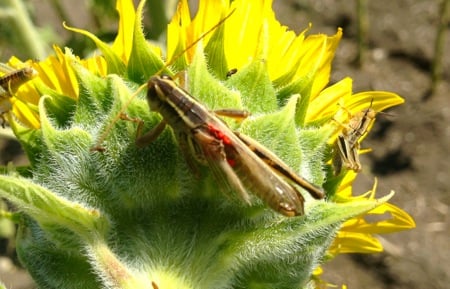
Grasshopper on a sunflower under attack from red mites.

Invasion of the body snatchers

Southwestern Manitoba grasshoppers being preyed upon by parasitic red mites

This grasshopper munching on a sunflower in southwestern Manitoba is being devoured by parasitic red mites (Eutrombidium locustarum), says Manitoba Agriculture, Food and Rural Development (MAFRD) entomologist John Gavloski. The mites feed on the blood (hemolymph) of grasshoppers. They also prey on grasshopper eggs. Each female mite can lay up to 4,000 eggs, providing mite

Martin Entz (centre) leads group on Glenlea tour. photos:  meghan mast

Manure improves organic forage-grain crop production

‘Experimental lakes of agriculture’ find organic crops can produce on par with conventional crops

Organic crop producers can match the productivity of their conventional farming neighbours with a little help from some four-legged friends. Composted beef and dairy manure restores important nutrients that can be mined from the soil under organic management systems, Martin Entz, an agronomy professor with the University of Manitoba’s Glenlea research station told participants in


Drying time can be reduced

Drying time can be reduced

With wet weather wreaking havoc in many parts of the province, 
some producers are cutting their forage when the weather lets them, not when it’s optimal quality

Farmers use a variety of methods to determine when alfalfa is ready for the first cut of the year, but this season a lot of those methods went straight out the window. “So how many of you are just cutting when it’s dry enough to get on the field?” Dan Undersander, an extension and forage


Beef 911: Preventing bloat when pasturing alfalfa

Producers can take steps to reduce the risk through management and preventive products

Pasturing alfalfa can improve gains, but bloat is always a worry. Thankfully advancements in technology, along with pasture management, can make this a viable option. Several principles can go a long ways to preventing unnecessary deaths when turning cattle out into leguminous pastures. Cattle should initially be turned out in the heat of the day.

Oil derrick

One invasive species leads to another

Human development linked with spread of invasive plants

One invasive species leads to another, says an article published in the current issue of Rangeland Ecology & Management. A release from the magazine’s publisher, the Society for Range Management, says the authors began with the idea that as people develop a rural area, they change the original habitat by introducing foreign species and spreading