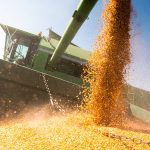
Photo: Oleksandr Yuchynskyi/iStock/Getty Images


The do’s and don’ts of desiccation

As with all herbicide applications, follow the label, especially on application timing

It is time to think about desiccation and pre-harvest weed control. “We’ve had some really good, hot weather for harvesting, so it really hasn’t been a year that we’ve had to talk much about pre-harvest desiccation or pre-harvest weed management,” provincial weed extension specialist Kim Brown-Livingston says. “But the harvest has just begun, and we’ve

(Viterra.ca)

Increases seen in most July grain deliveries

Oats deliveries more than double, canola near double

MarketsFarm — Most July deliveries of major grains in the country were higher than those from the same period a year ago, Statistics Canada reported Thursday. Total grain deliveries this past month tallied 4.056 million tonnes for a jump of 43.8 per cent over the previous July. All wheat came in at 2.186 million tonnes,


(Richardson International video screengrab via YouTube)

July canola crush sets new records

Soybean crush down slightly from last July

MarketsFarm — Statistics Canada reported very sizeable increases in the July canola crush when compared to a year ago. In fact, the month’s crush was not only a record for July but also for any month. Meanwhile, StatCan found the July soybean crush was slightly lower than in July 2022. The federal agency pegged the

As combines roll across the province, the expected highly variable yield picture is emerging.

Variable moisture, variable yields as harvest in Manitoba begins

Early reports say spring wheat crops are rated mostly fair to good; some producers report below-average or average yields

Variability was the name of the game as spring wheat harvest began in the third week of August. “This is the most variable I can remember,” said Clayton Harder. He has fields around the north side of Winnipeg and said he has soybeans that are ankle high and others that are waist high. One field


Hefty U.S. soybean crush propels Canadian canola upward

Hefty U.S. soybean crush propels Canadian canola upward

Despite rising with soy, traders say canola is still too cheap

The aggressive use of soybeans in the United States for biofuel production was squarely behind the sharp upticks in canola prices for the week ended Aug. 17 on the Intercontinental Exchange. The U.S. National Oilseed Processors Association released its monthly report on Aug. 15, showing 173.3 million bushels of soybeans were crushed in July. Not

“Pods can look dramatically different, either riper or less ripe, than the actual seeds, so we need to be cracking open those pods and looking at the seeds.”
 Photo: Greg Berg

ICE weekly outlook: Canola following soyoil’s lead

Stat Can's principal field crop estimates will be released on Aug. 29, may affect prices

MarketsFarm – The November canola contract rose above the C$800 per tonne mark for the first time in nearly a month during the week ended Aug. 23. However, it wasn’t without some turbulence over the last two days of trading. On Aug. 22, the November contract lost C$13.40 per tonne to close at $796.00, before


“There’s even a question of would harvest equipment be available for 2023. There will be some equipment available, but will it be what you want and [what] fits your needs?” – Bill Campbell, Keystone Agricultural Producers.  Photo: iStock/Getty Images

Manitoba crop report: dry week helps advance harvest

Cattle producers move herds to hay fields to graze regrowth

MarketsFarm – Dry conditions across crop-growing areas in Manitoba helped the province’s annual harvest get off to a good start during the week ended Aug. 20. Much of the eastern, southern and central regions received two millimetres of precipitation at most during the week with several locations receiving no rainfall at all. The northwest region

Summary of accumulated precipitation for Manitoba’s Agricultural Regions.

Harvest progress hits double digits, majority of Manitoba soils seen dry

Manitoba Crop Report: Issue 15 (week 34)

Overview  Harvest progress sits at 13 per cent complete across the province, which is on-par with the 5-year average harvest progress. Winter wheat and fall rye harvest is near completion, with 93 per cent of acres harvested. Early yield reports for winter wheat are averaging about 60 bu/acre and 70 bu/acre for fall rye. Harvest


Blackleg and verticillium stripe are sometimes found in the same plant.

Raising the profile of verticillium stripe

Identifying the new-ish fungal threat on the block

Conditions weren’t ideal for verticillium stripe this year but the Canola Council of Canada says growers should stay alert when it comes to the disease. “Verticillium stripe is a soil-borne pathogen and it overwinters in the soil,” said Courtney Boyachek, agronomy specialist and verticillium stripe lead with the council. “Last year was a bad year

Verticillium stripe and blackleg symptoms can look similar, but once you know what you’re looking for they can be quickly differentiated.

Verticillium stripe symptoms

Is it verticillium stripe, blackleg or sclerotinia? Here are ways to find out

The Canola Council of Canada flags several verticillium signs: Stem striping When the crop is full height, but still green, infected canola plants will often have a two-toned stem — half healthy and green and half discoloured and drying down. This is where the disease gets its name. Leaves can show similar symptoms: healthy on