Here’s some timely advice for winter wheat growers: hurry up and wait.
First hurry up and apply the nitrogen the crop needs. Then wait before deciding to leave or rip the crop up because of winterkill.
“As the weather gets warmer, winter wheat needs time to properly recover,” Paul Thoroughgood, regional agrologist for the Western Winter Wheat Initiative (WWWI) said in a news release April 23. “It’s best to wait until spring seeding is half done before deciding what to do with the crop. Winter wheat has a tremendous capacity to tiller. Plant populations that would be unacceptable for spring wheat can produce a profitable yield in winter wheat.”
But to maximize yield potential, nitrogen has to be applied to winter wheat long before its survival has been determined, Pam de Rocquigny, Manitoba Agriculture, Food and Rural Development’s (MAFRD) cereal specialist said in an interview April 24.
“That nitrogen needs to be on the crop immediately,” she said.
“Winter wheat yield is determined at the five-leaf stage. We’re approaching that quite quickly,” she said. “If you need to reseed, that nitrogen will still be a benefit to that crop.”
All signs point to the 2014-15 winter wheat crop having survived the winter in good shape, but each field will be different.
“From what I’ve been seeing, conditions to date have been relatively ideal for winter wheat breaking dormancy,” Lionel Kaskiw, MAFRD’s farm production adviser at Souris said in a webinar last week. “We’ve been seeing some gradual warming.”
The winter cereal survival model shows at most locations temperatures at crown level didn’t go low enough to cause much damage, Kaskiw said.
The model rates the severity of winterkill based on soil temperatures and the crop’s susceptibility to injury. But Kaskiw stressed the model is just a guideline.
Read Also
Herbicide-resistant weeds now on 72 per cent of surveyed Manitoba fields, costing farmers $77M a year
About 72 per cent of Manitoba fields last surveyed have herbicide resistance, says report — and that’s costing farmers big money.
“Winter wheat is a very aggressive crop in the spring and it tends to fill in a lot of these (dead) areas,” he said. “You really have to give winter wheat until the second week of May before you start determining if you need to be getting rid of a crop.
“You don’t need a lot of plants per square foot to still produce a fairly reasonable crop,” he said. He advised getting a second opinion before taking it out.
An ideal winter wheat field should have 20 to 30 plants per square foot, de Rocquigny said. But a stand of just seven plants per square foot can produce a decent yield under good growing conditions.
Plant stand isn’t the only consideration. There’s the cost of reseeding and the calendar. A later-seeded replacement crop might not yield as well.
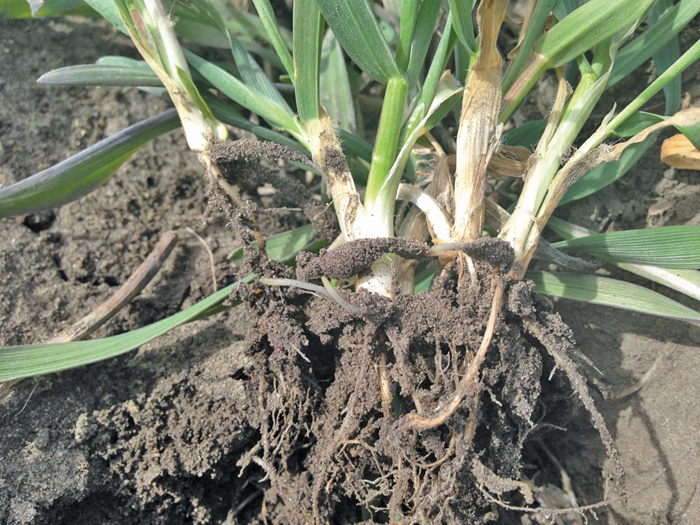
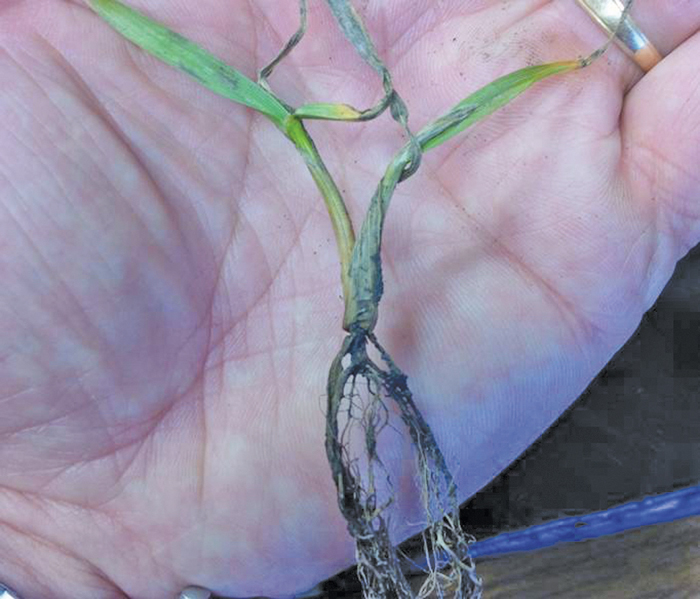
Farmers are advised to dig up some plants and look for white crowns and new roots, he said.
“Driving by the field seeing green leaves you might be fooled this crop is growing, but that’s growth from last year,” Kaskiw said.
“It’s pretty easy to tell when you dig them up; pretty hard to tell when you’re driving down the road. You need to get into the field and check them.”
Another complicating factor is winterkill is usually patchy, de Rocquigny said. While winter wheat tillers can fill in some of the gaps, extra management is needed, especially in controlling weeds.
Weeds, even in good stands, are something farmers should be checking for now, especially in fields that didn’t get a pre-seed burn-off last fall, Kaskiw said.
“Keep an eye on those fields so we don’t let those weeds get away because winter annuals are the ones that tend to sneak up on us and by the time we come to in-crop spraying they’ve got too big and are getting too hard to kill,” he said.
Bigger weeds often require a more expensive herbicide, Kaskiw said.
“Winterkill on the Canadian Prairies is at the same rate as Kansas — the largest winter wheat-growing state in the U.S. — around nine per cent,” Thoroughgood said. “When you look at it like that, Prairie growers shouldn’t be too concerned coming out of a winter like the one we just had.”
For more information, visit the Western Winter Wheat Initiative website for a video on how to do a proper spring assessment at or visit growwinterwheat.ca.