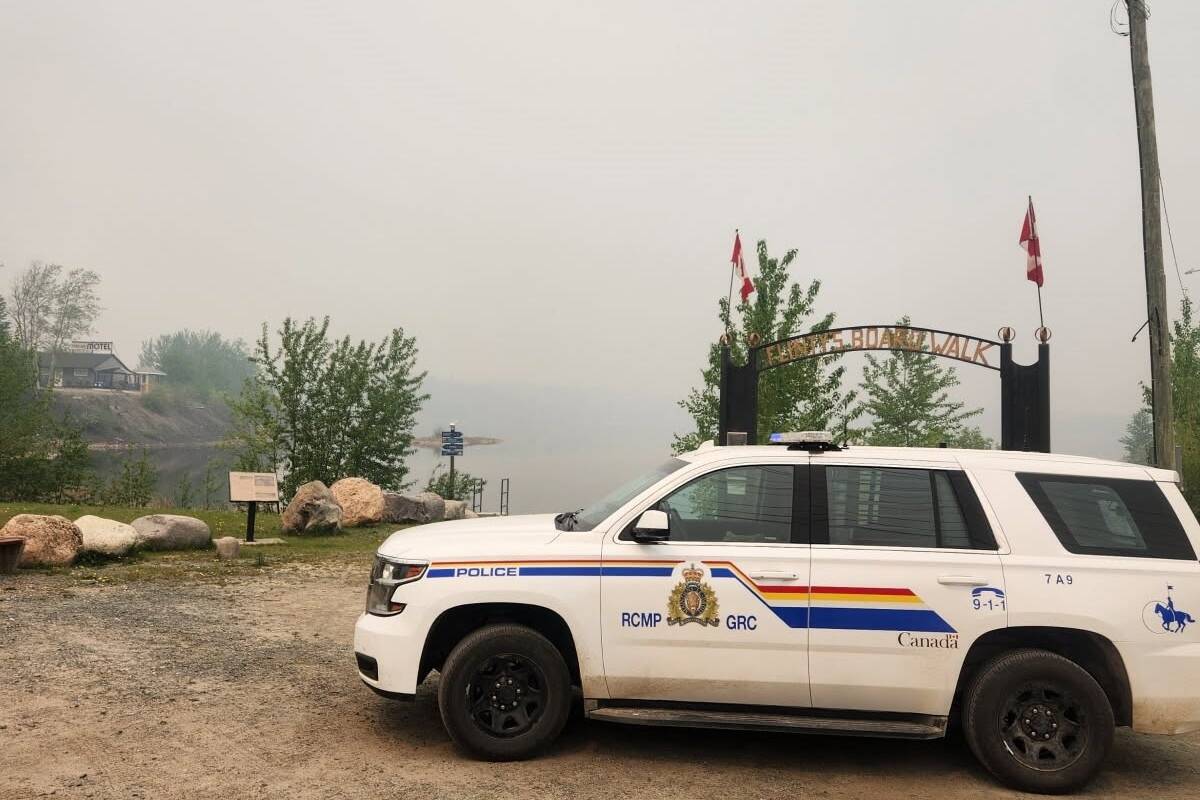
With all the smoke from forest fires currently blanketing much of the Prairies, many are wondering how it will affect weather and crop development.
I first looked at this topic a couple of years ago, and interestingly it was around the same time of the year.
WHY IT MATTERS: Manitoba has seen an intense wildfire season this year, with thousands of people evacuated and smoke blanketing the province.
Read Also
In defence of eating oats
Forget any social media fear mongering about oats — Oats are a healthy, nutritious, Prairie-grown option to add more whole grains to your diet.
The interplay of smoke and weather is not straightforward. Smoke can impact several things and how it impacts certain things can vary greatly depending on the state of the atmosphere, how much smoke there is, where in the atmosphere the smoke is located, and how long the smoke stays over a region.
Add to that more large-scale atmospheric events such as the movement of areas of high and low pressure and it can become very complicated. I will try to do my best to peer through all the smoke and bring to you a clear picture of just how smoke can impact our weather.
The first major and I guess obvious impact that smoke has is its effect on temperatures. Smoke particles scatter and absorb sunlight which leads to a decrease in surface temperatures. This is because less sunlight reaches the ground, resulting in less heating. The effect on temperatures can vary depending on the extent, level, and intensity of the smoke and general atmospheric conditions. Light smoke or very high smoke will have minimal effect while dense or low-level smoke can greatly impact temperatures.
The next two areas that smoke can impact are atmospheric stability and precipitation patterns. I’ve lumped these two together since atmospheric stability is directly tied to whether precipitation can form or not. Forest fire smoke can have complex effects on atmospheric stability, depending on factors such as the intensity and extent of the smoke, the vertical distribution of smoke particles, and the general atmospheric conditions.
Smoke from forest fires can release significant amounts of heat and moisture into the atmosphere. Solar radiation is absorbed by smoke particles which in turn can resulting in the warming of the surrounding air. This heating can then change the temperature profile of the atmosphere which can then end up altering the stability of the atmosphere. How and what kind of impacts this can have varies greatly.
In certain cases, forest fire smoke can inhibit convection and limit the formation of convective clouds. This may sound countervintuitive, but smoke particles can act as cloud condensation nuclei or ice nuclei allowing moisture to condense around these particles at a much higher number than in a smoke free atmosphere. This then reduces the availability of water vapour, making it more difficult for cloud droplets or ice crystals to grow larger.
That is, instead of cloud droplets growing bigger into raindrops, tons of little water droplets get formed but can’t grow large enough to form into raindrops. Without the ability of these droplets to grow, raindrops will not form, resulting in little to no rainfall. This can also result in the suppression of convective activity, and we only see the formation of shallow or thin clouds – something I haver been noticing on smoky days.
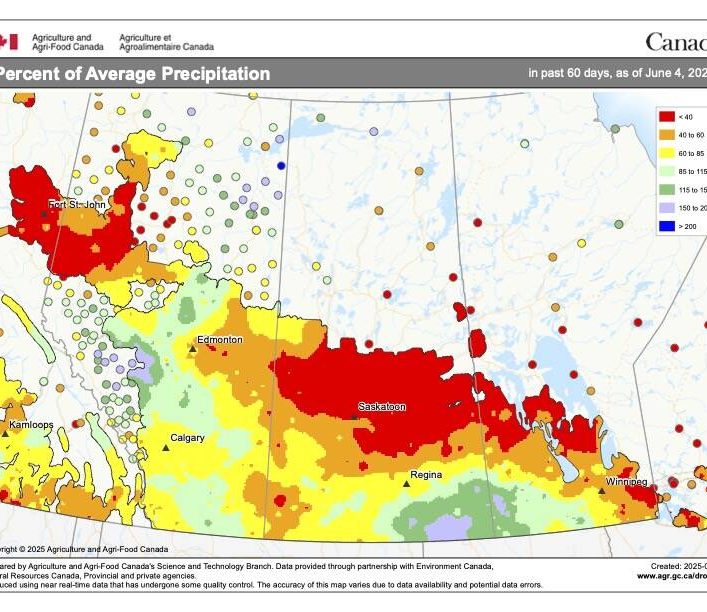
Now here is where it can get a little tricky. While this scenario often happens, if there is enough moisture in the air, and issues with the stability of the atmosphere can be overcome, all the extra condensation nuclei creating large numbers of water droplets can start a chain reaction. The excess number of water droplets start colliding and combining into larger raindrops within the cloud. This can then lead to more intense rainfall and the formation of hail.
Here is where we need to talk a little more about atmospheric stability. As I pointed out earlier, the smoke from forest fires absorbs sunlight. While this can and often does decrease surface temperatures, it can and often does increase the air temperature at higher altitudes, depending on where the smoke is in the atmosphere. This then creates a layer of warm air over top a layer of cold air.
Since warm air wants to rise and cold air wants to sink, this particular setup is known as a stable atmosphere. Air at the ground does not want to rise, as no matter what happens it stays colder than the air around it.
Unstable air, which leads to cloud formation and precipitation, is when we have cold air overtop of warm air. The warm air at the surface wants to rise and will rise as the air above is colder than the rising air.
In the case of smoke, the surface temperatures are being cooled by the smoke but warmed further up as the smoke absorbs energy from the sun. This is the opposite of the unstable setup, resulting in what is known as a stable air column or an inversion. This setup inhibits convection which is the primary force behind cloud development the precipitation. This is probably one the biggest impacts smoke can have on our weather.
So, smoke can either inhibit the formation of rainfall or enhance it, depending on the atmospheric conditions at the time. More often than not, smoke creates a stable atmosphere resulting in reduced rainfall as convection is limited. Remember, in the summer the vast majority of the rainfall across the Prairies is convective in nature.
One final impact that smoke can have ties into the chemicals released by forest fires, such as nitrogen oxides and volatile organic compounds. These chemicals can interact with other atmospheric components and influence the overall chemistry of the atmosphere. These interactions can contribute to the formation of secondary pollutants, such as ozone and particulate matter, which can further impact air quality. All of this can have an impact on not just human health but also the health of animals and even plants.
Well, I hope this clears things up a little bit. I have my fingers crossed that the Prairies, especially the northern and eastern regions, will get some much need rain not only to help out with the forest fires but to provide some much need moisture as we head towards the main part of the growing season.