
Mealworms are seen for sale at Gambela Market in Kinshasa, Democratic Republic of Congo, July 14, 2015.   photo:

Insect farming gains ground in fight against hunger

A kg of crickets sells for twice the price of beef in the Kinshasa market

There is no shortage of protein in Kinshasa’s Gambela Market, from cows to antelope and snakes. But it is the blue and silver bowls brimming with twitching crickets, termites and slithering mealworms that do the briskest trade. Experts hope that the love of edible insects in Democratic Republic of Congo may hold the key to


dairy cow

Editorial: More to TPP than milk and eggs

The Trans-Pacific Partnership and what a deal could mean for Canadian producers

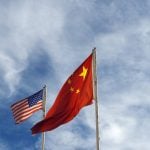
The Trans-Pacific Partnership (TPP) trade agreement now under negotiation involves 12 of the world’s largest economies, and has been described as “NAFTA on steroids.” What’s holding it up? Canadian dairy farmers. Or so you’d think about reading some of the national and international media coverage. Some of it made us think of the coverage of

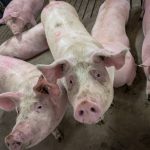
World food prices fall in January, rally seen unlikely

Rome | Reuters — World food prices are unlikely to rise much from their four-year slump as long as high production, low oil prices and limited import demand continue, a senior economist for the United Nations’ food agency said Thursday. The U.N.’s Food and Agriculture Organization’s (FAO) global food price index fell in January, continuing


soil profile of farmland

Dirt’s big year

The FAO has designated 2015 as the International Year of Soil

Last year may have been a lot of things to a lot of people but one thing it surely wasn’t was predictable. I mean who foresaw last year’s record-setting high in the U.S. stock market, the plunge in global crude oil prices, Russia’s naked grab of Ukraine’s sovereign territory or the Obama administration’s reaching out


soil erosion

Editorial: Changing how we think

Back in the days when Prairie farmers were still in the experimental phase of adopting what is now known as conservation agriculture, I remember interviewing a farmer who had gone all the way and embraced zero tillage. He said it was an exercise in frustration bordering on failure until he realized the transition involved more

vegetables in a store market

Small-scale farming at a crossroads

Is small beautiful or should the new motto be ‘move up or move out?”

As director general of the International Food Policy Research Institute in Washington, D.C., Shenggen Fan has come a long way from his roots in rural China, where he shared a one-hectare farm with his parents and two brothers. The agricultural economist, honoured earlier this year by the World Food Program’s Hunger Hero Award for his


Province, city recognize UN International Year of Family Farming

Province, city recognize UN International Year of Family Farming

A flag honouring the family farm was raised at Winnipeg City Hall July 30

Provincial and municipal leaders gathered at Winnipeg’s City Hall July 30 to raise a flag honouring the United Nations declaration of 2014 as the International Year of Family Farming. Manitoba Agriculture, Food and Rural Development Minister Ron Kostyshyn joined Brian Mayes, city councillor for St. Vital, to highlight the significance of family farming on a

Conservation not a hippie delusion

Small-scale farmers can implement conservation agriculture and improve soil health 
in developing areas, often by using a mix of science and local knowledge

The damaging effects of tillage on soils is well documented on Europe and North American soils. So why is that approach still being exported to developing nations, proponents of conservation agriculture asked the recent World Conference on Conservation Agriculture. “We’re taking that paradigm to developing countries, so one has to ask, what is actually going