

An Alberta Agriculture and Forestry employee samples a creek to help determine if BMPs are improving water quality.

New tool for managing nutrient run-off

Free downloadable tool for assessing phosphorus run-off risk and creating a 
customized mitigation plan will be available this spring

As more and more farmers, politicians and laypeople are coming to understand, nutrient run-off from farm fields into waterways is a very big deal. When not managed properly, nutrients from fertilizer and manure make their way into creeks, lakes, dugouts, and other water bodies. But a new tool to help mitigate phosphorus run-off risk will

Don Flaten, of the University of Manitoba, fields questions from farmers following his Ag Days presentation last month.

Phosphate products vary, but fate the same

Over time, they all want to become plant-unavailable phosphate rock

All phosphate fertilizers might not be created equal — but in the end they all wind up that way. That was the message Don Flaten, a University of Manitoba soil science professor, shared with farmers last month during a session at Ag Days. That’s because it’s a highly reactive compound and over time, the very


Chris Snip of Agris Co-operative works with farmers to check soil health and fertilizer practices of farmers near Lake Erie as part of the Great Lakes Agricultural Stewardship Initiative. (John Greig photo)

Phosphorus program aims to reduce Lake Erie nutrients

Chatham, Ont. — Henry Denotter’s farms near Kingsville, Ont. are close to the Wigle Creek, which flows into Lake Erie and takes with it any residues it pulls from nature and farmers’ fields. The Wigle Creek subwatershed, west of Leamington, has turned into ground zero in long-term research on how farmers can reduce phosphorus running

Phosphorus-laden solids separated from hog manure in a storage shed on Lauren Wiebe’s farm near St. Malo.

Manure separation could be key to P accumulation issue

Removing phosphorus-rich solids from nitrogen-rich liquid allows both 
local use and economical transportation to other farms

A unique method of separating nutrients in hog manure, based on European technology, may give livestock producers another way to deal with excess soil phosphorus in southeastern Manitoba’s livestock alley. The method involves separating out the solids in manure from the liquid, using an automated conveyor belt system. Solids in hog manure are high in


harvesting silhouette

Mix it up for phosphorus’s sake

Some producers have found innovative ways to balance phosphorus levels, including land swapping

It’s time for producers to mix things up. Speaking at the annual Crop Connect conference in Winnipeg last week, Don Flaten said that mixed farming can help balance phosphorus levels in the province. “But I’m not saying everyone should have some cows, some pigs, a few chickens, forage and crops,” he said. “What I mean

La Salle Redboine Conservation District manager Justin Reid spoke to municipal and conservation officials during the latest phase of the large-scale water-retention project south of Holland last week.

Pelly’s Lake watershed management project complete

Officials visit site to see the gates opened on the now complete Pelly’s Lake Watershed Management Project

Conservation and municipal officials opened the gates here June 16 to release water that had been held back through the spring as part of a water control project expected to bring multiple benefits to the area. The June opening of the gates on the Pelly’s Lake dam built last year is the latest phase of


red potatoes

Phosphorus acid a strong option for disease control in potatoes

Both foliar or post-harvest application are options, depending on circumstances

Phosphorus acid was a much-discussed topic at Manitoba Potato Production Days in Brandon this year, and for good reason. A variety of phosphorus acid treatments, registered in Canada under the labels Phostrol, Rampart and Confine, are useful additions to growers’ tool boxes for disease control. Susan Ainsworth, a potato specialist for Syngenta in Manitoba, offered

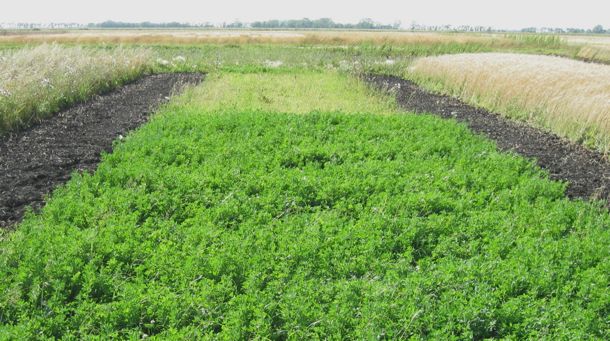
This 2009 photo of alfalfa plots highlights the long-term consequences of neglecting soil phosphorus. The alfalfa in the front of the photo received composted beef cattle manure after years of receiving no phosphorus. The alfalfa at the back of the plot did not receive any additional phosphorus and has suffered dramatically. (Martin Entz photo)

Minogue: Rebalance your fields’ phosphorus bank accounts

While your crop rotations and your seeding practices have evolved into something your grandfather might not recognize, recommended phosphorous guidelines for Manitoba farmers haven’t changed in more than 20 years. Over the past year, Manitoba soil fertility experts came together to fill this gap. John Heard (Manitoba Agriculture, Food and Rural Development), Cindy Grant (Agriculture


Little piglet in piggery with other pigs

Hog barn moratorium remains, fine print may change

In certain areas of Manitoba new hog barns may again be constructed, provided they qualify for proposed pilot program

Manitoba’s minister of agriculture has indicated the province may be prepared to ease some restrictions around new hog barn construction in certain circumstances. Speaking to reporters at a Keystone Agricultural Producers meeting in Winnipeg last month, Ron Kostyshyn said that alternative technologies could replace the anaerobic digesters now required for new barns in some phosphorus-deficient