(Lightguard/iStock/Getty Images)

Saskatchewan crops advancing quickly

MarketsFarm — Hot and humid conditions saw crops in Saskatchewan advance quickly during the week ended Monday, according to the latest provincial crop report — although the humidity has slowed haying. When humidity is high, cutting hay becomes more challenging and hay that is cut does not dry down as quickly, which can result in


Mud is impacting many farms and ranches this spring.

Reduce muddy conditions for livestock health

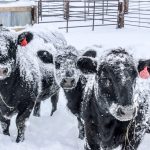
With mud impacting many farms and ranches throughout the region, North Dakota State University Extension specialists offer tips for protecting livestock health and managing muddy conditions. “When cattle get wet, their hair lies down and loses insulation value,” says Zac Carlson, NDSU Extension beef cattle specialist. “Mud will further reduce the insulation value of hair coats. Cattle become chilled quicker

(Lightguard/iStock/Getty Images)

Planting progress picking up in Saskatchewan

MarketsFarm — Overall spring planting across Saskatchewan reached 33 per cent complete as of Monday, according to the latest weekly crop report from Saskatchewan Agriculture. Despite the good progress over the week, that’s still 20 points behind the five-year average. When compared to the excellent progress this time last year, the gap expands to 41


(Government of Alberta via Flickr)

Alberta seeding ahead of five-year average

MarketsFarm — While spring planting in Alberta is 12.2 per cent complete overall there’s a disparity between the south and the rest of the province. Also, the pace was 2.6 points above the five-year average, but 5.2 behind last year. As of Tuesday, Alberta Agriculture found seeding in the south was at 36.5 per cent

(Lightguard/iStock/Getty Images)

Seeding already behind in Saskatchewan

MarketsFarm — Saskatchewan Agriculture on Thursday issued its first weekly crop report of 2022, showing only one per cent of all crops in the ground. The report cited cool temperatures and spring snowstorms holding back many farmers getting into their fields. The overall five-year average at this time of year is five per cent complete.


Cool spring temperatures and impacts of drought may cause a delay in turnout.

Extreme weather expected to delay pasture turnout

Last year’s drought and this year’s very slow spring mean trouble for pastures

Following a cooler-than-normal spring 2022 and the 2021 drought, cattle producers should expect a delay in grass development and growth this spring. “Air temperature is the main environmental factor that determines the rate of grass development,” says Miranda Meehan, North Dakota State University Extension livestock environmental stewardship specialist. “Each leaf produced on a stem requires


“You can’t obviously keep animals off all your pasture resources, but have a long-term plan, a five-year plan or something, where you rotate through and allow rest on those areas.” – Bart Lardner, University of Saskatchewan.

Facing the fallout: Give drought-stressed pastures time to recover

What should pasture management look like the year after a historic drought?

Seven months ago, producers around Joe Bouchard’s farm near Fisher Branch figured their pastures might be dead. “It was pretty grim here in July,” he said, recalling those dire days as the province, and Interlake in particular, were crippled by drought. “We started shipping older cows, cows that we knew were open. We pulled our