
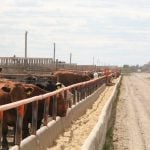
Manitoba Agriculture soil fertility specialist John Heard, soil sampling the old-fashioned way, says sampling cereals fields right after combining provides some advantages.

Soil test right after the combine

The tradition has been to sample for soil nutrients later in the fall, but there are compelling reasons to go sooner than later

It’s been the accepted wisdom to soil test as late as possible in the fall, but one soil test lab says it might pay to go earlier. Agvise Laboratories, that has soil-testing labs in North Dakota and Minnesota and a large stable of Canadian customers, told growers in a recent email it may be a
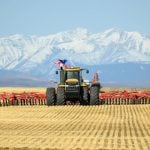
Manitoba’s winter wheat crop is at or near the window for fungicide applications.

Winter wheat close to fusarium spray window

In addition to crop staging farmers should assess how much risk 
their crop faces before applying a fungicide

Winter wheat is starting to flower throughout Manitoba and that means the spray window for preventing fusarium head blight is also upon us. The quality- and yield-robbing fungal disease can be prevented with fungicide applications on both winter and spring wheat — but only if the timing is just right, according to Pam de Rocquigny,


North Dakota is leading the nation in some products, but not in farm profits.

Tough times south of the border

North Dakota average farm profit was $28,600, 
compared with $76,404 in 2014 and $133,466 in 2013

Record spring wheat yields, the second-highest annual profit for cow-calf producers, an increase in government payments and lower crop production costs. Sounds like the start of a good-news story for our neighbours south of the border, but North Dakota State University says last year’s profit for farmers in the state fell to the lowest level

Blackleg is just one disease that can be caused by strains of the Dickeya pathogen.

Use only local seed to slow Dickeya and other pathogens

Europe has been grappling with a similar problem for years 
and we should learn from its experience

Imported seed bearing new pathogens is a threat to the Canadian potato industry, according to a U.S. researcher. Neil Gudmestad, a distinguished professor of plant pathology at North Dakota State University, was in Brandon this January to deliver a lecture on the importance of planting locally produced seed at Manitoba Potato Production Days. “There are


Measuring seeding rate by the bushel can lead to wide variations in yield.

Determining the best seeding rate for hard red spring wheat

An NDSU researcher finds that different varieties also have different tillering capacities

The old rule of thumb about seeding 1.5 bushels of wheat per acre just doesn’t apply anymore, says a researcher with North Dakota State University. Variety, seeding date and even latitude make a difference, Grant Mehring told the Manitoba Agronomists Conference in Winnipeg last December. He described his extensive, three-year research trials on seeding rates

On-farm strip trials can help determine which varieties perform best on your farm.

Assessing tillering capacity of hard red spring wheat

Tillering is one of three components that ultimately determines yield but it’s a complex process involving many different factors. It isn’t easy to predict, which is why producers can’t simply look up tillering capacity in their provincial seed guide. “There is no actual genetic predictor of tillering capacity that we know of,” Grant Mehring of


Data suggests there is most white mould suppression and increased yield when fungicides are applied at the R1 growth stage.

Soybean white mould control options limited

In contrast to canola, there are only four products registered

While many Manitoba growers are familiar with the extensive number of fungicides available for dealing with white mould (sclerotinia) in canola, they may not realize that there are a lot fewer options to treat this disease in soybeans. Only four foliar fungicides are registered for control or suppression of white mould on soybeans: Acapela (DuPont),

Joel Dewitz (l), his wife Nancy and son Jeff farm near Steele, North Dakota. Joel wants other farmers to know the dangers of entering a grain bag when extracting grain with a grain vacuum.

North Dakota farmers survive being shrink-wrapped in a grain bag

Joel and Jeff Dewitz are lucky to be alive — they were trapped in a grain bag while using a grain vacuum to remove spoiled grain

Farm accidents can sneak up on you. Just ask Joel Dewitz, who is telling his story to warn other farmers of the dangers of grain bags and grain vacuums. “I’m not proud of what we did, but I thought if maybe one person would happen to read the article and not do the same stupid


Tips on naturally recycling your kitchen wastes

Tips on naturally recycling your kitchen wastes

Prairie Fare: Spinach Artichoke Dip (Slow Cooker)

Julie, Julie, how does your garden grow?” people often ask me when inspired by my maiden name. Yes, that reminds me of the “Mary, Mary, quite contrary, how does your garden grow?” nursery rhyme. Fortunately, people leave out the “quite contrary” part. Well, they usually do. This year, my garden has hosted rabbits enjoying buffets

juicy barbecue steaks

Do you know the four Cs of grilling success?

Prairie Fare: Southwestern Marinade recipe

While growing up in Minnesota, having a “barbecue” meant having a bun with a cooked mixture of ground beef, ketchup, brown sugar, mustard and some spices. In school, we called these sandwiches “sloppy joes” if they were served on slices of bread. Then I moved to North Dakota, where people talked about having “slush burgers.”