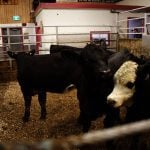
Examining the impact of transportation on cattle

Examining the impact of transportation on cattle

A research study looking at the effects of transportation on cattle says to be cautious of high speeds 
on uneven roads and prolonged stationary times as this may result in increased bruising

Cattle are being moved every day but what are the true implications and how can negative impacts be minimized? “Even though transportation is only a small part of a cow’s life, it can have lasting impact on them. Transportation can affect animal welfare, production, social and even trade,” said Carolynn Kehler, project co-ordinator with the

CFIA veterinarian Max Popp speaking at the Manitoba Beef Producers annual general meeting in Brandon on Feb. 4.

Cattle producers warned to avoid transport violations

'Out of sight and out of mind' is the wrong attitude when shipping animals

Cattle producers should keep an extra-close eye on their animals’ condition before loading for transport, says a Canadian Food Inspection Agency veterinarian. “Cattle hide their pain so that they don’t look vulnerable to predators. Keep that in mind when monitoring your herd,” said Max Popp, CFIA animal health district veterinarian, western area operations. “The primary


Once animals have been loaded onto the level trailer surface, hydraulic lifts raise the animals into a locked position.

Livestock transport company testing new trailer design

Prototype will be tested for six to 12 months

One of North America’s largest commercial livestock carriers recently unveiled a new trailer that may revolutionize the future of livestock transportation. Steve’s livestock transport, which transports more than 2,500 head of cattle and 150,000 pigs throughout North America weekly, has partnered with Wilson Trailer Company of Sioux City, Iowa, to develop an all-aluminum hydraulic lift