
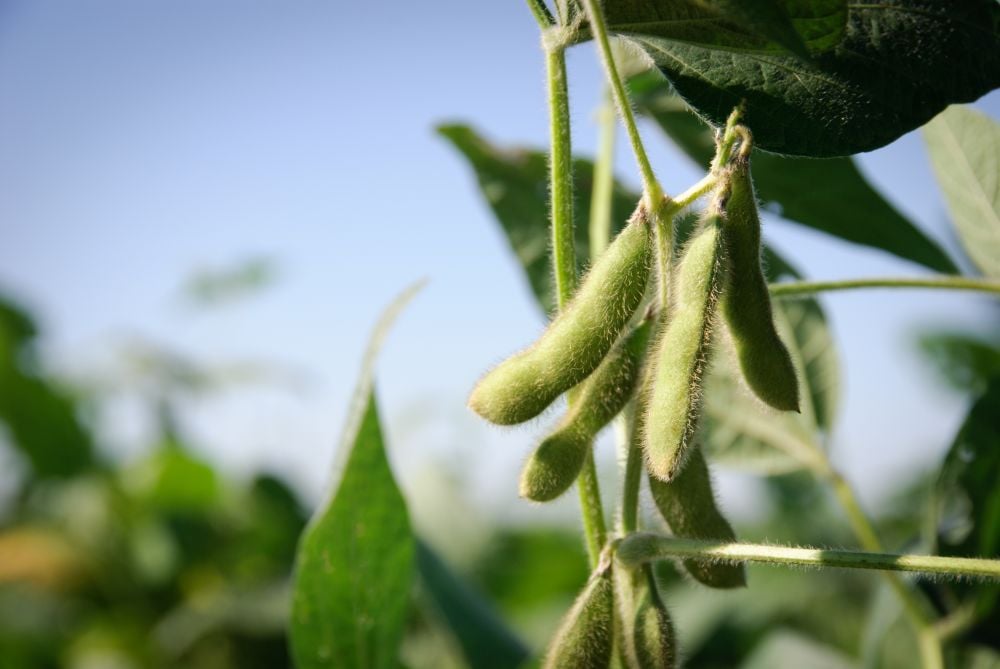


A $400-million pea-processing plant was announced during an event at the Manitoba legislature.

$400-million pea plant announced

Manitoba producers to benefit from the global demand for vegetable protein ingredients

Pea acres in the province could see a growth spurt following the announcement global ingredient and pharmaceutical giant Roquette will build its next processing plant in Manitoba. The $400-million pea-processing plant will be located just outside Portage la Prairie and is expected to employ 150 people once complete. “I expect there will be more pea
Researchers at the Brandon Research and Development Centre are conducting a plot trial on various 
forages to determine what is most productive in Manitoba conditions.

Sainfoin’s forage potential tested

Trials at the Brandon Research and Development Centre aim to see how 
the crop will measure up in a second-cut system compared to alfalfa

Does sainfoin have the potential to be a productive second-cut system, comparable to alfalfa? Agriculture and Agri-Food Canada (AAFC) researchers intend to find out. At the Brandon Research and Development Centre they have seeded two varieties of sainfoin, Melrose and AC Mountainview, in both pure stands and mixed with grasses. Mae Elsinger, an AAFC range


Brandon Clayton (l) shows Tyffany Wentoniw, Abraham Lemus and Elvis Mingano how to make crepes using chickpea flour at Elmwood High School.

Bean Team spreads word on pulse crops

The Manitoba Pulse and Soybean Growers is bringing nutritional information into the province’s schools

“It tastes just the same as any other crepe I’ve had,” said a slightly surprised Gage Anderson. “It tastes good.” Anderson and two dozen other students at Winnipeg’s Elmwood High School made the crepes using chickpea flour last week, as part of a new outreach initiative launched by Manitoba Pulse and Soybean Growers. In recognition

Peter Frohlich stands in front of Cigi’s new Ferkar mill, which will be used in a new project researching pulse flours.

Taking the ‘beaniness’ out of beans

Food processors want the fibre and nutrition of beans, but not the bean flavour

Peter Frohlich calls them “unique” flavours. “Yes, the beany flavours. I personally enjoy those flavours, but a lot of food companies would prefer to have all the nutrition of pulses minus the flavour attributes,” said the project manager for pulses and specials crops at the Canadian International Grains Institute, better known as Cigi. He’s just


A pea/oat/tillage radish cover crop seeded in early August, pictured on October 17.

Cover crops breaking out of livestock niche

Benefits of cover crops shown to accrue to grain portion of mixed operations, causing some without livestock to consider them

Cover crops could be a game changer for Manitoba, and not just for mixed crop and livestock operations. Typically those farms have been the earliest adopters of this new technique, said Michael Thiele, who works with the province’s grazing clubs through a Ducks Unlimited program. “These guys growing cover crops are finding that using and

File photo

Forage expert says bloat caused by alfalfa a “self-culling trait”

Jim Gerrish says selecting for bloat tolerance is a producer’s No. 1 defence against the deadly condition

The fear of bloat costs the livestock industry more than the condition ever does, says a well-known grazing consultant and researcher from Idaho. “I’ve seen the figures from the States, and something like two one-hundredths of one per cent of the total cattle herd dies each year from bloat,” Jim Gerrish told attendees at a


Martin Entz (centre) leads group on Glenlea tour. photos:  meghan mast

Manure improves organic forage-grain crop production

‘Experimental lakes of agriculture’ find organic crops can produce on par with conventional crops

Organic crop producers can match the productivity of their conventional farming neighbours with a little help from some four-legged friends. Composted beef and dairy manure restores important nutrients that can be mined from the soil under organic management systems, Martin Entz, an agronomy professor with the University of Manitoba’s Glenlea research station told participants in

AAFC scientist receives CFGA award

The Canadian Forage and Grassland Association (CFGA) has announced that Gilles Bélanger is recipient of the 2013 CFGA Leadership Award. Bélanger is a Quebec-based research scientist with Agriculture and Agri-Food Canada in the area of physiology and agronomy of forage crops. “Dr. Bélanger’s contribution to improving the productivity and adaptation of forages in Eastern Canada


Hairy vetch opens up opportunities

Hairy vetch has long suffered snickers and quizzical looks at the very mention of its name, but new research shows the legume has potential in Manitoba. Scott Chalmers, a diversification technician with Manitoba Agriculture, Food and Rural Initiatives, told producers at the annual Special Crops Symposium in Winnipeg that plant is a possible cover crop