
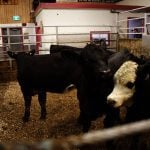
Pickled Stover Works For Cattle Feed

New research has shown that a substantial portion of the grain in cattle feed can be effectively replaced with corn stover – the plant’s stalks, cobs and leaves – when these harvest residues are treated with a common food ingredient known as hydrated lime, or pickling lime. The alternative feeding strategy, which could improve feeders’

U.S. Biodiesel On Life Support, But Smiling

Biodiesel, still a moneylosing proposition in the United States compared to oil-based diesel, is about to have its best year ever thanks to government tax credits and usage mandates. But it will take months for the biodiesel industry to bounce back after being stranded last year, when the government let its six-year subs idy expi


One Plan, Three Men And 50 Years

When Wes Jackson, Wendell Berry and Fred Kirschenmann get together, conversation, laughter and ideas flow. Other than a closeness in age, the three appear to have little in common. Jackson is a PhD plant breeder and founder, in 1976, of The Land Institute, a Salina, Kansas non-profit organization dedicated to finding sustainable solutions to food’s

Wind Turbines Might Improve Crop Performance

Wind turbines in farm fields may be doing more than churning out electricity, researchers with an Ames, Iowa laboratory associated with the U.S. energy department report. The giant turbine blades that generate renewable energy might also help crops stay cooler and drier, help them fend off fungal infestations and improve their ability to extract growth-enhancing


U.S. Ethanol Sector Contemplates Subsidy Cuts

Mark Marquis had planned to double the size of his Illinois ethanol plant in 2011, and was considering expanding a Wisconsin facility his family-run firm bought into last July. But those plans are now on hold, as Marquis and other ethanol producers brace for the possible end of $6 billion a year in U.S. subsidies

PRRS Costs Run Higher Than Expected

New research shows the cost of porcine reproductive and respiratory syndrome (PRRS) to the Canadian swine industry is far greater than previously known. An analysis by the George Morris Centre estimates PRRS costs the industry at least $130 million a year and possibly higher. The finding could point to the need for a national strategy


Farmers Rattled By $39-Billion Bid For Potash Corp. – for Aug. 26, 2010

The possible creation of a fertilizer giant between BHP Billiton’s and Potash Corp. has rattled U. S. and Canadian farmers who fear higher input costs if the $38.6-billion deal goes through. BHP Billiton’s acquisition offer was rejected by Canada’s Potash Corp. but the world’s largest fertilizer company said it might consider a more attractive proposition.

Iowa Soy Crops Hit By Disease – for Aug. 26, 2010

The worst outbreak in 16 years of the crop-devastating soybean sudden death syndrome (SDS) disease in Iowa is capturing the attention of the market but it is too early to determine the extent of losses. “It’s just starting to unfold; we work with a lot of grain elevators across Iowa and the Midwest. It is


U. S. Grain Trade Gauging La Niña Risk

Grain traders are concerned that a La Nińa weather event could produce hotter, drier weather in the U. S. Midwest this summer, potentially lowering crop yields. During a La Nińa, a cooling of sea surface temperatures in the equatorial Pacific Ocean alters weather patterns around the globe. Grain traders associate La Nińa with warmer and

U. S. Crops, China Becomes Top Soy User

U. S. farmers will grow the second-largest corn and soybean crops on record this year – 13.134 billion bushels of corn and 3.213 billion bushels of soybeans, just below the records set in 2009, said a University of Missouri think-tank March 9. The Food and Agricultural Policy Research Institute also said U. S. wheat production