
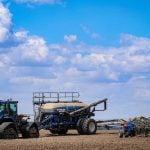
Natural gas, natural solution: Devine

It’s good for the environment, economy and food security, according to a former Saskatchewan premier

The move is on to switch heavy vehicles to natural gas, and that will benefit farmers and enhance global food security, says former Saskatchewan premier Grant Devine. There’s an abundance of cheap natural gas across the country, and new extraction technology is adding to the surplus here and abroad, he said. “We have no end
Dinosaur gas and the greenhouse effect

In a major new climate finding, researchers have calculated that dinosaur flatulence could have put enough methane into the atmosphere to warm the planet during the hot, wet Mesozoic era. Like gigantic, long-necked, prehistoric cows, sauropod dinosaurs roamed widely around the Earth 150 million years ago, scientists reported in the journal Current Biology May 7.


Cold-weather-proof biogas project to demonstrate renewable energy viability

Capturing methane gas from manure is taking the world by storm — in warm countries. In energy-poor countries of Southeast Asia, for example, biodigester facilities are popping up like mushrooms, including on large-scale livestock operations seeking less expensive and more reliable power, as well as ways to reduce odour and create a new revenue stream

Bioeconomy Gives Agriculture New Lease On Life

The emerging bioeconomy is rewriting agriculture’s contract with society, a senior official with Manitoba Agriculture, Food and Rural Initiatives told bioengineers meeting in Winnipeg recently. Daryl Domitruk, director of the Agri-Food Innovation and Adaptation Knowledge Centre for Manitoba Agriculture and Rural Initiatives, said agriculture is often portrayed as “the bad guy” when it comes to


Tapping Alberta’s “Other” Liquid Gold Resource

Mention the term “liquid gold” in Alberta and livestock manure isn’t likely the first thing that jumps to mind. But it’s slowly becoming part of the conversation as researchers learn more about how to harvest the nutrient benefits of this potentially abundant resource and byproduct of the livestock industry. One of the latest and most


Carbon Offsets Could Reduce The Stink From Manure Lagoons

“Ninety-five per cent of the odour is gone.” – LEONARD HOFER Cutting the stink from manure storage lagoons doesn’t earn farmers a cent, but capturing and destroying the methane lagoons create might. Preferred Carbon, Farmers Edge Precision Consulting, the University of Manitoba and Starlite Colony have set up a pilot project to study to see