
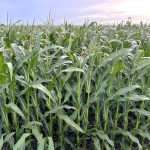
(Dave Bedard photo)

Saskatchewan forage rainfall insurance to adjust for hot spells

SCIC also expanding crop roster for contract price option

Saskatchewan forage and corn growers whose crops are insured against below-normal rainfall can expect a beneficial bump starting this year if those crops get cooked in high heat. The Saskatchewan and federal governments on Tuesday announced details for their 2022 crop insurance program — under which average coverage is expected to reach $405 per acre,

Cattle producers are finding the effects of drought are lingering into the winter, in the form of high-nitrate feed.

Nitrate fears in feed come due

Feed tests are less expensive than a dead cow or reproductive wreck, experts plead

Nitrate poisoning has claimed a number of cattle this year, provincial livestock specialist Pam Iwanchysko has confirmed. “It’s been a tough go, in that regard,” she said, noting that, in some of those cases, equipment issues kept producers from properly processing bales and mixing high- and low-nitrate feed properly. When that high-nitrate feed was also the most


The province’s horse breeders say they’re being frozen out of drought relief programs.

Horse breeders push back against AgriRecovery exclusion

DROUGHT | The horse industry argues its ranches were equally drought stricken as its beef-producing neighbours

Horse breeders in Manitoba are questioning why PMU horses are the only equines eligible for feed and animal transportation programs through AgriRecovery. “There are a lot of horse breeders in the province of Manitoba who have foals on the ground that are just as big and contributing just as much, if not more, to Manitoba’s

Feds fund Hay West to ship another 15 million to 16 million pounds of hay

Feds fund Hay West to ship another 15 million to 16 million pounds of hay

DROUGHT With far more demand than capacity, the CFA is seeking to mitigate as much damage as possible

Federal funding will allow the Hay West relief initiative to ship another 15 million to 16 million pounds of hay through the winter, says the Canadian Federation of Agriculture (CFA). That’s based on an average cost of 15 to 20 cents per pound, a spokesperson told the Co-operator. However, that’s a fraction of the hay


A grazing horse is receiving benefits well beyond just nutrition.

Forage the key to healthy horse diet

Horse Health: Marketing campaigns plant doubts about importance of natural diet

Horses both need forage and horses need to forage. Both aspects are equally nourishing to the horse and both aspects are necessary to fully satisfy the physical, emotional and mental contentment of the horse. Forage comes without a feed label and receives very little marketing attention when held in comparison to the enterprising sales campaigns that market designer

A project aims to create alfalfa management tools after creating a database tying management to crop performance.

National effort underway to level the playing field for alfalfa

Data-driven project aims to boost the bottom line of producers — and reverse slide in forage acres

Glacier FarmMedia – A new initiative designed to improve alfalfa producers’ access to precision management tools could boost the crop’s popularity and increase production, industry officials say. Data collection has started for two new alfalfa artificial intelligence (AI) decision management tools across Ontario, Quebec, Nova Scotia and Manitoba. The project aims to create the database


In general, research indicates that soybean forage should not make up more than 50 per cent of the total diet.

Drought-stressed soybeans offer forage options

Don’t wait too long to make the decision as feed quality is declining daily

Although many areas across the region have received much-needed moisture recently, the ongoing drought and lack of forage options for beef producers is still a concern. “One potential forage source is drought-stressed soybeans that can be grazed or harvested for hay or silage,” says Janna Block, North Dakota State University (NDSU) Extension livestock systems specialist at

“It’s a significant increase from a year-to-year standpoint.” – David Koroscil, MASC.

MASC reports slight forage insurance uptick

This was the first year programs included changes from a forage insurance review

Slightly more producers bought into forage insurance this year, although it’s unclear how much that increase was brought on by changes new to the program this year, and how much was due to expectations of a poor season. “It’s probably a combination of both,” Manitoba Beef Producers general manager Carson Callum said, “and we don’t


A field tour participant examines the wider corn rows and multi-species intercrop that will provide extended grazing for MBFI’s herd later this year.

Tweaking the recipe for higher-quality, lower-labour corn grazing

Intercropping could reduce grain overload and need for supplemental hay

An intercropped corn-grazing trial at the Manitoba Beef and Forage Initiative (MBFI) is hoping to improve on an already cost-effective way to winter cattle. Organizers say there’s still some work to do, but the demonstration research farm north of Brandon added yet another year of data to their ongoing study mixing corn grazing with a mixed-species forage intercrop. Researchers

“Price and quality of alternative forages will play a key role in determining whether they can be used in a given production situation.” – Zac Carlson, NDSU.

Going non-traditional on forage

Tips and considerations for putting up atypical sources of livestock feed

Many producers are seeking alternative, possibly non-traditional, sources of forage such as cattails, flax, kochia, millet varieties and soybeans in light of continued drought. “With limited forage on the market and high prices, it may be a better option to evaluate local hay options,” North Dakota State University Extension beef cattle specialist Zac Carlson said.