
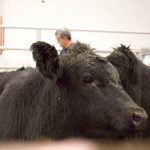
KAP president Dan Mazier is pleased fuels used to heat and cool livestock buildings, greenhouses and dry grain are exempt from the province’s $25 a tonne carbon tax.

KAP welcomes further carbon tax exemptions

Fuels used to heat and cool livestock buildings, greenhouses or to dry or store crops will be exempt

The Manitoba government’s carbon tax exemption on marked farm fuels used in farm equipment and trucks, has been extended to include heating and cooling farm buildings and drying crops. “A farm building for fuel and carbon tax purposes is a building where you either keep or raise livestock for sale or a building where you
A new government program could help compensate farmers for their work protecting 
environmental features like wetlands and riparian areas.

Manitoba budget contains multimillion-dollar conservation trust

There’s great potential for the trust to help farmers help the environment, says KAP

A $102-million conservation trust fund announced in the Manitoba government’s March 12 budget could help compensate farmers for protecting the environment, says Keystone Agricultural Producers president Dan Mazier. “That’s how I see the fund being used, but I’m not certain if all of it will be,” Mazier said from his farm near Justice, Man., in


An aerial image of the research study area in southwestern Kansas.

Cellulosic biofuels best bet for climate concerns

They’re lower impact than other options and can even sequester carbon rather than produce it

A new study from Colorado State University is breathing new life into the concept of biofuels produced from switchgrass instead of grain crops. The team says the non-edible native grass which grows in many locations throughout North America could be a better alternative than corn and other cereal and oilseed crops when it comes to

This image was taken from a trail camera set up in the park.

Studying the wolves of Riding Mountain National Park

Scholar has been researching collared wolves in order to understand the ecology of the park

Since the spring of 2016, Christina Prokopenko has been collecting data on the behaviour and population of wolves in Riding Mountain National Park (RMNP). Prokopenko, who is a Vanier Scholar completing her doctoral thesis out of Memorial University in Newfoundland, undertook the research to better understand the ecology of RMNP’s estimated 70 to 75 wolves


One grain on eroded land

No such thing as ‘unprecedented’ weather, delegates at ARBI conference told

Delegates with the Assiniboine River Basin Initiative (ARBI) met in Regina February 14 and 15

If 1930s seems like the worst drought we could ever have, scientific records show pre-settlement dry spells lasted far longer. Likewise, there were wet spells on the Prairies much more intense than events like 2011’s — a flood we tended to call “unprecedented.” Neither are unprecedented, say Saskatchewan scientists. Both extremes have occurred before on

Maya Almaraz, a National Science Foundation post-doctoral fellow at UC-Davis and the study’s lead author, samples soils for NOx emissions in Palm Springs, California.

Soils make smog too

California researchers say as much as 40 per cent 
of nitrogen oxides come from fertilizers

Internal combustion engines are typically blamed for smog in urban centres but researchers in California say fertilized fields need to be added to that list. The scientists, from University of California-Davis, say they’ve found about 40 per cent of the nitrogen oxide emissions in the Golden State is coming from fertilized soils in the agriculture-rich


Opinion: Ongoing evolution necessary in farming

Not only are farmers being trusted to look after the land, crops and animals, we also want to do the best possible job ourselves. The problem is we don’t always have the clearest picture of what the best practices really are, and we of course operate within the confines of present technology and profitability. Take

The swollen Red River engulfs farmyards in this aerial file photo. River floods will be a growing risk as the climate warms, scientists say.

Warming will put millions more at flood risk

The risks are greatest where governments lack the funds to improve infrastructure

Thomson Reuters Foundation – Unless countries urgently boost their flood defences, millions more people will be at risk from river flooding in the next 20 years. Scientists say as global warming increases, so will the likelihood of severe rainfall. In Asia, the numbers at risk will more than double to 156 million, up from 70


Comparing canola flowers opening under control and high nighttime temperature allows researchers to understand the different impacts of stress on yield.

No rest for weary canola plants

You’re not the only one who can’t get any ‘sleep’ during those sweltering summer nights

Turns out your canola plants just need to get a little rest. When high temperatures, especially at night, prevent them from “sleeping” properly productivity takes a hit, and now researchers from Kansas State University are trying to figure out why. What exactly is the plant doing at night? It’s not sleeping like humans do, but

Local projects for multi-beneficial water management were cited by staff with Seine-Rat River Conservation District speaking at the 42nd annual Manitoba Conservation Districts Association convention in December.

CDs cite need for multi-benefit water control projects

Flood preparations alone won’t buy a litre of drought protection, 
say MCDA speakers


Will there be flooding? Will there be drought? Planning for both is essential to help ward off the financial hits these weather extremes bring, speakers at last month’s Manitoba Conservation Districts Association convention said. In the Seine-Rat River Conservation District (SRRCD) they’re looking at ways to be ready for whatever climate change brings, and to