
Start Tomato Seeds Soon

Tomato seed should be sown no sooner than four to six weeks before the last spring frost. Plant the seed thinly, covering with a soilless mix to a depth of one-quarter inch, and use a mild fertilizer of one level teaspoon of 20 20 20 dissolved in two gallons of water at each watering. Keep
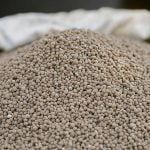
Options Abound For Improving Phosphorus Management

“The underlying problem leading to food waste stems in part from consumer behaviours supported by an economic system built to produce more than we need.” Anew report by the International Institute for Sustainable Development outlines several avenues that could be explored to improve phosphorus management: Another case for local food networks: “Cycling phosphorus exported in


Manure-Processing Projects Approved For Funding

A hog manure lagoon and a combined hog/ chicken manure lagoon will be used in the project. Test projects to separate useful fertilizer out of liquid manure and to compost solids will get underway this spring with public and producer funding. Hog producer Hytek plans to assess a manure treatment system that separates out crop

There’s Gold In Them Thar Heaps

What is composted manure worth? On one end of the scale, an urban gardener tossing it into the trunk of the car might pay $2.59 retail for a 20-kg bag and think nothing of it. At the other end, a beef producer or feedlot operator cleaning out pens full of the raw materials for making


Invite The “Good Guys” Over For Compost Tea

Conventional agriculture’s overwhelming focus on chemistry is fundamentally flawed, according to Matthew George, a lab director with Soil Foodweb Canada. By neglecting the important role played by soil biology, chemically dependent farming tries to supply the entire scope of a plant’s nutrient needs through artificial means, effectively bypassing natural processes. The result, he said, is

Switching The Ratios

The key to Elaine Ingham’s approach to enhancing soil fertility lies in adjusting the ratio of fungi to bacteria. For grasses, vegetables and brassicas, the optimal fungi to bacteria (F:B) ratio is 0.75:1, compared to 1:1 for row crops, and anywhere from 5:1 to 1,000:1 for old-growth forests, he said. Weeds, as hardier pioneer species,