Manitoba Pork Council chair George Matheson and federal Agriculture Minister Marie-Claude Bibeau announce funding for a two-year pilot insurance program for Manitoba hog producers. (Dave Bedard photo)

Manitoba to pilot insurance program against hog disease risks

Pork council study backed with federal, provincial funds

“Private sector solutions” to manage financial risks caused by disease outbreaks on hog farms are on the drawing board in a new Manitoba-led pilot project that could go nationwide. Coming out of a Thursday morning meeting with hog producers in Winnipeg, federal Agriculture Minister Marie-Claude Bibeau announced $482,158 from the AgriRisk Initiatives (ARI) arm of

(Jeremy Woodhouse/DigitalVision/Getty Images Plus)

CFIA rethinking limits on travellers’ personal food imports

Consultation running until March

The federal government is considering changes to the amounts of food travellers can bring into Canada with them from other countries for their personal use. The Canadian Food Inspection Agency on Thursday announced public online consultations on the proposed new limits, which CFIA said would “better reflect the volume of foods typically moved by travellers


A macrophage (immune response) cell in early stages of infection with African swine fever virus, magnified about 1,000x. (Keith Weller photo courtesy ARS/USDA)

VIDO-InterVac joins swine fever fight

The University of Saskatchewan’s vaccine research and development arm is set to become Canada’s first non-government agency to work with the African swine fever virus. Saskatoon-based Vaccine and Infectious Disease Organization-International Vaccine Centre (VIDO-InterVac) will start work with the virus this month at its Containment Level 3-Agriculture (CL3-Ag) facility, the Canadian Food Inspection Agency said


(Photo courtesy Canada Beef Inc.)

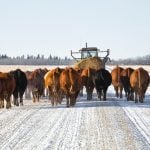
Cattle producers get longer phase-in on new transport regs

New federal livestock transport regulations, due to come into force in February, will now roll out on a longer timeline for the beef and dairy cattle sectors. Federal Agriculture Minister Marie-Claude Bibeau has announced a “two-year transition period” for bovines, which is meant to provide “time to gather more data on effective solutions concerning the


A colourized low-temperature electron micrograph of a cluster of E. coli bacteria. Individual bacteria in this photo are oblong and coloured brown. (Eric Erbe photo and colourization by Christopher Pooley courtesy ARS/USDA)

Ryding-Regency’s federal beef packing licenses cancelled

Citing “false or misleading information” given them during an E. coli probe, food safety officials have now permanently pulled the federal slaughter, processing and export licenses for Toronto’s Ryding-Regency Meat Packers and related companies. The cancellation, announced Monday, indefinitely prolongs what was already described as “critical processing capacity shortage” for the province’s cattle producers, leaving