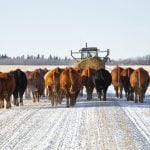
Photo: Canada Beef Inc.

Klassen: Steady demand seen for all feeder cattle

Compared to last week, Western Canadian feeder cattle prices were relatively unchanged.  Yearlings supplies were limited in certain regions which caused buyers to shrug off fleshier characteristics in some cases; however, heavier yearlings over 950 pounds were somewhat softer. Finishing feedlots appeared to be more aggressive on heavier, vaccinated or pre-conditioned calves. Many auction barns


Manitoba livestock auctions.

Manitoba fall cattle run behind schedule

Many factors hampering auction movement

Cattle prices were steady to slightly higher at Manitoba’s cattle auctions during the week ended Oct. 24, with supply chain bottlenecks causing concern on both the supply and demand side. The rush of cattle volumes coming to auction have been delayed due to producers struggling with late harvests and muddy pastures. “Sometimes there’s standing crop


Harsh fall weather weighs on Manitoba cattle values

Snow and mud have hit Manitoba hard, limiting the ability to take cattle to market

Snow, mud, and challenging fall weather across the Prairies put a damper on cattle activity in Manitoba during the week ended Oct. 11. “Guys aren’t really after cows right now,” remarked Harold Unrau of Grunthal Livestock Auction Mart. He noted feeder cattle prices were under pressure compared to the week prior. “From here right to

Rain challenges Manitoba cattle auctions

Rain challenges Manitoba cattle auctions

If nothing else, recent rains have helped pastures and hay land thrive

Challenging fall weather has not spared Manitoba’s cattle auction marts, as wet pastures and delayed harvests have limited the number of cattle coming to auction. Allan Munroe of Killarney Auction Mart noticed cattle volumes were down at auction marts during the month of September. “A lot of guys can’t get their cattle out from pasture, because there are standing crops in the


(WPohlDesign/iStock/Getty Images)

Klassen: Adverse weather tempers feeder market

Compared to last week, western Canadian feeder cattle markets traded $3-$5 lower. Excessive snow in Alberta and ongoing rains across Manitoba and Saskatchewan set a negative tone. The market appeared to incorporate a risk discount, although many auction barns had limited numbers on offer. Buyers once again focused on local cattle and avoided transportation over

(Photo courtesy Canada Beef Inc.)

Klassen: Yearling prices remain firm

Compared to last week, western Canadian yearling markets were relatively unchanged with the exception of southern Alberta where 800-plus-lb. feeders traded $5 to as much as $8 higher. Strength in deferred live cattle futures and weakness in barley prices were the main factors driving demand in the Lethbridge area. The U.S. Department of Agriculture’s bullish


CME October 2019 feeder cattle with 20-, 50- and 100-day moving averages. (Barchart)

Klassen: Feeder cattle market remains volatile

Western Canadian yearling markets appeared to stabilize after coming under pressure earlier in the month. Compared to last week, yearling prices were unchanged to $4 higher on average while calf markets traded $2-$3 on either side of unchanged. Major feedlots were more aggressive for 800-plus-lb. cattle as feed grain prices continue to grind lower. Favourable

Manitoba's livestock auctions.

Tough times still coming for Manitoba cattle producers

Recent rains have greened up pastures, but that’s only 
going to blunt the worst of it

Recent rains may have averted the worst-case scenario for Manitoba’s hay shortage, according to Tyler Slawinski, auctioneer at Gladstone Auction Mart. Recently, 12 municipalities in Manitoba’s Interlake and Parkland regions declared a state of agricultural emergency due to dry conditions that created a lack of sufficient hay and the below-average quality of what was produced.