

An Alternative Solution To The Cattle Crisis

I suggest we have been suckered into export dependency and are now trapped on a treadmill of keeping more cattle to make up for declining margins. Many people have been pondering the question of whether there is a future for beef production in Canada. We are continually told that there is light at the end
Restricted-Feed Intake In Heifers Makes Better Cows

“When you develop a heifer on a restricted-gain program, you change the metabolic efficiency of that heifer and the way it utilizes feed and stores energy reserves.” – JOHN POPP Just as too many cooks can spoil the broth, it seems too much feed makes for less efficient heifers. Using a similar strategy to that


Cattle Cycle Has Bottomed Out, Says Wright

“Miraculously, in the last year, producers have found every record they had since March of 1999, and are age verifying cows at an alarming rate.” – RICK WRIGHT Cow-calf producers take heart, better times may be on the way. A mass sell-off of cattle around the world driven by years of low prices has finally

Grass Boosts Health, Cuts Need For Replacements

Researchers compared lameness rates and replacement rates between pasture-based and confinement operations in the United States and found that grass won on both counts. The confinement operations had health-related replacement rates of 40 per cent per year, according to Dan Undersander, a forage agronomist from the University of Wisconsin. That “incredibly high” rate costs money.


Make Plans To Move Livestock, Hay Now

Livestock producers need a plan for moving their animals and hay to higher ground before flood waters start rising. “Make arrangements now in case cattle and other livestock need to be moved, or have a plan to utilize other facilities in case of flooding,” says Charlie Stoltenow, North Dakota State University Extension Service veterinarian. “Trying

Weather Smiling On Producers

“It’s been excellent calving this year.” – Cliff Graydon Manitoba cattle producers last week were reporting near-perfect conditions for newborn animals as the annual winter calving season got underway. Not too cold, not too mild, just enough snow cover and cows in generally good shape. “It’s been excellent calving this year,” said Cliff Graydon, a


Potential Benefits From Livestock ID

Here in Canada, we’re enhancing our livestock identification programs. Individual cattle ID with radio frequency eartags (RFID), age verification, premise ID, animal movement records – about the only thing that isn’t planned is a GPS locator attached to each individual animal. Incredibly, American efforts for a National Animal Identification System are back to Square 1.

Feed ‘Em Or Ship ‘Em? Program Helps Decide

At this time of year, cattle producers are probably thinking about how slowly winter is moving and how quickly the feed stack is disappearing. Some tough decisions may have to be made before grazing starts again in late spring – buy more high-priced hay to hold the herd over or pull the trigger and sell


Values Improve For Heifers, Slaughter Cows

“These producers are likely to continue holding those calves until they get the pounds on…” The numb er of cattle that made their way to auction yards in Manitoba during the week ended Feb. 12 declined from the previous week’s level. Prices for the classes of cattle, however, held steady levels with some improvement evident

Hypothermia And Frostbite Harmful In Herd

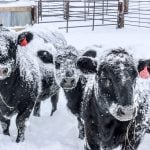
All herd bulls should have breeding soundness exams 45 to 60 days after the last severe cold spell. Hypothermia and frostbite can be harmful to livestock, especially the newborns. “Hypothermia is a profound drop in body temperature,” says Charlie Stoltenow, North Dakota State University Extension Service veterinarian. “Animals less than 48 hours old or animals