
cattle in winter

Wet weather promotes foot rot

Experts warn to be on the lookout for foot rot as recent weather conditions 
have been ideal for the growth of the bacteria

Keep a weather eye out for foot rot. The wet and warm conditions of this season have set the stage for the bacteria that causes it to flourish. “The wet weather gives more places for the bug to live and softens up the animal’s skin which makes little wounds more prevalent,” said Dr. Wayne Tomlinson,

Workers in hog barns can become carriers of drug-resistant bacteria.   photo: thinkstock

Hog barn workers carry drug-resistant bacteria even after they leave the farm

A small study of North Carolina hog barn workers turned up surprisingly high levels of persistent and resistant bacteria

A small-scale study of hog barn workers in North Carolina found nearly half carry livestock-associated bacteria in their noses, and that this potentially harmful bacteria remained with them up to four days after exposure. Researchers with the Johns Hopkins Bloomberg School of Public Health tested 22 workers over a period of two weeks during the


American dog tick.

Manitoba arthropod populations expanding

Although rare in Manitoba, bovine anaplasmosis can be spread by wood ticks

They only have eight tiny legs, but ticks are on the move in Manitoba and across the Prairies. “They’re moving north for sure,” said entomologist Kateryn Rochon, noting the arthropods travel with their hosts, including deer, birds, rabbits and other animals. The University of Manitoba professor is tracking the movement of the American dog tick

Dr. Leigh Rosengren, a veterinary epidemiologist, urges producers to guard against antimicrobial resistance.

Superbugs in hospitals may also be on farms

Producers urged to practise antibiotic stewardship
Imagine a situation in which meat containing antibiotic-resistant bacteria ends up on the dinner plate of a consumer, who in turn ends up in the hospital with an infection which may not be treatable. That’s the kind of nightmare scenario Dr. Leigh Rosengren envisions when she warns livestock producers about the risk of antimicrobial resistance


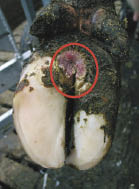
Cases of strawberry foot rot may go unnoticed because there is not much swelling evident at first.

Strawberry foot rot is on the increase in feedlots

An infection previously mostly found in dairy cattle is showing up in some western feedlots

It has come to my attention that “strawberry foot rot” or “hairy heel wart” or “Montellaros disease,” which was once considered a dairy disease is now making its way into feedlots in Eastern Canada. The disease is potentially caused by a treponema bacteria. The infection starts at the back of the hoof on or near

Tetanus — a nasty disease, but easy to prevent

In our practice, the incidence of tetanus has definitely been increasing in the last several years. This article will review some of the pertinent signs of tetanus and look at the prevention of this deadly disease. Tetanus is caused by the bacterium Clostridium Tetani, which is in the same family of organisms that causes blackleg.


Tick That Can Cause Lyme Disease Making A Home In Manitoba

The odds of picking up a blacklegged deer tick – and contracting Lyme disease – are on the rise in Manitoba. The southeast corner of Manitoba and an area around the Stanley Trail in south-central Manitoba now have established blacklegged tick populations. Surveillance findings suggest they now occupy an area that may stretch from the

Scientists Find New MRSA Superbug

British scientists have found a new strain of the “superbug” MRSA in milk from cows and in swab samples from humans. Researchers said the find was “worrying” but added it was unlikely that the methicillin-resistant Staphylococcus aureus bug, which is resistant to some antibiotics, could cause infections by getting into the food chain via milk.