
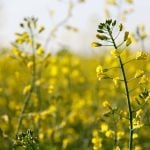
Bigger seed changes the canola seeding equation

The best chance for maximizing canola yields is a plant population of eight to 10 plants per square foot and a minimum of five throughout the growing season, says Doug Moisey, an extension agronomist with the Canola Council of Canada. “Typically when you have four to five plants per square foot or higher your yield
Organic forage seed growers: Working with Mother Nature to keepbugs and weeds in hand

Growers manage fertility and soil health with less tractor hours by growing perennial forage seed crops

Growing organic forage seed takes a different mindset. Larry Pollock, who has been farming organically since the 1990s on 600 acres north of Brandon, was part of a panel of experienced growers offering insights at a recent workshop hosted by Manitoba Agriculture, Food and Rural Initiatives. He sows 100 to 150 acres of alfalfa under


Young farmer champions the soil

It’s the kind of story that the farming industry takes great pride in today. A young producer, recently graduated with an agriculture degree, recently married, joining his family farm, and building a farming future on high principles of conservation and sustainable management. Ryan Boyd, who farms with wife Sarah and parents Jim and Joanne Boyd,

Canadian forage exports remain strong

Commodity News Service Canada / Solid U.S. demand and interest from China are keeping Canadian forage exports firm, but higher transportation costs and competition from the U.S. Midwest may limit the upside potential, says Wayne Digby of the Canadian Forage and Grassland Association. The easing of drought conditions in the southern U.S. could lessen demand, but


Warning: Soil with seed can spread clubroot

Manitoba seed and potato growers are being warned about the risk clubroot-infected soil could get to their farm in the seed they bought for spring planting. The Manitoba Clubroot Action Team, consisting of representatives from the Manitoba government, Agriculture and Agri-Food Canada, and the Canola Council of Canada, issued the warning in separate letters to


It’s early, but a good time to fertilize

Field work was underway in some parts of Manitoba late last week as farmers began applying fertilizer applications during one of the earliest springs people can remember. But while extension officials urged farmers to take full advantage of the province’s exemption to rules limiting fertilizer applications until after April 10, they cautioned against putting seed

Too soon to give up on winter wheat

The Prairie winter wheat crop may have been left looking a bit worse for wear due to unusually low snowfall cover, but there’s still life lurking below those browned-off stalks. That’s because it takes more than just a tap on the head to kill winter wheat, said Outlook, Sask.-area farmer Dale Hicks, who is also


Spring fertilizer demand strong

Demand for fertilizer by western Canadian farmers looks solid ahead of spring planting. Supportive commodity prices are encouraging farmers to buy fertilizer in order to maximize yield potential in their crops this spring. However, challenges remain in some areas due to last spring’s wet conditions. Doug Chorney, president of the Keystone Agricultural Producers in Manitoba,

Organic research achieving critical mass in science

The modern organic agriculture movement started 100 years ago. Sir Albert Howard was an English mycologist who served as the imperial economic botanist to the government of India between 1905 and 1924. He was fascinated by the indigenous practices of Indian farmers, whom he called his professors. His 1940 book, An Agricultural Testament, has become