Western Canadian soybean growers routinely earn less than their U.S. counterparts, but there’s a growing sense that gap may be unfair and outdated.
During a recent Soy Canada webinar, industry representatives pointed to a roughly 70-cent-per-bushel difference between western Canadian soybeans and comparable U.S. supplies moving through Pacific Northwest export channels.
WHY IT MATTERS: Getting paid closer to full value for soybeans could make a meaningful difference to farm profitability.
Read Also

Indo-Pacific seen as potential organics market
Organic producers who want to export Canadian agrifoods should look to the Indo-Pacific region, an expert on trade in the area says.
In some cases, that gap shows up in stark terms and underlines its arbitrary nature.
Brian Innes, Soy Canada’s executive director, pointed to one producer farming on both sides of the Manitoba–North Dakota border who sees markedly different prices for soybeans grown only a short distance apart.
The determining factor is simply which side of the international boundary they are sold. That gap has become part of the industry’s broader argument that Canadian soybeans are not always being valued for what they are actually worth.
What’s behind the gap?
Much of the difference in price is said to be linked to protein.
Innes said western Canadian soybeans have long faced a reputation for lower and less stable protein than competing supplies. That affects how buyers view the crop before it ever reaches a vessel.
Soy Canada makes the case for looking at overall performance, rather than just one marker.
Lesley Nernberg, an animal nutritionist with Lighthouse Agri-Solutions, told webinar participants that crude protein, while still the main benchmark used in the market, does not tell the whole story when it comes to feed value.
“The difference between how nutritionists and purchasers think is potentially leaving a lot of money on the table for Canadian growers and processors,” he said.
Purchasers tend to focus on crude protein, moisture and other straightforward specs. Animal nutritionists, by contrast, are looking more closely at amino acids and energy — the components that determine how well a feed ingredient actually performs in a ration.
Nernberg argued those deeper measures can matter as much as protein. He pointed to U.S. and international work showing that amino acid availability, digestibility and sucrose levels can be attractive to customers.
“These start to create cost advantages for feed millers,” he said, adding northern-grown soybeans may offer nutritional benefits that are not being fully recognized.
Research is suggesting Canadian soybean meal may be more competitive on those deeper nutritional measures than systems based on crude protein alone indicate, said Nernberg. If that holds, not only is crude protein is an incomplete measure of value, but the market may be pricing Canadian soybeans on one measure, while end users are deriving value from another.
The challenge is getting the market to reflect that value.
Can better data close the gap?
Canada has far less publicly available compositional data on soybean meal than competitors such as the U.S., Brazil and Argentina. That means fewer Canadian comparisons in the literature and fewer tools to help buyers look past a simple protein number.
Innes said that is part of what Soy Canada is trying to address.
In a followup interview, he said there are really two parts to the issue. One is the actual quality and consistency of soybeans being delivered over time. The other is how the value of those soybeans is measured and understood in the market.
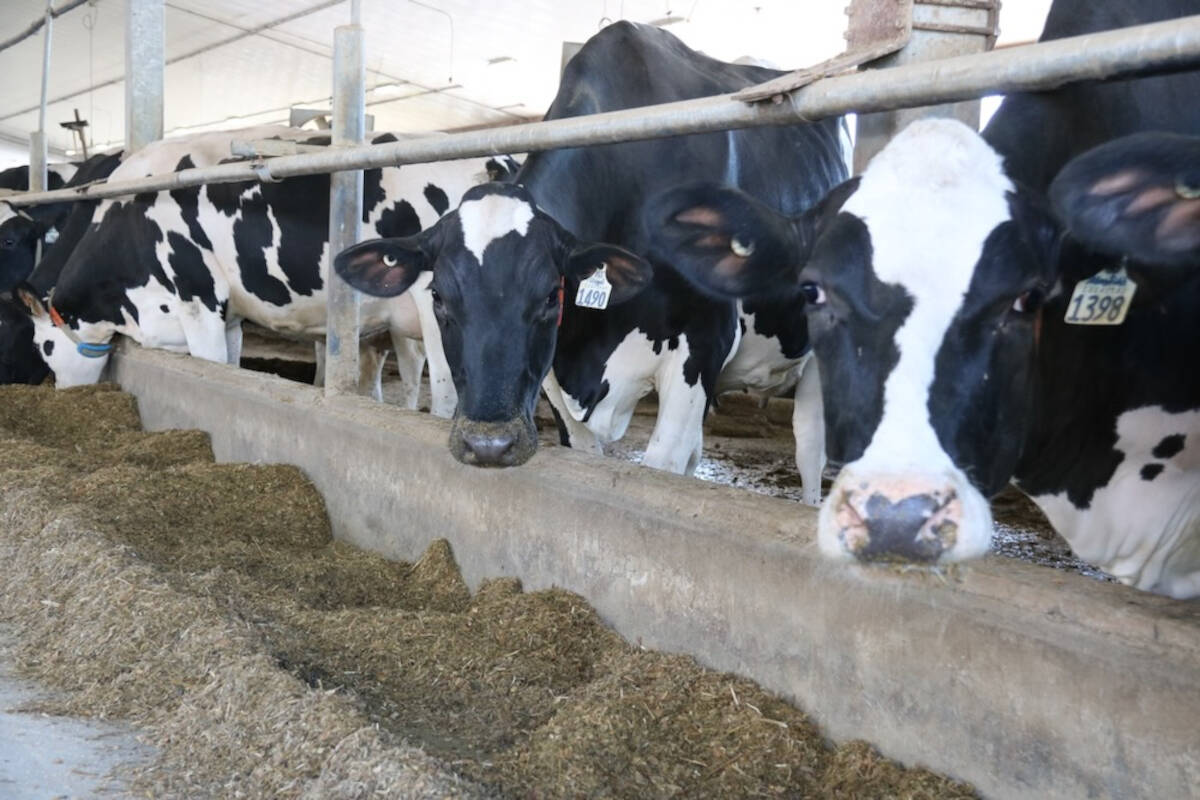
In other words, some of the discount comes from the reputation western Canadian soybeans have built over time. Some of it also comes from the fact that Canada has a thinner dataset to show what those beans are worth beyond crude protein.
That is why Soy Canada sees better data as part of the solution.
The organization itself does not directly fund research, but Innes said Canadian groups are building out Prairie-specific data, drawing in part on similar research in the northern U.S. Soy Canada has been working to connect different parts of the value chain and identify where new information could be most useful.
Innes pointed to the role of Manitoba Pulse and Soybean Growers, among others, in supporting work that could help better define the value of Canadian soybeans and communicate that to export customers.
Better data will not erase the price gap on its own, he said, but it could help ensure Canadian soybeans are being valued more accurately.
What it means on the farm
For farmers, the more immediate question is what that kind of gap means on the ground.
Darren Bond, a farm business management specialist with Manitoba Agriculture, said the difference is far from trivial.
At typical Prairie soybean yields, a 70-cent-per-bushel price gap works out to roughly $30 an acre.
“That’s definitely nothing to sneeze at,” Bond said.
In Manitoba’s latest cost-of-production guide, soybeans were the only major crop projected to show a positive return when fully costed, at roughly $2 an acre.
Add another $30 an acre on top of that, Bond said, and the picture changes quickly.
“That $30 an acre is pure profit.”
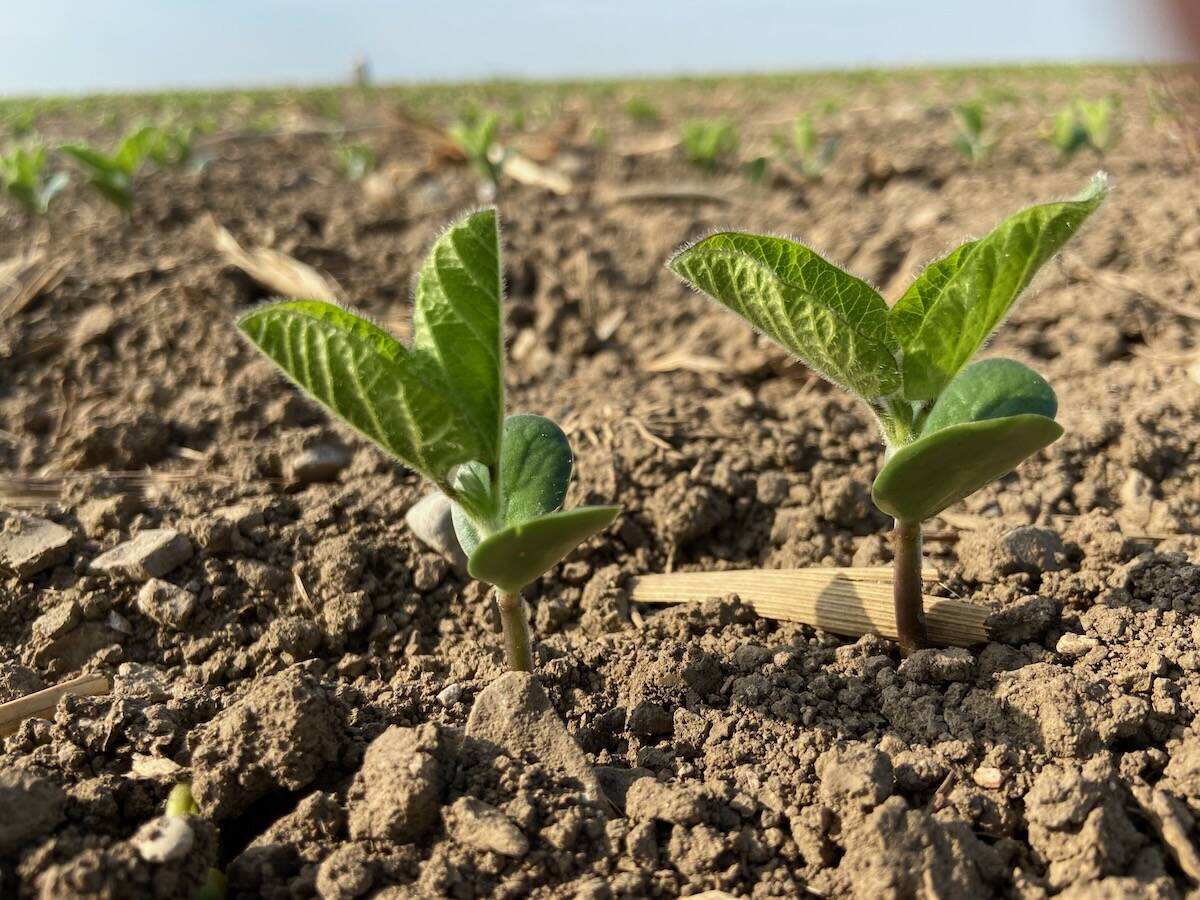
Bond said soybeans already benefit from lower fertilizer costs than crops like wheat or canola because they typically require little or no nitrogen. That has been one of the biggest reasons they looked more attractive this year. Higher yields, stronger genetics and better management have also helped improve the crop’s economics in Manitoba.
A better price would only add to that advantage.
Would that mean a major jump in acres? Possibly.
A stronger price signal would clearly improve the crop’s competitiveness, especially in a province where soybeans have already become an important part of the farm business mix. But Bond said there are other considerations, including freight, weather, rotation and market access. He also noted western Canadian soybeans are still relatively new in the broader market sense. Many Manitoba growers have only been producing them for 15 to 20 years, which means the crop still lacks some of the long track record and market familiarity seen in longer-established U.S. growing regions.
That relative newness feeds back into the same problem Nernberg identified: fewer years of data, fewer established expectations and fewer tools to show buyers what Canadian soybeans can deliver.
For Soy Canada, that is where the opportunity lies.
“The goal is to narrow the gap between the actual value for the animal and what customers perceive that value to be,” said Innes.