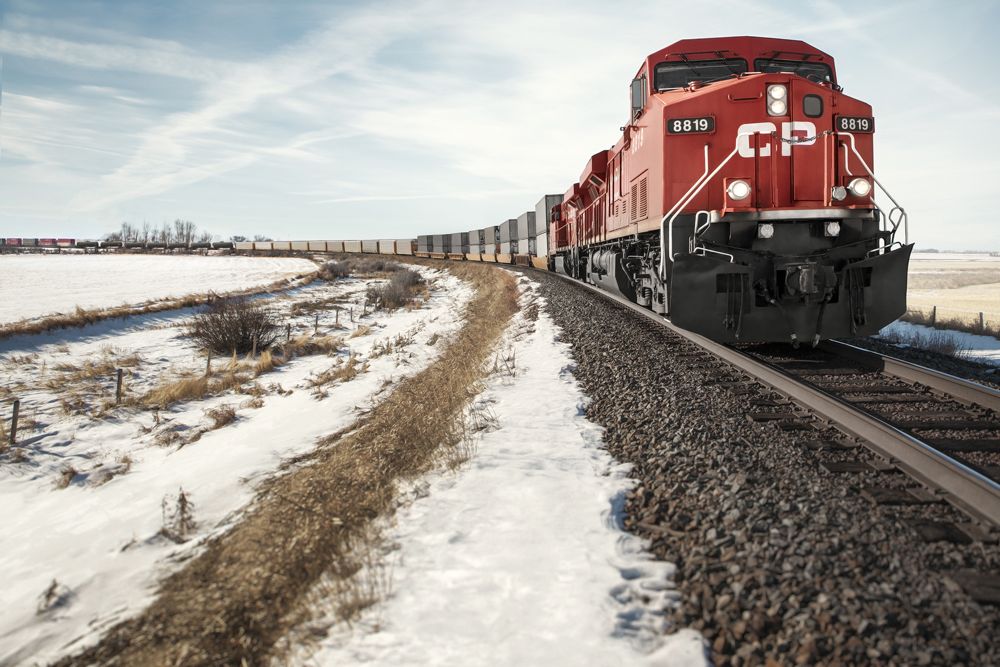
CP’s latest labour dispute is over — but the metaphorical wreckage is going to linger on the tracks for a while.
Canadian Pacific Railway and the Teamsters Canada Rail Conference agreed March 22 to settle a labour dispute that began March 20, when the railway locked its workers out over a dispute on pensions, pay and benefits.
They’ve agreed to settle through arbitration, averting more pain to firms battling supply-chain disruptions. But although the railway was only effectively out of operation for three days, the impact will linger for the grain sector.
Read Also

Manitoba Beef Producers take aim at elk surge, feed losses from wildlife
Resolutions at last month’s Manitoba Beef Producers meeting seek help to rein in elk and deer populations, expand fencing supports and improve compensation for wildlife damage.
Wade Sobkowich, executive director of the Western Grain Elevator Association, said the lockout came at the worst possible time, as his members were already grappling with dismal rail service.
“There’s a lot that was out of the railways’ hands this year, like flooding in B.C.,” he said. “But their inability to recover due to running too lean — that was their fault.”
Mark Hemmes, president of Quorum Corp., Canada’s national grain transportation monitor, agreed the strike was just the latest momentum-sapping event in a disappointing year for grain shipping.
“Effectively, what this does is it kills the whole grain week,” he told the Co-operator the morning of March 22. “This grain week is for all intents and purposes done, and it’s a year when we couldn’t afford it, we’ve already had too many disruptions.”
Though the strike only affected one railway, it still hit the entire system hard.
“Grain companies don’t source grain for a vessel at port from just one railway, or a single elevator,” Hemmes said. “It comes from multiple delivery points, so they were definitely affected throughout their operations.”
The effect will go beyond the three days the workers were effectively off the job, as well. In the two days leading up to the strike, operations were slowed dramatically so as to not strand loads, and now there will be a recovery period.
Hemmes said the situation will no doubt cause many to wonder what can be done to prevent future issues like this. Bill C-49, the federal Transportation Modernization Act, envisioned reciprocal penalties for nonperformance, but that system never really took off.
“It really raises the question — what’s the right way to incentivize railways to have some kind of surge capacity so recovery and resilience is built into the system?” he said.
Sobkowich said the numbers speak for themselves this year. Both railways have posted disappointing results that have backed up the grain handling and transportation systems, resulting in vessel demurrage charges and contract penalties for his members.
“Before the strike we were already facing car fulfilment that was half our demand, and that demand was very low,” Sobkowich said. “There is zero resiliency built in for any disruption whatsoever. They had no ability to handle anything that came at them this winter.”
Sobkowich said the labour disruption was a particularly bitter pill to swallow because they parties could have simply gone to binding arbitration in the first place and avoided the economic fallout for the rest of the economy. He said it speaks to the need for government to recognize railways as an essential service.
“Railways should be subjected to binding arbitration to resolve disputes in all cases — which is where this one ended up anyway — without the cost, delay and reputational damage that goes along with a work stoppage,” Sobkowich said. “The parties should have been required to just go to binding arbitration right off the bat.”
He added that it seems like there’s a railway labour dispute every couple of years, damaging the Canadian economy every time it happens. While this particular one was short-lived, there’s no guarantee every one will be.
“We shouldn’t be in this situation in first place,” he said. “We shouldn’t be dodging a bullet every two years.”
A binding arbitration typically involves an employer and a union presenting their demands before an independent arbitrator, whose decision on contract terms is final.
“While arbitration is not the preferred method, we were able to negotiate terms and conditions that were in the best interest of our members,” union spokesperson Dave Fulton said.
Normal operations will continue at CP during the arbitration period, federal Labour Minister Seamus O’Regan, who mediated the talks, said.
The agreement comes as global supply chain woes hamper the rail sector and industries that depend on it to transport everything from cars to coal.
“We are obviously relieved but even a strike of short duration has impacts and is costly,” Mining Association of Canada CEO Pierre Gratton said.
The country’s last major railway labour disruption was an eight-day Canadian National Railway strike in 2019.
— With files from Reuters.