[UPDATED: Nov. 15, 2023] The first year of the Prairie Watersheds Climate Program has given its administrators reason for optimism.
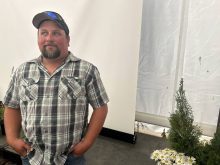
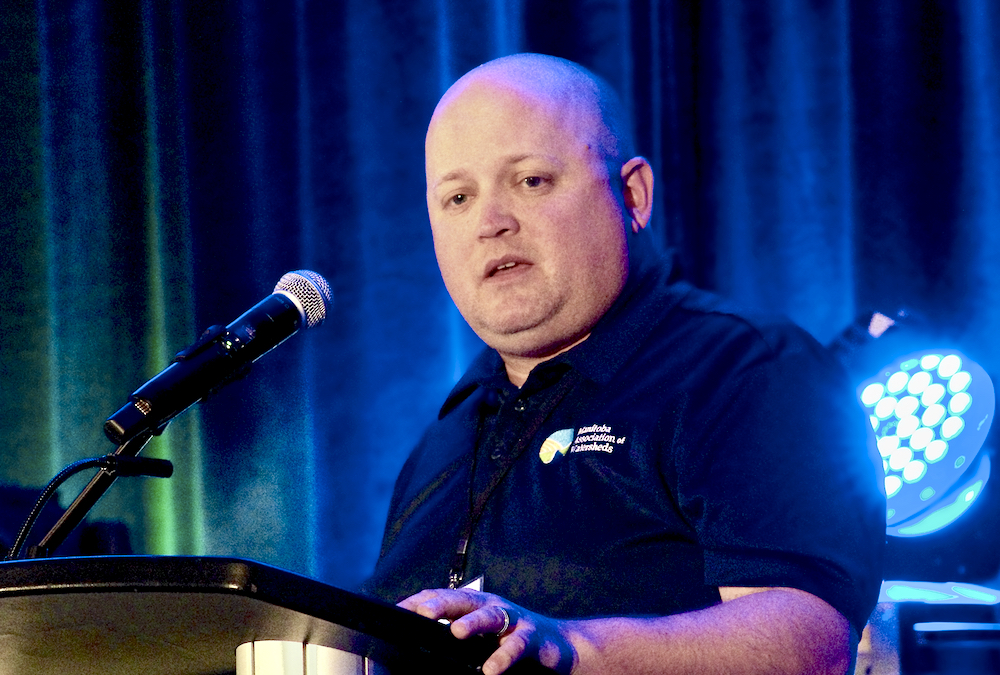
Dan Cox, program manager for the Manitoba Association of Watersheds, was on hand during the opening day of the Manitoba Forage and Grassland Association’s Regenerative Ag Conference in Brandon Nov. 13 to give an update on the program.
Why it matters: Producers face increasing pressure on all sides on issues like emissions reduction.
Read Also
Neutral conditions drive 2026 weather as La Niña subsides
U.S. government meteorologist expects there will be neutral ENSO conditions for the 2026 farm growing season.
The program handed out sustainability funding to 731 farms in Manitoba last year, to the value of $7.45 million, he said. Those projects covered 200,000 hectares of land. Between Manitoba and Saskatchewan collectively, funding went out to 1,411 farmers, to the value of $15.6 million.
“I’m here tonight to say thank you to the watershed districts, to the retailers, to the seed companies, to everyone who was part of that program—upselling it, helping to provide support to landowners when they applied, when they were looking for agronomic support in their decision making,” Cox said. “All of you were there to help landowners get access to this funding.”
MAW was tapped last year by the federal government to administer the PWCP in Manitoba and Saskatchewan, which launched in 2022 with $40 million in funding through the On-Farm Climate Action Fund. The goal was to accelerate awareness and adoption of beneficial management practices that would lower greenhouse gas emissions on farms.
Eligible projects would be based around three streams. Producers could use funds to facilitate or improve rotational grazing, cover cropping or sustainable nitrogen management.
A more detailed list of eligible projects included things like fencing or watering systems, seeding legumes for grazing or help to develop a rotational grazing plan. Producers could get money for seeding fall, spring or full season cover crops, or for planning and technical assessments related to cover cropping.
On the nitrogen management side—an issue of prime concern to producers last year, with heightened tension around a federal goal to reduce nitrogen fertilizer emissions by 30 per cent below 2020 levels by the end of the decade—producers could get funding for soil testing or mapping or agronomic support for nitrogen plans. Equipment upgrades to allow side-banding or enhance fertilizer injection and incorporation was eligible. So was switching to alternate fertilizer sources linked to emissions reduction or buying into things like polymer coated urea.
That last stream got particular traction with farmers, Cox said, although all streams got good uptake.
The watersheds association is expecting to go bigger next year. The organization already has waiting lists for applications in some districts, Cox noted. MAW expects that the program will divvy out around $9.8 million to Manitoba producers in 2023-24. Between Manitoba and Saskatchewan, the program is projected to provide $19.7 million in funding in 2023-24.
“The program keeps getting larger due to the success of the first year and we are really looking forward to Year 2 and hopefully beyond,” Cox said.
The program will run until the end of March 2024.
For more coverage of the MFGA’s 2023 Regenerative Ag Conference, look for the next print edition of the Manitoba Co-operator.
*Update: A previous version of this article incorrectly named Dan Cox as Don Cox and cited funding numbers specific to Manitoba as applying to both Manitoba and Saskatchewan.