
A group of Manitoba researchers have isolated two naturally occurring micro-organisms they say will help farmers better utilize phosphorus and fight plant diseases.
The work of the scientists, from the University of Manitoba and KGS Group, has centred around two novel bacterium dubbed KGS-2 and KGS-3.
Stan Lozecznik, senior environmental engineer with KGS Group, said they found the two by screening native soil organisms using modern genetic screening technology, then testing them in greenhouse and field trials.
Read Also
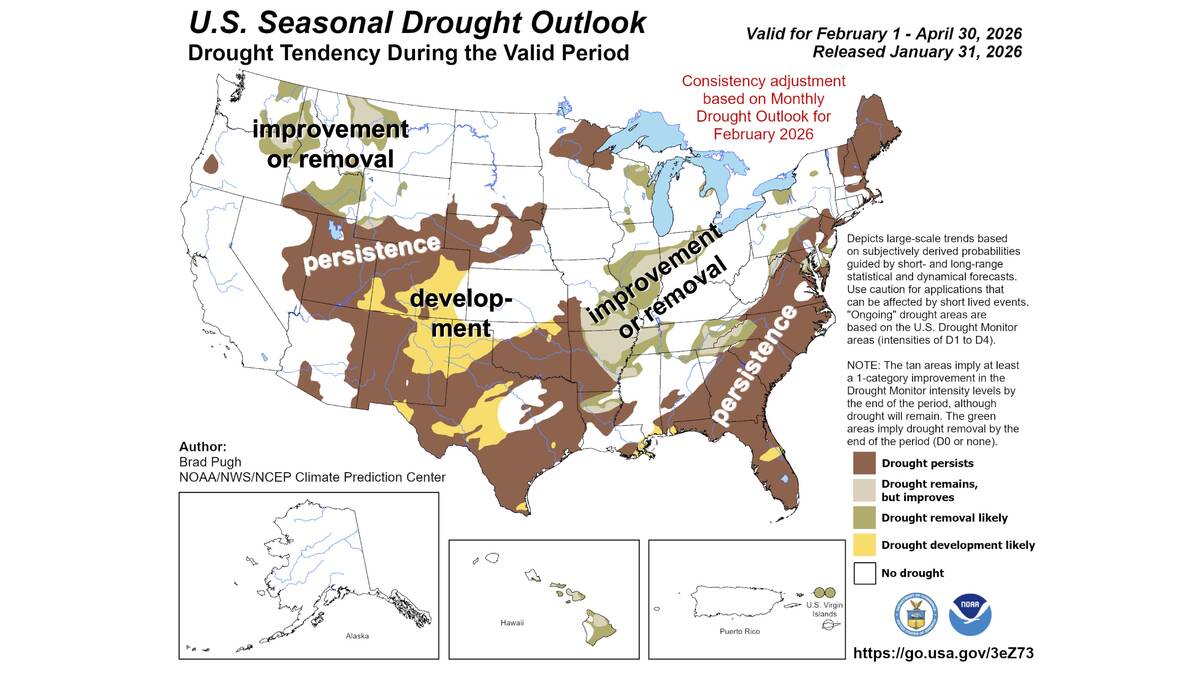
Neutral conditions drive 2026 weather as La Niña subsides
U.S. government meteorologist expects there will be neutral ENSO conditions for the 2026 farm growing season.
“We were looking for organisms that could enhance phosphorus use because that’s a very important nutrient here in Manitoba, with our hog industry,” he said. “It’s also a nutrient that’s of limited supply globally and is important to crop yield. We also wanted to identify ways to address the excess phosphorus loading that is causing environmental concerns in our rivers and lakes.”
Lozecznik said both biostimulants proved to be “very effective” in their ability to promote phosphorus use by crops. In field trials KGS-2 delivered up to 24 per cent higher wheat yield and 18 per cent higher yield in a small-plot tomato trial.
They act as phosphate ‘solubilizers,’ converting the insoluble phosphorus into a readily plant-available form, which allows the plants to take up more of it, and enhance growth and yield.
“We also found that KGS-3 is a powerful and broad-spectrum biofungicide,” Lozecznik said.

In their trials they observed a substantial reduction in pressure from three key crop diseases. They saw up to a 76 per cent reduction of blackleg in canola, up to 46 per cent reduction of fusarium head blight in wheat and a 75 per cent reduction of black scurf in potatoes.
Home field advantage
Both organisms occur naturally in Manitoba soils, which means they’ll be well adapted to the harsh conditions of Western Canada.
Rob Gulden, a plant science professor at the U of M and project member, told the online UM Today publication that’s a distinct advantage.
“For Prairie producers, it’s a great benefit that these products have been developed and tested in Manitoba and Saskatchewan, and therefore are ideally suited to our unique geography and climate,” he said.
What are bioinoculants?
Bioinoculants are amendments that use beneficial microbes to promote plant health.
They come in two main types, rhizospheric or endophytic.
A rhizospheric micro-organism exists in the soil, in the root zones of the plant, and interacts with the plant.
An endophytic micro-organism exists within the plant itself. These are most commonly fungus.
Most of these microbes form mutually beneficial symbiotic relationships with plants, where both benefit.
The most common use is to enhance plant nutrition. The well-known inoculants that promote nitrogen fixation in pulse crops is one example of this.
Other bioinoculants can promote plant growth by stimulating plant hormone production.
Some of the amendments can stimulate overall plant health through what’s known as ‘systemic acquired resistance’ or SAR.
While bioinoculants are seen as mostly a good-news story, others worry that the additives can change the soil microbial community, which could have unintended future consequences.
It also means they’ll likely already be an established member of whatever soil biome the inoculant is introduced to, which significantly reduces any concerns about the potential of introducing what could become a bioinvasive species.
“What we’re doing is augmenting the level of something that’s already there,” Lozecznik said.
Environmental fit
Biostimulants are a growing market, with an estimated value of US$10.6 billion globally in 2021, and forecast to rise to US$18.5 billion by 2026, according to a report from market research firm Research and Markets.

One reason they’re garnering a lot of attention is the desire to reduce the environmental impact of agriculture while maintaining yield.
While traditional crop inputs are the product of heavy mining (phosphorus) or energy-intensive chemistry (nitrogen), that requires specialized equipment and air- and moisture-free environments to synthesize the inputs.
These biological products are, on the other hand, essentially, brewed like beer in a vat.
That makes for a safe, environmentally friendly operation by comparison, John Sorensen, of the U of M’s department of chemistry, told UM Today.
“The underlying technology is identical to that used for other large-scale fermentations such as beer making,” Sorensen said.
Richard Sparling, a chemistry professor, and researcher told UM Today that the production method would reduce production risks, as its safety track record is well established.
“The fact that the bacterial growth can be accomplished in water with common safe ingredients is a major improvement in safety,” Sparling said, noting it “… virtually eliminates the environmental risks that can be associated with the production of chemical plant stimulants and fungicides.”
The researchers put the microbes through a scaled-up process last spring, partnering with BioScision Pharma to produce the large quantities of KGS-3 needed for their field trials.
BioScision benefited from an opportunity to test run their newly acquired biofermentation facility.
Lozecznik says the two organisms have been patented in Canada and the U.S., and the next step is to find a partner interested in producing commercial quantities of the products.
“We’d love to see these products commercialized and widely available to Prairie farmers,” Lozecznik said.