The Canadian government must address the container crunch hurting the nation’s pulse growers and every part of the Canadian economy, says Pulse Canada.
“It’s no secret that life is getting more expensive by the day here in Canada, and the lack of containers is playing a big role in driving up the cost of living while preventing Canadian businesses from capitalizing on the growing global demand for our exports,” Jeff English, Pulse Canada’s vice-president of marketing and communications wrote in an email Oct. 26. “While it’s true this is a global problem, there are clear actions the federal government can and should take.”
To that end Pulse Canada and its allies in — and beyond — agriculture have launched a campaign to pressure government action, including encouraging Canadians to write the prime minister.
Read Also

Manitoba’s 2026 budget boosts loan limits, insurance and farm support programs
Manitoba’s 2026 budget expands farm support programs with higher loan limits, new insurance incentives and $143.7M in agricultural funding.
They’ve even launched a website, containercrunch.ca.
Why it matters: COVID-19 broke global supply chains. While Canadian pulse exporters struggle to find containers to export, Canada’s economy as a whole suffers.
The average price to ship a standard container has risen almost eightfold from $1,461 at the beginning of 2020 to $11,109 in September, their website states.
The higher cost is one thing, but just getting a container is another, English said in an interview Oct. 26.
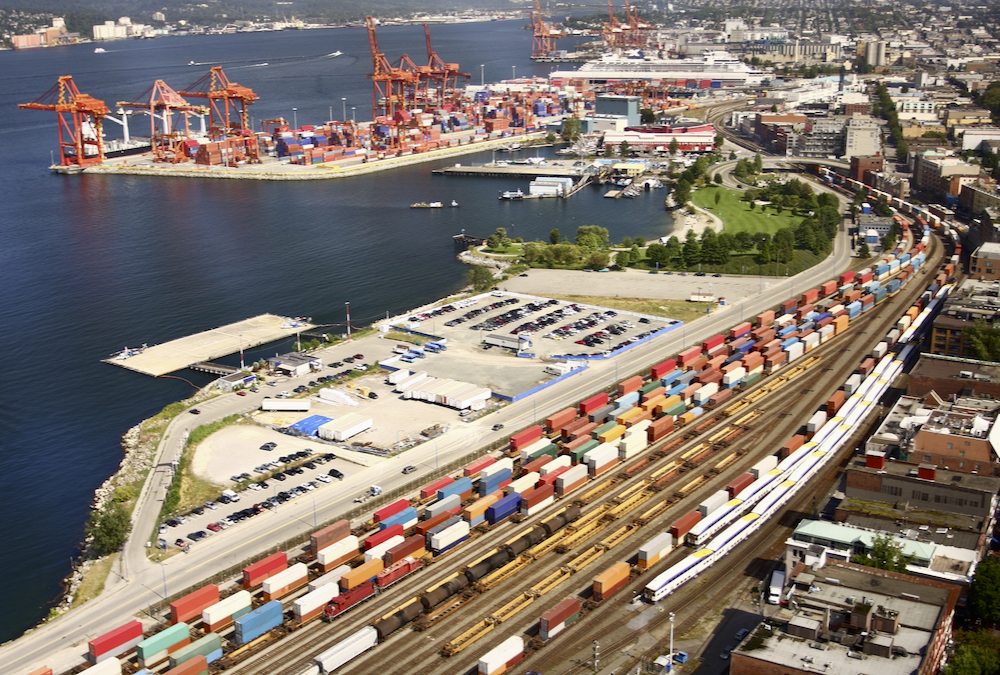
“The reason so many shipping containers are going back to Asia filled with nothing but air has to do with a surge in consumer demand for Asian goods,” the website says. “Rather than waiting for the containers to be loaded with Canadian goods, shipping companies are paying a premium for containers to be sent to Asia empty, so that they can be filled faster for the trip back to Canada.”
While COVID-19 threw the world’s supply chains out of sync, Pulse Canada asserts anti-competitive actions are also at play (see ‘Read more’ below).
Pulse Canada is asking Ottawa for two things:
- Call an immediate investigation under Section 49 of the Canada Transportation Act to investigate and determine the factors affecting access to containers.
- Create a joint industry-government task force to identify immediate actions to lessen the disruption.
“We need to see an investigation that uncovers the root causes of the issue,” English wrote. “Carriers are governed in Canada by federal law, and should an investigation point toward any part of the supply chain not acting in the national interest (i.e. through deprioritization of exports etc.) we would see that as a significant issue which would require federal attention. In addition, as a country that relies so heavily on trade, Canada should also play a role in helping to find global solutions to the issue. We believe it is hard for us to get a seat at this table without showing domestic action.”
The federal government has the power to bring the whole supply chain together to create a task force representing all participants ensuring fixes work for the whole system.
“We need industry decision makers who are thinking big picture, and it is requiring government intervening power to bring everyone to the table,” he wrote.
The problems disrupting supply chains are global, but other countries such as the United States are moving to address them and Canada, which relies so heavily on trade, must too, English said.
“So our ask of government is to make sure Canada is not just pulling its weight, but leading by example with respect to levers that are at the government’s disposal to not only get to the bottom and identify the root causes of this issue, but at the same time ensure that industry is talking all around the same table and that the decisions of one group at any point in the supply chain to alleviate pressure on their part don’t kind of just send that up or down the chain,” he said. “I’ve been equating it to fixing a grain backlog. You need to start with putting every player around the table. The government has at its disposal convening power… ”
About 30 per cent of Canada’s pulse crops are exported in containers, English said. It depends a bit on the crop, where it was produced and the market it’s going to.

Most, but not all peas, are shipped bulk in ship holds, while lentils are mainly shipped in containers, he said.
“The premium markets we are able to send to are a premium for a reason — because when something is sealed on the Prairies and shipped in a container they know exactly what they are getting,” English said. “So the solution is not turning more and more to bulk vessels because we feel that will lose some of the value that farmers want to capture in terms of being able to customize their delivery and go after some of those more premium markets that are looking for certain specs.
“Shippers are looking at their bottom lines and at what point does it become no longer economically viable to make a living off doing this in terms of shipping (in containers)?”
Canada exports 80 per cent of its pulse crops worth around $4 billion annually, making it the world’s largest pulse exporter.
Around six million tonnes of pulses and other high-value Canadian crops, including milling wheat and malting barley, are shipped abroad in containers annually.
Many western Canadian farmers saw crop yields cut this year due to drought.
Some crop prices are historically high because of reduced production, but can’t take full advantage because of lower yields.
Meanwhile, input costs such as fertilizer and seed are jumping.
“Certainly from a pulse perspective not having access to containers is a big problem in terms of even being able to deliver,” English said.
“We have a pulse diversification strategy talking new uses and new markets. To take away options right now is kind of counter to that approach. Not only are we knocking down new doors and getting into new markets, but we need what we have to keep functioning and right now we’re not seeing that.”