La Niña is rapidly fading and should be largely gone by spring, while El Niño is building but won’t be a force until autumn, says a weather forecaster.
That means there will be neutral ENSO conditions for the upcoming growing season, said Brad Rippey, a U.S. Department of Agriculture meteorologist with the Office of the Chief Economist.
WHY IT MATTERS: Weather conditions will dictate whether the U.S. has another bumper crop this year.
Much of the world’s oceans are warmer than usual, except for the pocket in the equatorial Pacific that is cooler than normal due to the lingering but fading La Niña.
“You’re going to feel that influence on land from those above average ocean temperatures,” Rippey told delegates attending the USDA’s 102nd annual Agricultural Outlook Forum.
Read Also
Manitoba Beef Producers take aim at elk surge, feed losses from wildlife
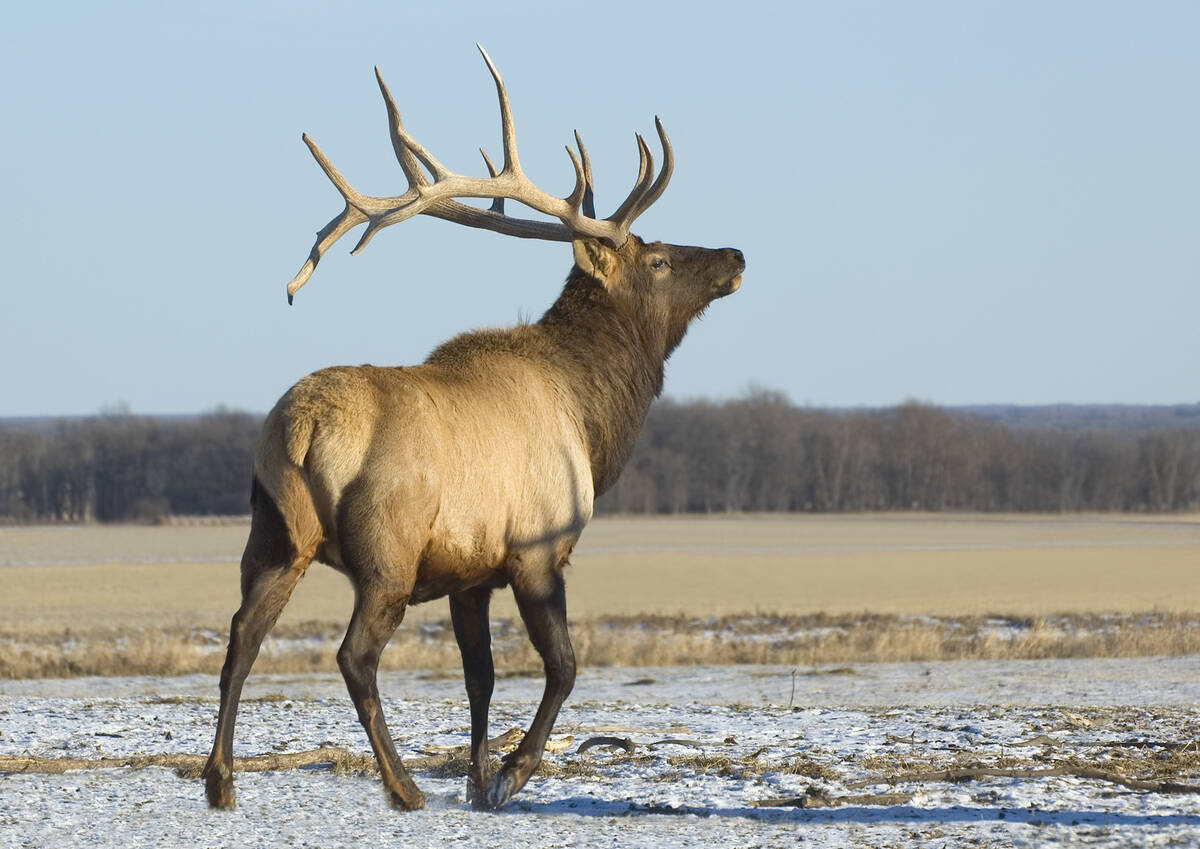
Resolutions at last month’s Manitoba Beef Producers meeting seek help to rein in elk and deer populations, expand fencing supports and improve compensation for wildlife damage.
That doesn’t mean there will be devastating heatwaves everywhere, but it does mean temperatures will likely be above normal around the globe heading into the 2026 growing season.
When there are ENSO neutral conditions “other weird things happen,” said Rippey.
A lot of times it results in a meandering jet stream or what meteorologists call a blocking pattern.
There has already been a lot of blocking at high latitudes over the winter months. That resulted in a sprawling winter storm that delivered more than a foot of snow to parts of the lower Midwest and northeast.
Unfortunately, blocking patterns are hard to predict more than a few days in advance.
“It makes it very difficult to look ahead at some of the spring and summer weather patterns because blocking can just kind of randomly come and go,” said Rippey.
Spring weather forecast 2026
His spring forecast for the U.S. calls for warmth across the south and possible wetness in the eastern corn belt.
He expects some episodic cold outbreaks, although the duration and intensity levels will decrease as nights become shorter and the sun angle increases. Those cold shots could cause some winter wheat damage in late spring.
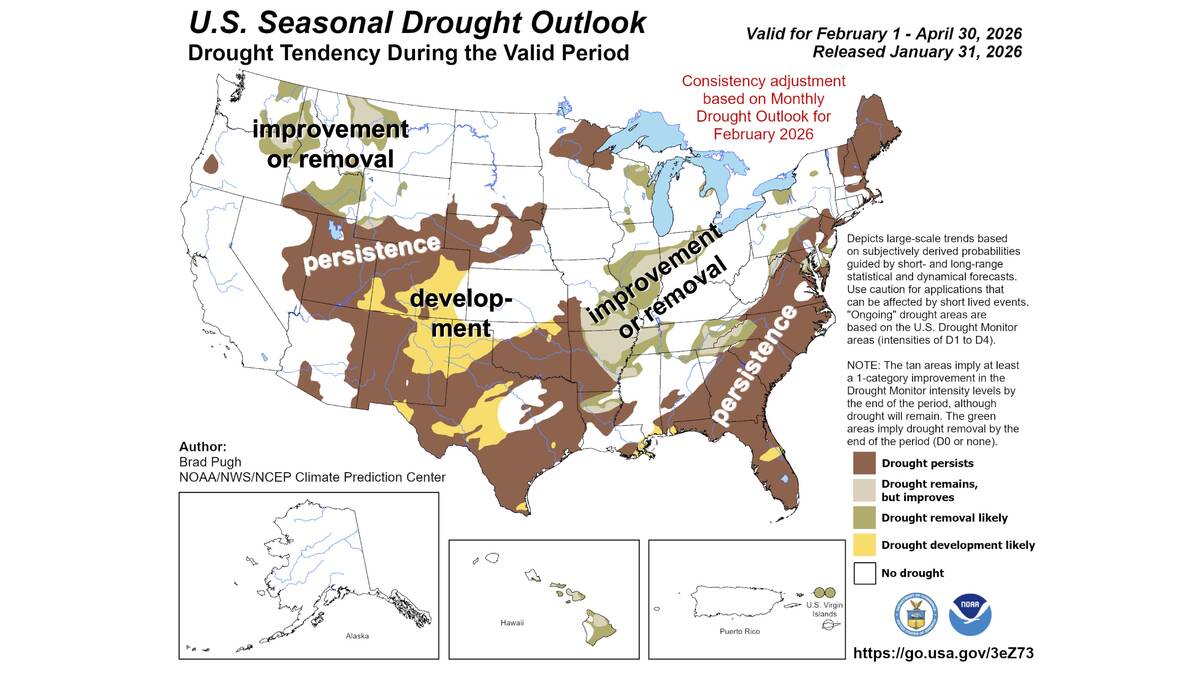
The southwest could trend dry through the spring, while drought may expand in the Plains region.
Approximately 45 per cent of the U.S. winter wheat production area was experiencing some level of drought as of Feb. 10.
It was the ninth driest August to January period on record in the U.S. and the driest since 1999-2000.
Some key winter wheat growing states managed to get moisture at the right time.
Wheat growing conditions
Things are looking good in Kansas for instance, where 61 per cent of the crop was rated good to excellent as of the end of January.
However, that is not the case next door in Nebraska, where only 24 per cent fell into those two categories, down 30 percentage points from where it was rated at the end of November.
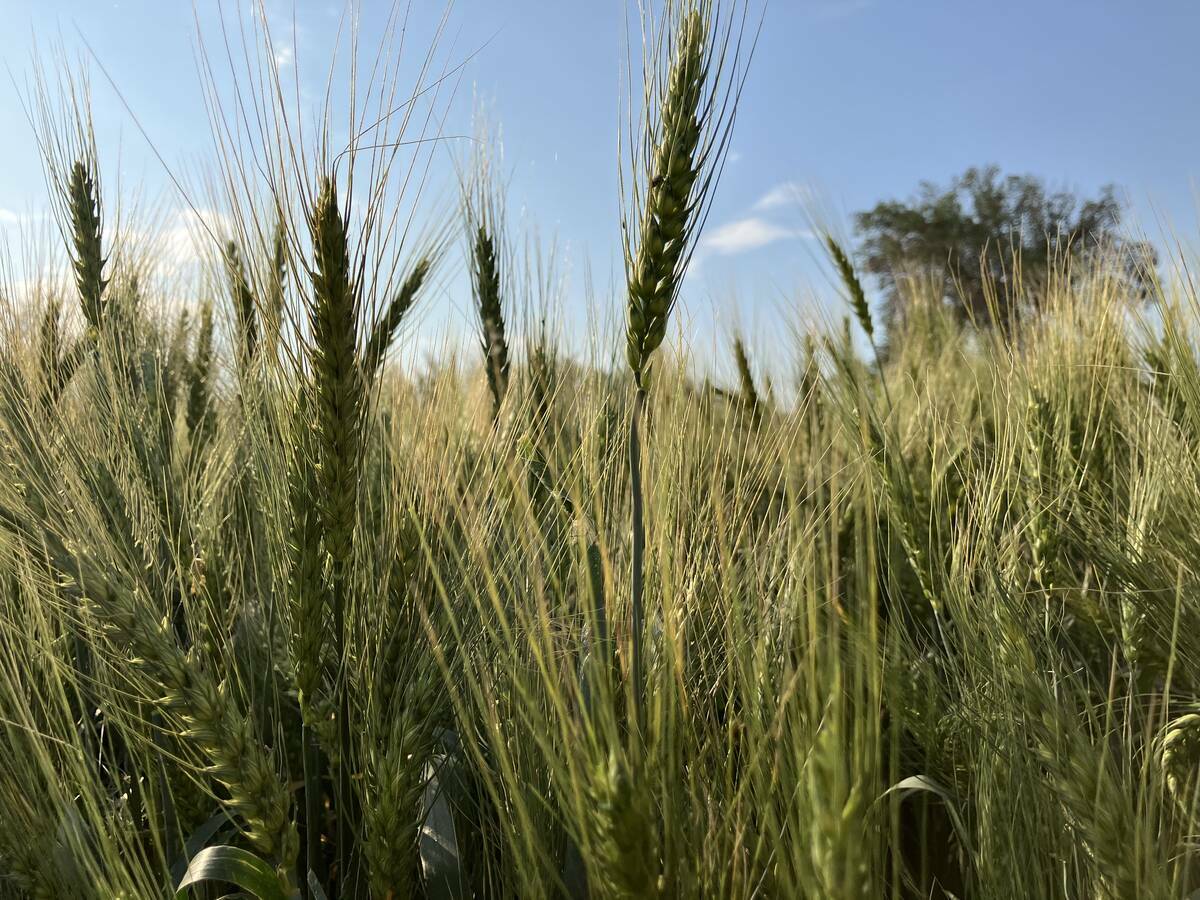
Parts of Oklahoma and Texas also have drought issues.
“The bottom line is we have kind of a mixed bag for the winter wheat production areas,” said Rippey, who has been the author of the U.S. Drought Monitor since its inception in 1999.
There are no excessively wet areas, so spring flooding should not be a problem this year.
“Generally speaking, planting is going to proceed fairly rapidly unless we get some crazy spring storm that floods somewhere,” he said.
What the weather models say
La Niña will be completely gone by summer, which means other factors, such as atmospheric blocking, will control the weather.
A consensus of climate models suggests there could be a dip in the jet stream across the Plains and the Midwest, keeping extreme heat at bay.
However, there are also indications that a ridge of high pressure could form over the western U.S., leading to enhanced odds of a hot and dry summer in the northwest.
El Niño will likely return in late 2026. That will be too late to have any effect on North America’s crops.
But it could have a “profound impact” in the western Pacific Rim, causing drought in parts of Australia, southeast Asia and southern Africa.
El Niño tends to have the opposite impact in South America, resulting in wet conditions in southern Brazil and Argentina.