
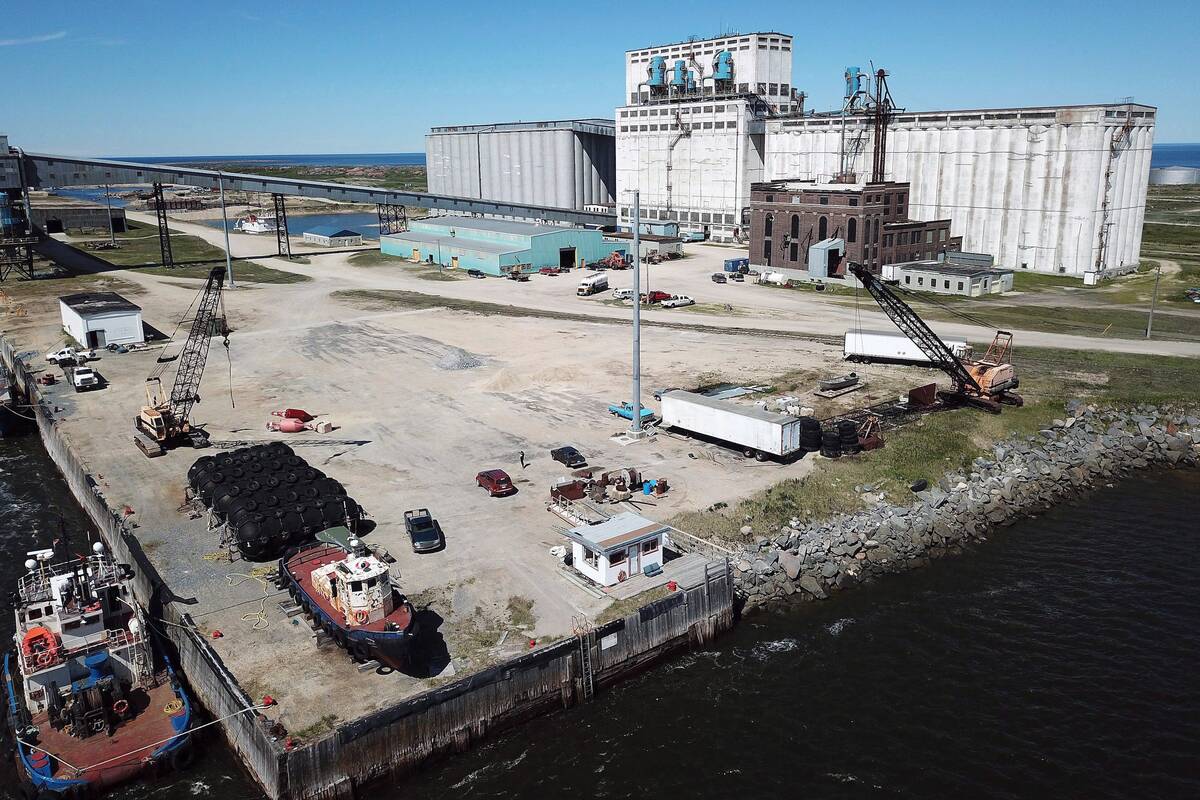
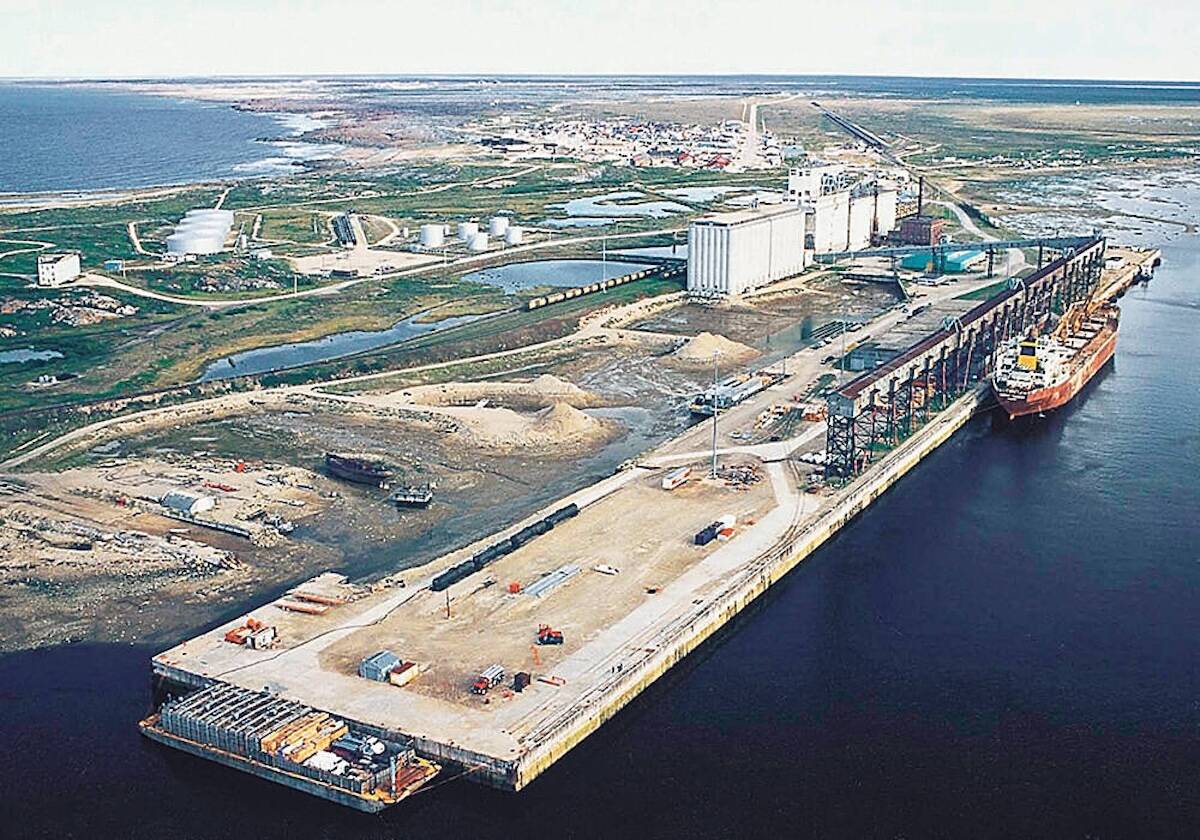
Manitoba has some big hopes for the Port of Churchill, but ambitious plans to expand shipping through the Arctic sea port will hinge on upgrading rail standards and resolving seasonal constraints on sea travel.
That’s what speakers said during the Northern Transport Conference in Winnipeg from Feb. 19-20.
Read Also

Forecasting spring 2026 weather on the Prairies
What weather can farmers expect across Manitoba, Alberta and Saskatchewan as they head into seeding? Plus: a lesson on what makes the seasons turn
WHY IT MATTERS: Giving new life to the Port of Churchill would offer a closer export route for Prairie agriculture commodities.
Churchill, and the concept of an Arctic trade corridor, has enjoyed a resurgence of interest and investment, particularly as tensions with the United States and domestic calls for trade diversification have picked up steam.
Headlines mentioning the port in the last few years have featured a long line of funding commitments, memorandums of understanding, along with industry and community partnership announcements to expand the scope of the port. That’s contrasted with the previous decade, which featured years of stalled upgrades, ownership change and service disruptions.

The push now is for what has been dubbed the “Port of Churchill Plus,” a multi-pronged project that ranges from upgrading the rail line, moving energy products to tidewater and developing an all-weather road to Churchill and northern communities, and opening up the Arctic trade hub to year-round shipping — bolstered both by conversations around ice breakers and research that has noted longer ice-free windows on Hudson Bay.
Chris Avery, president and CEO of Arctic Gateway Group, which owns the port and the rail line servicing it, outlined that plan during the recent Winnipeg event.
Wheat and the Port of Churchill
Churchill once handled significant grain volumes during the era of the Canadian Wheat Board’s single desk marketing. Back then, wheat accounted for roughly 90 per cent of port traffic and annual shipments peaked at more than 600,000 tonnes.
Those volumes declined sharply after the end of the single desk and the subsequent rail disruptions.
In 2017, flooding caused critical damage to the rail line, sparking a halt in service and months of drama with then-owner OmniTrax, an American company. The line was sold to Arctic Gateway Group the following year.
Recent messaging around the port has focused on diversification beyond grain.
Rail freight upgrades needed
While the railway is now in good condition, following extensive repairs and lengthy hiatus in service starting in 2021, Avery noted it cannot carry the same weights as lines serving Vancouver or Montreal. Those corridors can handle 286,000 pounds gross weight per car, while the line to Churchill can carry 268,000 pounds.
“We do need to upgrade the rail line to carry heavier cars,” said Avery.
The difference stems from investment decisions made decades ago. In the late 1990s and early 2000s, Candian National and Canadian Pacific (now Canadian Pacific Kansas City) upgraded their main lines to handle heavier cars, while the then-owners of the Hudson Bay Railway did not.

“We do need to upgrade the rail line to carry heavier cars.”
Chris Avery, Arctic Gateway Group
“That roughly seven per cent difference is critical when optimizing supply chains and distribution,” Avery said. “Our customers tell us they need the same level of consistency so they don’t have to plan differently for Churchill than they do for Vancouver, Prince Rupert or Thunder Bay.”
He acknowledged that any expansion will depend on compatibility and collaboration with Canada’s major railways.
“We need to partner with CN and CPKC,” he said. “The duopoly railway system in Canada owns the national infrastructure and must work with us to develop this port. That partnership is required.”
Ice breakers necessary
On the marine side, the Port of Churchill currently operates about four months of the year. However, Arctic Gateway Group has commissioned University of Manitoba researchers to assess how climate change is affecting the shipping season in Hudson Bay.
“Based on the data gathered and observed climate trends, they tell us the sea lanes can already be open for up to six months of the year without icebreakers,” Avery said.
Arctic Gateway Group is also partnering with Canadian shipping company Fednav for a study to determine logistics of turning the port into a year-round operation. That study will clarify operational requirements and allow the company to move forward with impact assessments and Indigenous consultation.

Another speaker, James Bond, director of the Icebreaker Center of Excellence at Davie Shipbuilding, also talked year-round shipping. While Hudson Bay has lost significant ice thickness over the past two decades and fall increasingly sees open-water conditions, Bond said late winter and spring remain more challenging.
“In other words, April and May could be problematic without assistance,” Bond said.
He said vessels built to what is known as Polar Class 6 — similar to ships operating in the Baltic Sea in Northern Europe — could handle Hudson Bay conditions for much of the year under recent averages. However, shoulder months would likely require icebreaker escort.
Upgrading to a stronger Polar Class 5 vessel would provide more flexibility, but that added strength means higher construction and operating costs. Using icebreaker escort during the shoulder months can extend the operating season, but that too adds expense.
Avery said determining whether year-round shipping is, in fact, feasible will require detailed operational planning before any regulatory steps are taken.
“You can’t take shortcuts. You have to do the proper work,” he said. “But this is the starting point. Before assessing impacts, you need to understand what the operational plan looks like.”