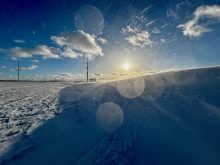
The average person spends eight minutes a day talking about the weather. I just looked it up.
I had done a handful of freelance articles for the Co-operator before coming on board as a staff writer in May. I’m a journalist by trade, and don’t have a ton of agriculture in my background. I knew I had a lot to learn about the nuts and bolts of a farming operation; about soil science and botany, weeds and diseases, and I was excited to start my new journey.
One subject I thought I had sufficient knowledge in was weather. Eight minutes per day for a lifetime adds up. So, I figured I could hold my own.
Read Also
VIDEO: What climate change data gets wrong about the Prairies
Precipitation, not temperature, may be a better gauge of climate change impact on the Prairies, says director of the Prairie Adaptation Research Collaborative.
Of course, I knew weather played a role in agriculture. Whenever you’re talking about growing crops or raising livestock outdoors, the topic of weather is bound to come up. Even the most agri-ignorant city-slicker has shared the notion that rain, in spite of its negative effect on parades and the like, can at least be ‘good for the farmers.’
But it quickly became clear to me that when it comes to talking about the weather, eight minutes a day is a gross underestimate for people who work in agriculture.
[RELATED] An early 2023 weather outlook
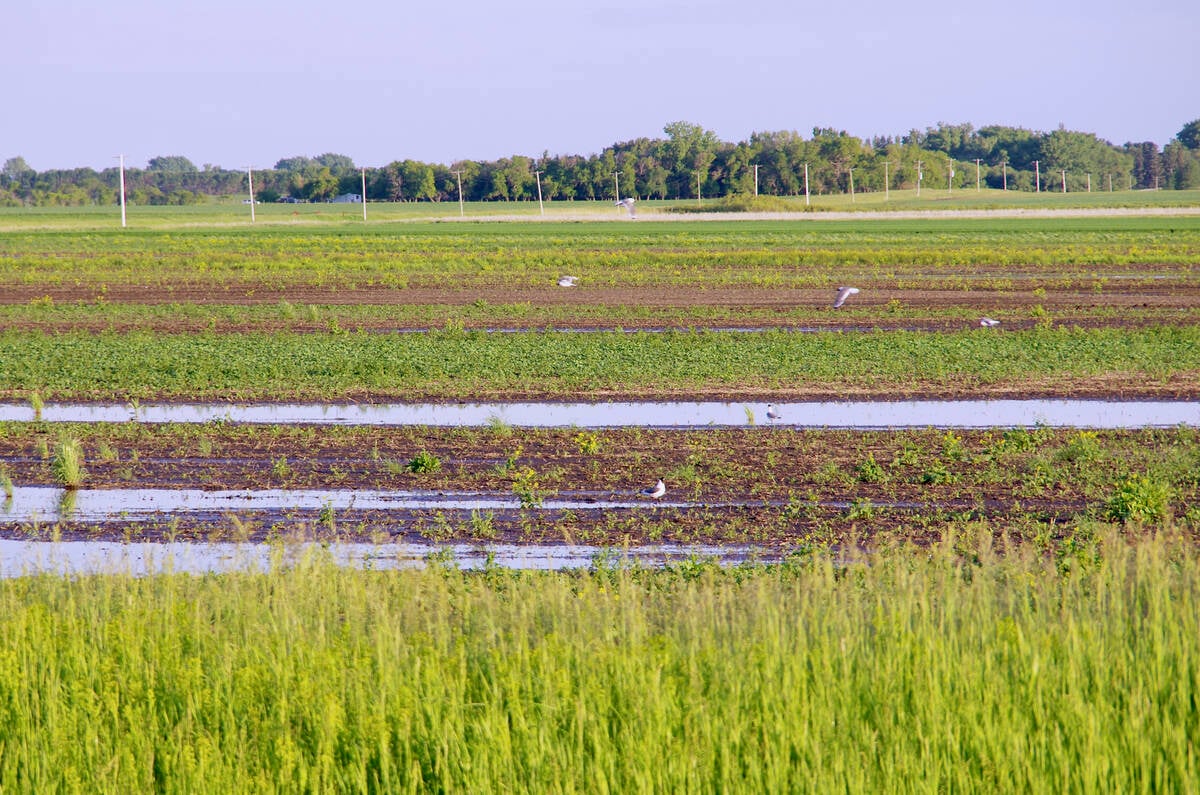
It was no surprise that the three consecutive early-spring Colorado lows that flooded fields and delayed seeding were at the top of everyone’s mind when I first came on the job in early May. I certainly understood that too much rain was bad for getting the crops in, and that it would have financial repercussions for farmers. I expected this.
But since that time, almost every piece I’ve written has at least touched on weather, if it wasn’t the main focus of the article – and sometimes in unexpected ways.
Take one of the first articles I was assigned – a look at the supply-chain crisis that had affected grain shipments for the 2021-22 crop year. Somehow, this story about logistics and supply chain management became one about the weather.
Due to the 2021 drought (weather), rail companies reduced their estimates for rail cars and staff required to haul the harvest. And when temperatures drop below -25 C (weather), which they did a lot in the winter of 2021–22, train speeds and lengths have to be reduced.
Adding to that a relentless pineapple express trade wind dumped a torrent of rain (weather) in B.C.’s Fraser Valley, washing out rail lines and disconnecting the Prairies from their main export outlet at the Port of Vancouver.
Then throw in a non-weather-related COVID-19 outbreak that saw many rail employees stay home from work, and these events combined to create a logistics nightmare for grain shippers that would persist long after the weather events that precipitated it (pun intended) ended.
Another story that unexpectedly shifted toward talking about the weather was a feature on increasing herbicide resistance in weeds.
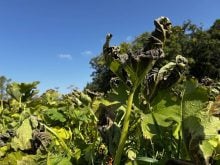
One weed of particular concern, waterhemp, became more prevalent this year as a result of the wet spring.
Of course, shifting weather patterns are often the reason for invasive species of plants entering a new ecosystem. So, it’s not entirely unexpected. But still, for an article where I expected to be writing about chemical companies and plant genetics, weather played a more significant role than I thought it would.
It goes without saying that climate is at least weather-adjacent. I’ve already touched on it when talking about weather patterns. And although I described it as such, a drought isn’t actually a weather event. It’s a climatic event. You don’t look out the window and say, ‘Looks like we’re in for a drought today.’
It’s often said that the effects of climate change are felt first by farmers. But even since I started at the , the discussion surrounding climate change has shifted from talking about droughts, growing seasons and other things that directly affect production to the role farmers can play in mitigating climate change, specifically when it comes to nitrous oxide emissions.
It’s been one of the most persistent stories of this year. And even within that weather-adjacent discussion, the chemical process that releases nitrous oxide (volatilization) requires weather (rain) to occur.
So, as I reflect on the year that’s been, whether it’s writing a story directly or indirectly about weather or just wondering whether to wear rubber boots on my next site tour, I guarantee I’m now thinking about weather for more than eight minutes a day. And the next person who approaches me with ‘How about that weather?’ can expect an earful.