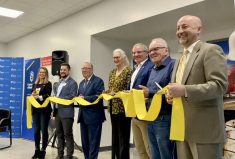

For the first time ever, Manitobans can view the nuts and bolts of a working egg farm.
The Manitoba Egg Farmers have officially unveiled their new Learning and Research Centre at the University of Manitoba’s Glenlea Research Station. The farm group hosted a grand opening for the centre in late April. It is Canada’s first public egg research, education and training facility.
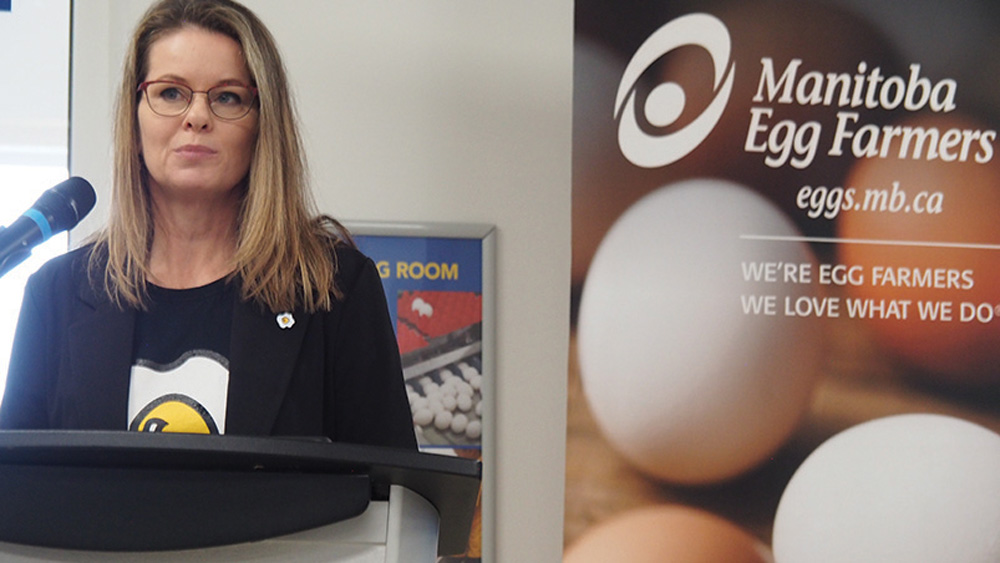
“I have been involved in this project for several years, and I am just so excited to see today happen,” said egg farmers chair Catherine Kroeker-Klassen.
Read Also

Trade uncertainty, tariffs weigh on Canadian beef sector as market access shifts
Manitoba’s beef cattle producers heard more about the growing uncertainty they face as U.S. tariffs, and shifting trade opportunities, reshape their market.
Why it matters: Biosecurity usually keeps visitors away from egg production. The state-of-the-art, public-facing facility at Glenlea hopes to offer outreach and information.
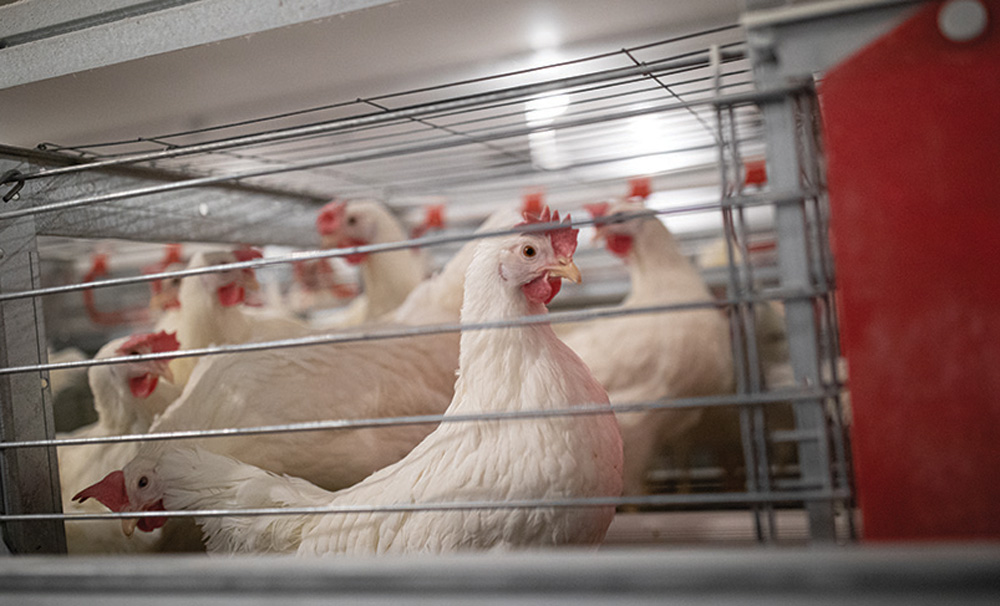
The facility aims to advance research on egg production and showcase modern farm practices for the public. It features two bio-secure barns: one free-run aviary that gives hens access the entire barn area, and one with enriched housing that combines the food safety benefits of conventional production with the welfare benefits of open housing.
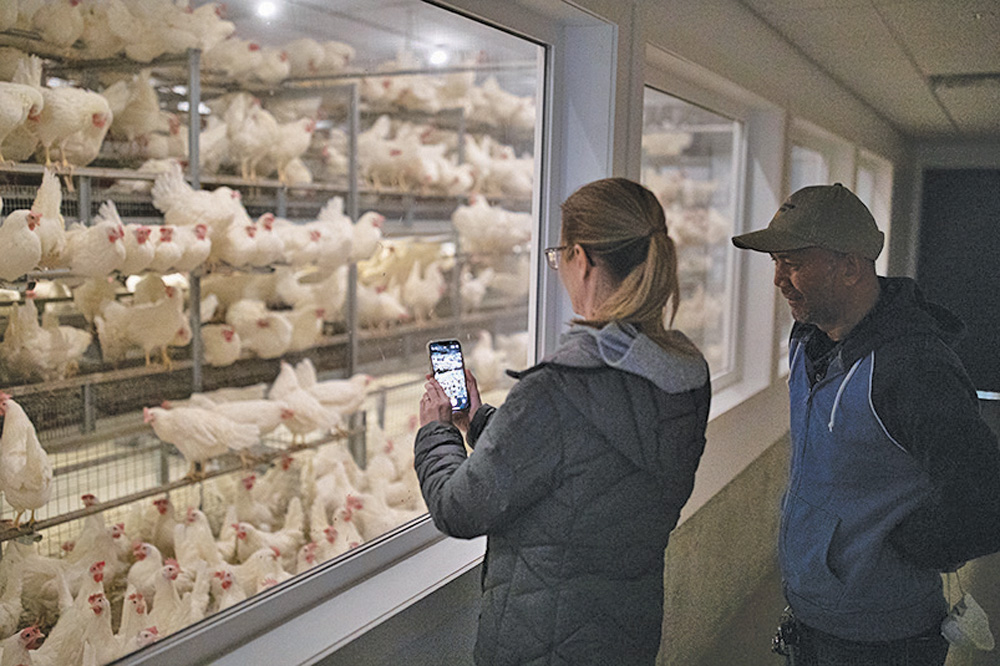
There are windows into each barn for the public to view as well as research space in the private section of the building for students and researchers from the University of Manitoba to do their work.
“Public access to this facility is really important,” Kroeker-Klassen said. “We want people to know where their food is coming from. They can see it; they can trust us, and they can be happy about the choices they’re making at the grocery store.”
But until this facility was built, the public was unable to access egg-laying operations. “Biosecurity is imperative for food safety and to keep hens healthy on egg farms, which means that the public has, until now, really not had access to working egg farms,” Kroeker-Klassen said.
“This building has been designed with visitors in mind. The large windows allow you to view the hens exhibiting their natural behaviours like pecking and scratching, perching and using the nest boxes to lay their eggs.”
The public cannot enter sensitive areas to avoid the spread of diseases like highly pathogenic avian influenza.
“Windows protect the hens and maintain biosecurity and staff and researchers are trained on how to prevent diseases that could harm the hens by changing their footwear, washing vehicles, wearing protective equipment and washing their hands — the same things farmers do every day on their own farms,” Kroeker-Klassen said.
The facility includes three controlled-environment research rooms, egg quality and post-mortem laboratories, meeting spaces, staff and student areas and a program delivery area.
It’s located next to the Bruce D. Campbell Farm and Food Discovery Centre and the Dairy Farmers of Manitoba Discovery and Learning Complex, about 25 minutes south of Winnipeg. It is the first complete poultry build at a Canadian university in 30 years and is the only research facility with the capacity for in-depth multi-replicate studies, as well as comparison studies between the two housing systems.
Up and running
Mario Pinto, the university’s vice-president (research and international), acknowledged that much of the project’s work was done before he took up his current role in October 2022.
“Many of you have done the heavy lifting along the way,” he said. “Partners, including the Manitoba Egg Farmers, the federal and provincial governments and the University of Manitoba, have been collaborating on this project for a number of years.
“It’s very exciting to see the new facility open to the public today. It’s not often that something comes to fruition in our world, but when it does, we really should take time to celebrate.”
The facility will be “a hub for innovative agriculture research in Canada while providing highly qualified graduate students with employment opportunities in the sector,” Pinto added.

“The research conducted here will help transform data to support the sector and provide world-class opportunities for researchers and students.”
The new facility was funded in part by the governments of Canada and Manitoba through the Canadian Agricultural Partnership and in part by the 170 egg-farming families represented by Manitoba Egg Farmers.
MLA and former ag minister Ralph Eichler stood in for Manitoba’s current ag minister, Derek Johnson, at the grand opening.
“In 2021, the governments of Canada and Manitoba announced $1.5 million in funding for the MEF to establish this centre,” he said. “Our government appreciates the dedication of these 170 families as they continue to work hard to ensure delivery of high-quality, safe, healthy and sustainable food products for consumers.”
The centre “promises to be an important research and training centre with a special focus on public engagement,” he added.
As an egg farmer, Kroeker-Klassen noted the benefit of the facility to her industry.
“We want people to love eggs for all their versatility, their attributes, their benefits. Having a place like this, that shows what we’re doing on the farm, it’s fantastic.”