Len Koop has done a lot of volunteering in his life.
In the early 2000s, he and a neighbour in his home community of Kola noticed that local kids had only an outdoor rink. Given the province’s frigid winters, that seemed like a problem, and one that Koop figured they could fix.
Within a few years the kids of Kola were skating in a canvass-covered structure that Koop helped build.
Read Also

Student agronomy challenge coming to Assiniboine College
The Prairies’ first agronomy competition brings together post-secondary ag students for hands-on crop advising challenges at Assiniboine College in Brandon, Man.
That’s only one example of his largesse. Koop spent 13 years volunteering in the Elkhorn Fire Department. He helped get a gymnasium added to his church.
And those at the Manitoba Bison Association’s Great Spirit Show and Sale at any time in the last few decades have likely seen him and his wife, Lori, among those helping pull the event together.
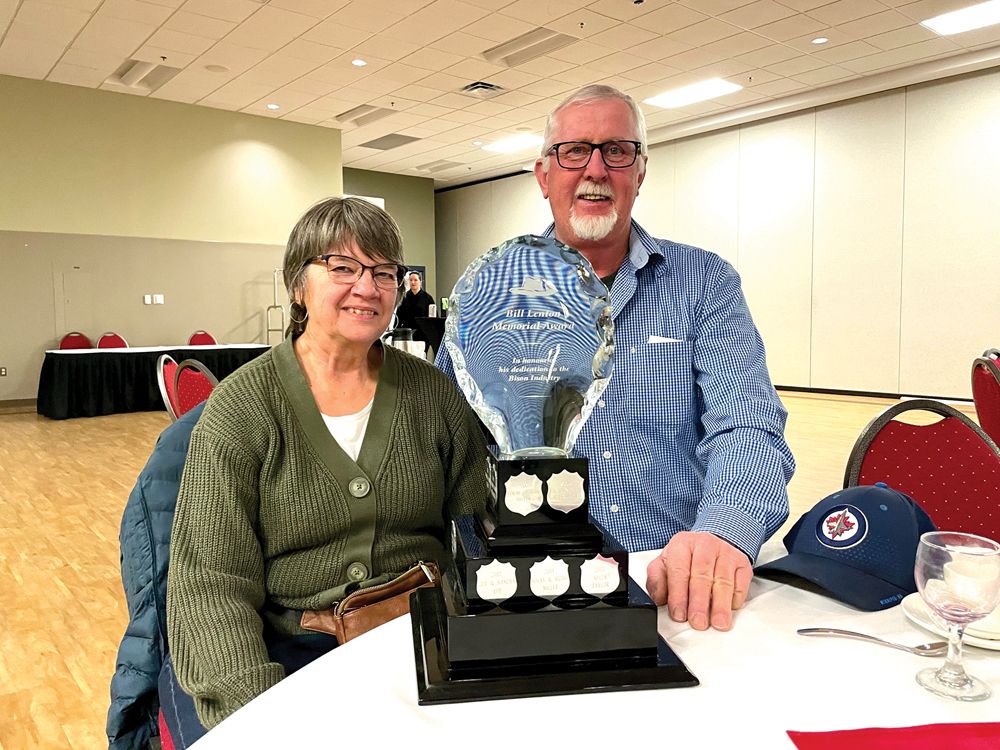
Steady volunteerism earned Len and Lori Koop this year’s Bill Lenton Memorial Award from the provincial bison organization.
The Bill Lenton Award recognizes leaders in the bison sector.
The Manitoba Bison Association hands out the award each year in honour of Lenton, who helped spearhead the MBA and it’s national counterpart, the Canadian Bison Association. Award winners are chosen based on their efforts to grow and advocate for the sector.
The Lentons spent years mentoring and looking to unite bison producers, said MBA president Robert Johnson.
“When we went through our selection process this year, Len and Lori’s name came up. Whenever there’s somebody [needed] to work in a trade show booth or when we have our annual Great Spirit Show and Sale, Len was always there to either consign animals or to volunteer to run a gate — just be there to help set up or take down or any part of it.
“There’s just no questions asked. Len was always there. We could always count on him.”
In Len Koop’s opinion, those hours holding down a trade show booth or setting up sales rings are a matter of doing his part for the sector. He said his fellow bison producers have been invaluable to his own operation. It’s only fair that, as established members of the industry, some of the work now falls to him and to Lori.
“I’ve always enjoyed volunteering on different occasions for different places in the community and I have become very attached to the bison animal. Therefore, for me to volunteer in this manner to promote the industry — because it is a very small industry — to promote it is only a benefit to us,” Koop said.
Four decades
The Koops bought two quarters of land in 1982 and moved onto the parcel in the following year. The farm launched as a typical mixed family farm of the period, with grain and a small beef herd.
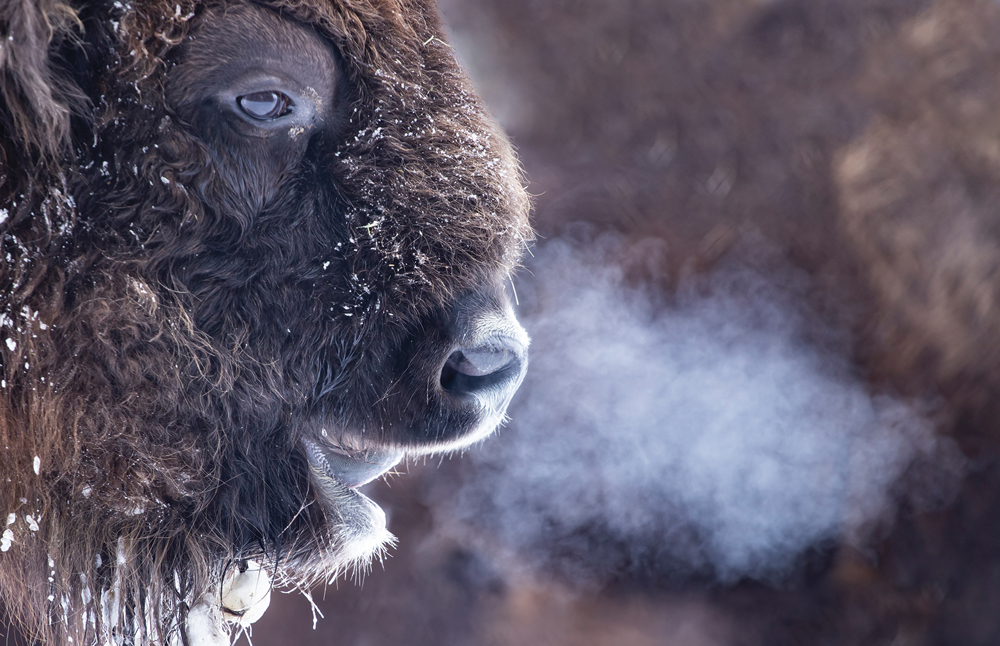
Bison didn’t enter the equation until the late ‘90s. But in the early ‘80s, Lori Koop had been babysitting for a family that had bison, thus exposing the couple to the idea of the large ruminants as commercial livestock.
Len Koop was intrigued. It was the age of farm diversification. Across the country, agriculture was experimenting with markets like emu or elk. Among the trends he saw, bison drew his eye.
“It was just something about the animal,” he said. “To me, I love big animals… they were unique.”
From an economic perspective, bison also seemed like the better bet.
“It was native to this country and definitely a meat animal, not just a sideline for foreign industry, like velvet for the elk or just eggs and breeding stock for the birds. I just saw them as just a really neat animal, a neat industry to get into,” Koop said.
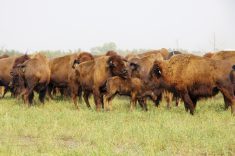
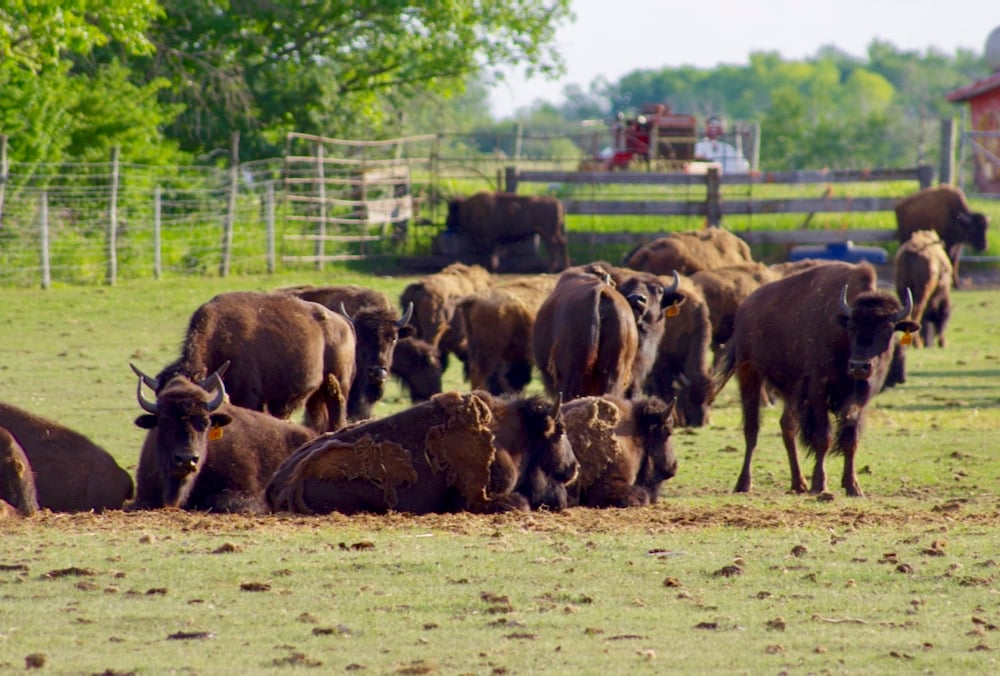
In 1997, the couple purchased their first four bison and eased themselves out of cattle. Grain acres were replaced by hay and pasture. The bison herd eventually settled at around 35 cows. Since then, Len Koop noted, his animals have been run largely as a closed herd.
The couple have also supplemented their income with cabin rentals, dubbed Prairie Sky Cabins.
The switch in livestock quickly educated Koop in the quirks of the species. Bison are not beef cattle. They are much hardier, he noted. They are also much closer to wild.
“At first, I treated it like a beef [animal], but very soon found that they had their own temperament; they had their own way of thinking, and you had to start thinking like a bison.” Now, just over 40 years since starting their farm, it’s time for another transition.
This year’s award from the MBA doubled as recognition of long service and a farewell.
The Koops are retiring and hope to find an acreage in eastern Manitoba, closer to their children and grandchildren. Their herd and most of their land is already sold and they are in the process of selling their cabin rental business.
Wherever they land, Koop said there is likely more volunteering in his future.
“In whatever community, there’s always people looking for encouragement or looking for help.”