When Tom Hoogendoorn’s milk tank wasn’t functioning properly, he didn’t think twice about squeezing himself through the 18-inch opening at the top in order to enter and see what the problem was.
For his safety’s sake, he asked someone to stay near the top of the tank and keep an eye on him. But no ventilation tests were done first, there was no rescue or first aid equipment on hand, and no thought was given to what could be done if Hoogendoorn was unable to climb out on his own.
Read Also
Farm sustainability means farmer wellness too
University of Manitoba LEAP program wants to talk farm succession, self-efficacy and community supports as part of agriculture wellness and sustainability study.
“I just made a quick decision,” he says. “We were starting to milk in an hour.”
Hoogendoorn cleaned the tank, fixed the problem and safely exited. It’s something he’s done “maybe twice before” in his 32 years of dairying, he says. But after sitting through a workshop on confined workspaces last fall, it’s a risk he’ll never take again.
“For one thing, I’m going to buy a ventilation system,” he said. “Any enclosed system we’ll have to work in, we’ll ventilate first.”
VENTILATION
Hoogendoorn was a participant in a workshop on the hazards of confined spaces hosted by the Canadian Agricultural Safety Association (CASA) in Winnipeg last November.
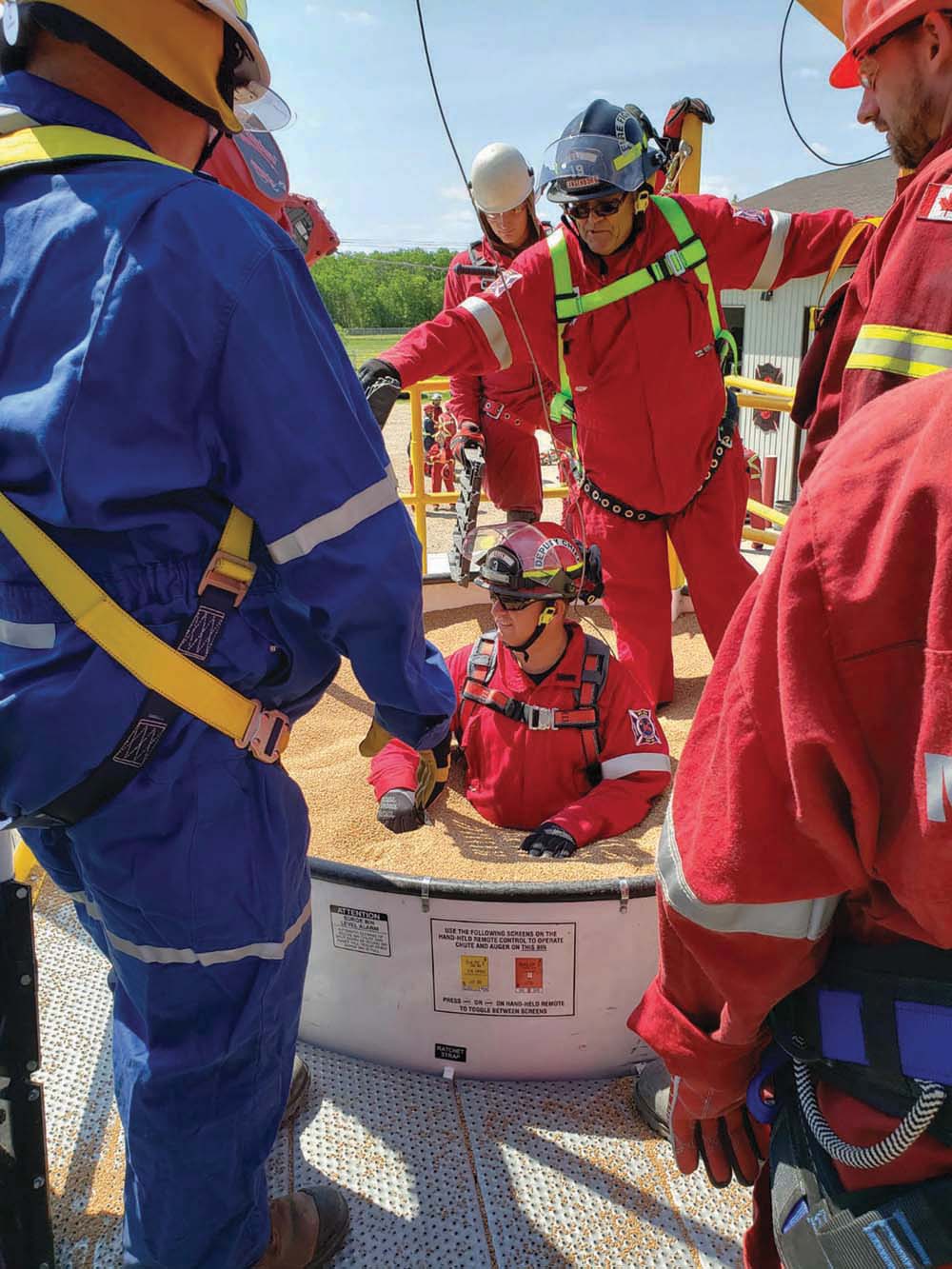
Silos, grain bins, milk tanks, water cisterns, and manure pits are just a few examples of potentially hazardous confined space. They are places where people typically don’t work and where the risks are difficult to gauge, said Neil McManus, a consulting industrial hygienist with NorthWest Occupational Health and Safety in B.C. who spoke at the CASA workshop.
The biggest problem is the risk often isn’t recognized, says McManus, who has found workers were frequently unable to define a confined space or how to act appropriately around them.
For example, trenches and excavations are essentially confined spaces if they provide only limited or restricted entry or exit, or limit the ability to rescue or provide first aid to a person.
Risks and hazards are also wide ranging. Some people have died because of the atmospheric conditions while others have been killed by engulfment and asphyxiation.
LETHAL CONSEQUENCES
McManus defines them as spaces in which “minor mistakes produce lethal consequences.”
“These places play for keeps,” he said.
One high-profile tragedy in B.C. in 2008 saw three workers on a mushroom farm die and two others suffer long-term injury after they were exposed to lethal gases while repairing a pipe suspended over a containment pit. That incident galvanized the Farm and Ranch Safety and Health Association (FARSHA) to develop educational resource materials around entry procedures and doing risk assessments for working around or in confined spaces, said Scott Fraser, safety specialist with FARSHA.Dealing with Confined Spaces in Agriculture is available for download on its website.
McManus stresses farmers should not only be aware of confined spaces in their operation but have workplace strategies for dealing with them, just as any industrial workplace would.
That means having appropriate instruments available to measure atmospheric conditions before any entry is attempted, as well as developing work procedures that includes spotters on site with retrieval equipment if any sort of emergency develops, he said.
For more information on confined spaces go to www.farsha. bc.ca.
———
“Theseplacesplayforkeeps.”
– NEIL MCMANUS, CONSULTING INDUSTRIAL HYGIENIST