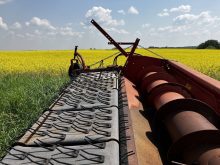

The ICE Futures canola market was trending higher during the week ended Aug. 11, but was still rangebound.
The November contract has traded within a broad range of $780-$900 per tonne over the summer so far, with little to suggest a break one way or the other could be possible without an outside catalyst. Rather, market participants are likely biding their time waiting to see how yields pan out at harvest.
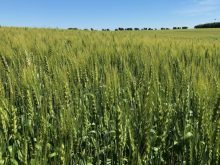
Spring seeding was delayed in many areas this year, which means development is also running about two weeks behind normal. With harvest likely pushed back as well, the risk of an early frost is hanging over the futures. Any significant damage could be the spark of a rally, but favourable weather would be equally bearish on the other side.
Read Also
Iran war catches Prairie farmers in the geopolitical crossfire — again
Prairie farmers didn’t ask for a Mideast conflict to squeeze global fuel and fertilizer supply chains — threatening to send farm costs spiking — but here we are.
In addition, after last year’s drought there’s a thought that producers are more than a little apprehensive about doing much forward contracting on fears they could again be left without a crop to deliver. The sentiment in the trade is that many producers are undersold, which could lead to heavy selling at harvest time if the crop comes off in decent shape.
In the U.S., corn and soybeans will also be trading off the shifting weather forecasts heading into the latter half of August. Condition ratings for both crops have been generally favourable so far, but a lack of moisture across parts of the Midwest could cut into the yield potential. Updated yield and stocks projections out on Aug. 12 will likely provide a clearer picture of the situation.
The U.S. winter wheat harvest is nearing completion, causing seasonal harvest pressure to ease somewhat on that front. Development for U.S. spring wheat, as for many of Canada’s crops, is behind normal but harvest should also pick up and move northward over the next few weeks.
In Europe, a severe drought has decimated crops, which is already opening the door for more North American export business. The ongoing war in Ukraine remains another feature in the background, although some grain has finally started to move through the Black Sea over the past few weeks.
While North American weather will likely take precedence in the agricultural futures through the harvest season, the broader macroeconomic issues at play in the financial markets remain an important background feature. The U.S. inflation rate showed signs of easing in the latest data, but the global economy remains in a precarious position, with high energy costs on one hand and recessionary concerns on the other.