
Canola futures on the Intercontinental Exchange have been steadily rising since the start of the new year. Almost two months in, nearby contracts have reached heights unseen since August.
The May canola contract closed above $690 per tonne and July canola surpassed $700/tonne on Feb. 24, the first time for both contracts in six months. Canola prices have risen $80 since the start of 2026, pacing ahead of their respective 20-, 50- and 100-day moving averages.
Canola’s value has risen despite the record crop estimated by Statistics Canada for 2025-26. But while China’s reduction of tariffs on the Canadian oilseed announced last month supported prices, it’s Chicago soyoil’s rally that’s driving canola’s own upswing.
Read Also
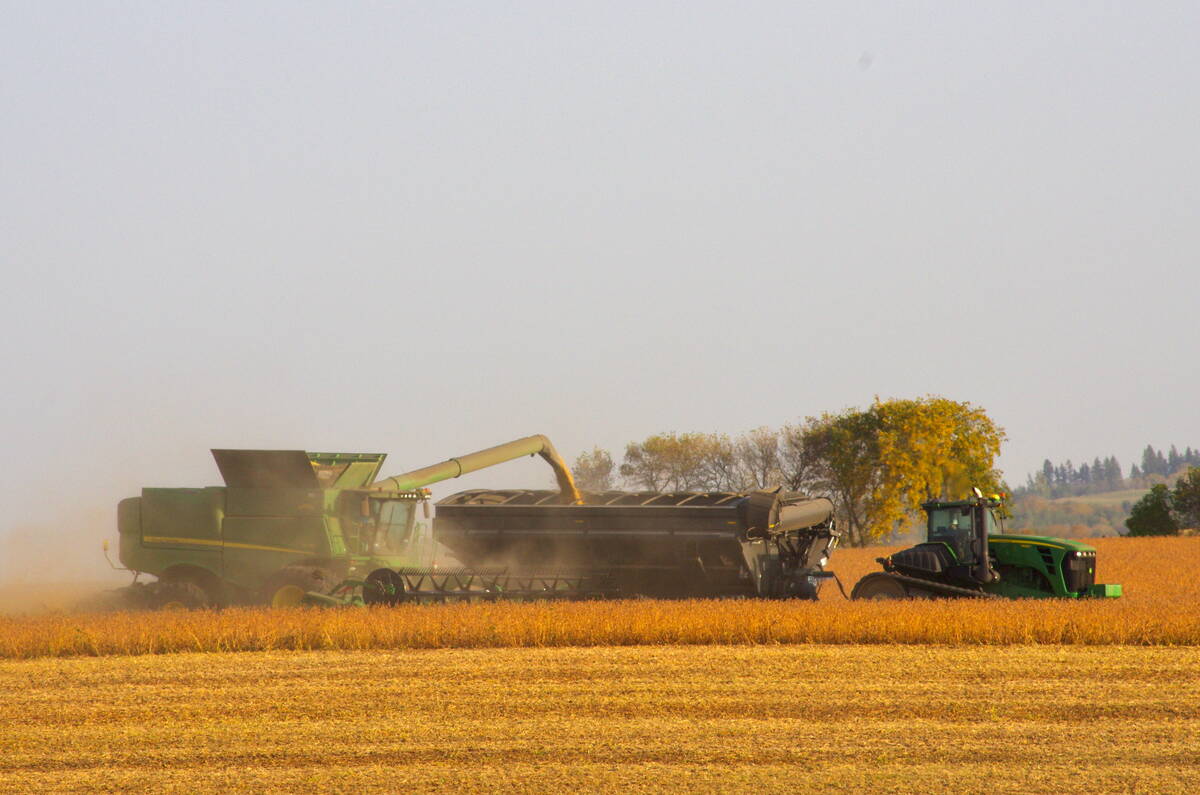
Why the price gap against western Canadian soybeans?
Prairie soybeans get 70 cents less per bushel. That price gap is raising questions about protein, data gaps and how soybeans are valued.
The May soyoil contract has gained nearly 12 U.S. cents per pound or 25 per cent of its value since December, closing at 60.50 cents on Feb. 24. Just like canola, soyoil has exceeded its moving averages since January.
Soyoil’s rise has been driven by optimism over increased demand from the biofuel sector. At the United States Department of Agriculture’s Outlook Forum on Feb. 19, soyoil use in biofuel production was projected to reach 17.3 billion pounds in 2026-27, which would be 47 per cent above the 11.758 billion used in 2024-25. There are expected to be 85 million acres of soybeans to be planted in the U.S. this year, up from 81.2 million in 2025. The USDA also projected soyoil exports to plummet from 2.492 million pounds in 2024-25 to 1.2 million in 2025-26 and 600,000 in 2026-27.
If next year’s figures were to be realized, they would wholly depend on the Trump administration’s biofuel mandate for 2026, which is expected to be announced in the coming weeks.
Even then, canola’s and soyoil’s prices aren’t expected to hold for long.
In addition to both facing resistance levels, the relative strength indexes for canola and soybeans exceeded 70 as of Feb. 24, indicating overbought contracts. Brazil’s record crop will soon flood the global market and add to the soybean crush, despite a slower than average start to the harvest.
While current canola prices are well-deserved for growers left reeling from China’s months-long de facto ban on the oilseed, they will be a brief respite from the price pressures soon to come.