The ICE Futures canola market held rangebound during the week ended Oct. 20, with historically wide crush margins and supportive underlying fundamentals still not enough to break values out of their sideways pattern. However, there were some bullish technical signs hinting a turn higher could be in the works.
Intermonth spreading accounted for much of the trade volumes during the week, as participants were busy rolling out of the nearby November contract ahead of its expiry. November climbed to a premium over the more deferred months, but declining liquidity in the front month likely exaggerated the move.
The January contract has become the pace setter with the largest open interest. January canola has held in a rather narrow range between $860 and $875 for most of October, but its settlement at $876.30 per tonne on Oct. 20 marked the first close above the 100-day moving average in four months.
Read Also

VIDEO: Seed less canola, harvest more? Bourgault field trials say it’s possible
Bourgault field trials tested canola seeding rates as low as 1.25 pounds per acre and found individual plants grew larger with stronger roots.
If the contract manages to hold above that moving average chart support, the next significant resistance comes in at around $900.
Crush margins remain incredibly wide, at more than $200 above the January contract. That compares with levels closer to $60 at the same time a year ago. Those wide margins mean canola should be very attractively priced to end-users, keeping demand in the market even if the futures move higher.
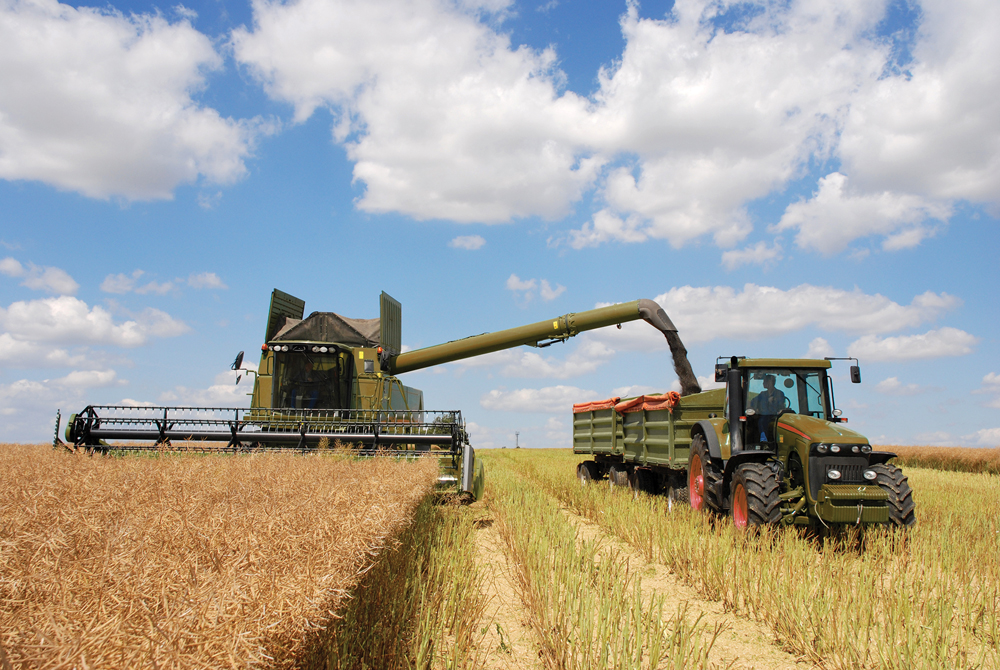
Canola harvest has all but wrapped up across the Prairies and a seasonal slowdown in off-the-combine deliveries should also lend support.
Weekly farmer canola deliveries dipped below 500,000 tonnes for the first time in a month during the week ended Oct. 16, coming in at 431,200 tonnes. However, supplies in the commercial pipeline remained large for the time being at 1.4 million tonnes.
Those large supplies are finding a home, with exports and the domestic crush both hitting their highest levels of the marketing year to date.
In the U.S., soybean and corn harvests are progressing, which should keep seasonal harvest pressure at the forefront of the markets. Activity in world energy and financial markets will also be influential.
For wheat, U.S. farmers were still seeding their next winter wheat crop, with drought conditions in parts of the southern Plains hurting germination in some cases.
The situation in Ukraine remains at the forefront of the wheat trade, which can lead to wide price swings as the trade sentiment seems to shift from day to day. While heightened Russian drone and missile attacks in recent weeks raised concerns, talks on keeping the Black Sea grain corridor open were reportedly constructive.