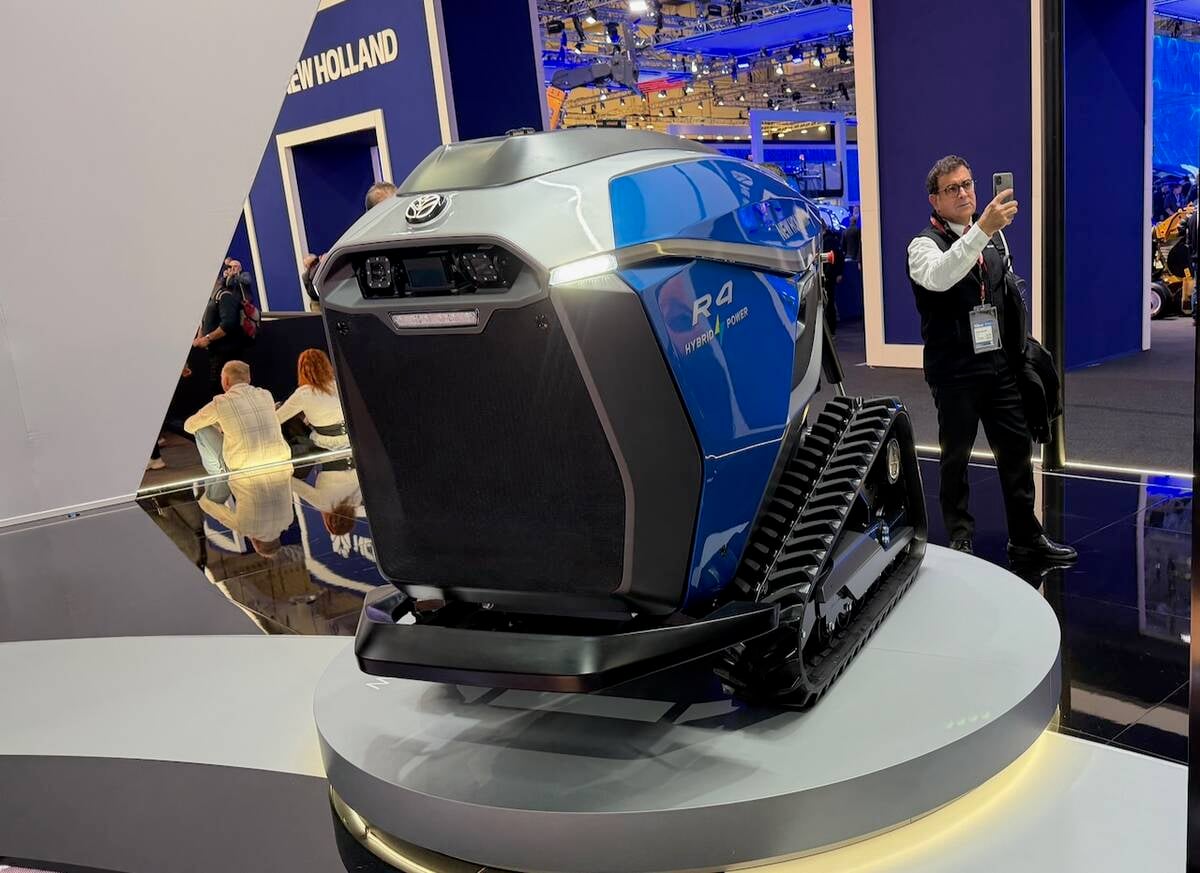
Farmers have been told for years that autonomous, commercially available, farm equipment is coming. Researchers at the University of Manitoba are studying how those machines could one day operate more reliably in real farm fields.
WHY IT MATTERS: Autonomous equipment is advancing quickly on roads, but farm fields present a different set of challenges.
The work was discussed during a recent presentation at St. Jean Farm Days in early January. Researchers with the project are focused on the challenge of uncertainty in agricultural environments, and obstacles to realistic adoption of the technology.
Read Also
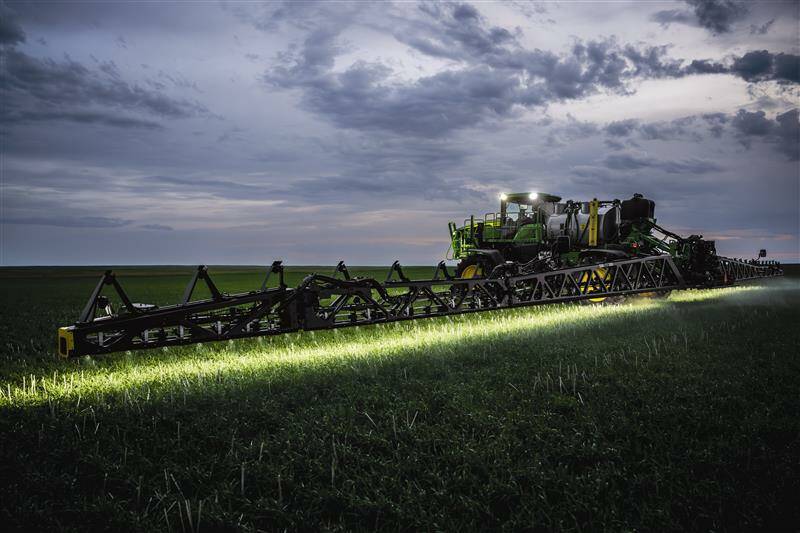
Deere expands spot spray system for small grains crops
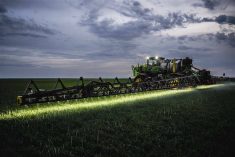
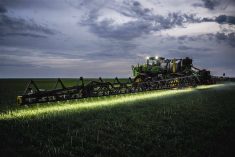
John Deere says it has expanded the See and Spray system’s functionality to other crops. For the 2027 model year machines, it will be compatible with wheat, barley and canola.
“We want the robot or tractor or any machine working in the agriculture field to follow the design path as accurately as possible,” said Jay Wang, an assistant professor with the University of Manitoba’s faculty of mechanical engineering.
Many modern road vehicles are now equipped with some form of autonomous control. With that in play, people may tend to think that fields, with their wide open spaces free of pedestrians or heavy traffic, would be a comparative slam dunk.
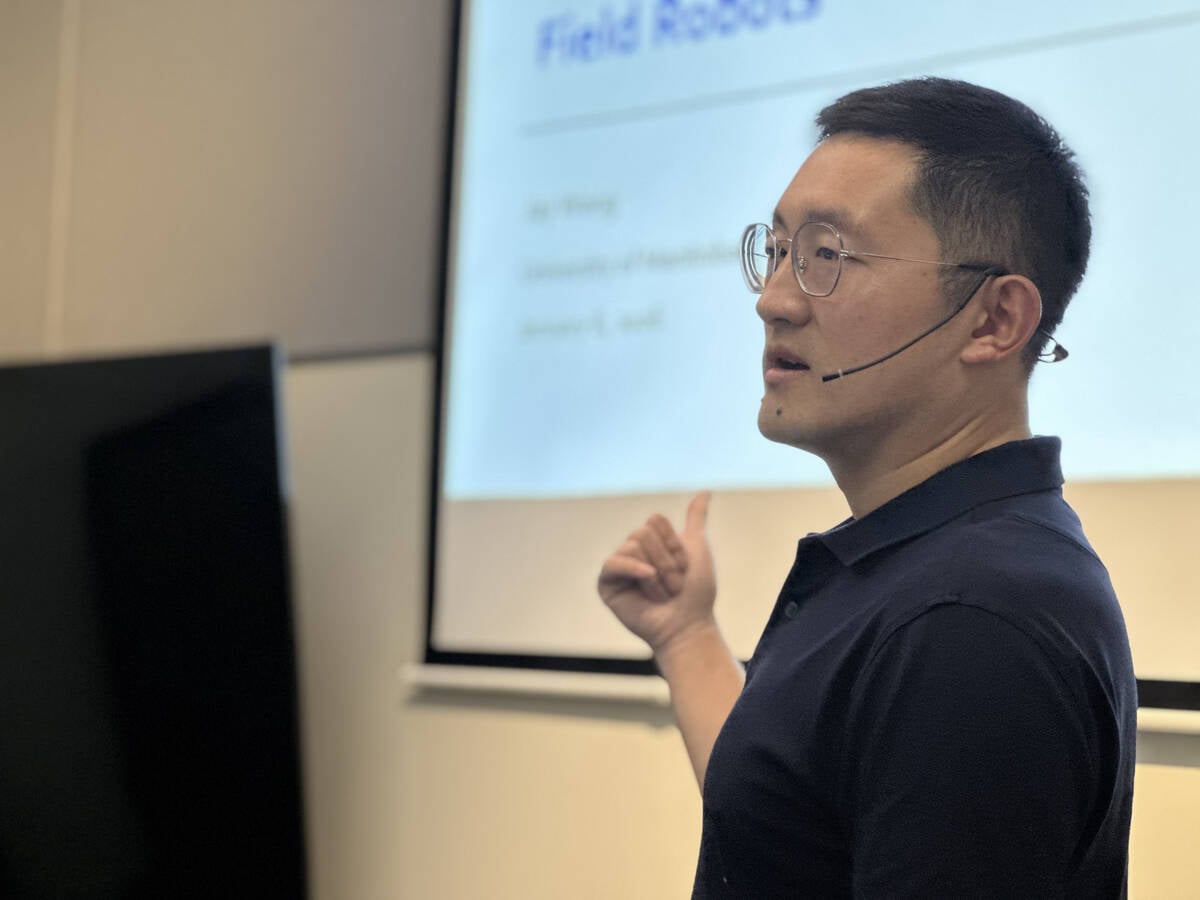
But Wang, who also heads up his department’s Robotics Lab, points out that farms present unique problems:
- Fields are bumpy
- Conditions are constantly changing
- Precipitation can change ground texture
- Crop residue can create obstacles
- Soil compaction differs across the field
By contrast, a flat, hard road, defined by lane markings and supported by traffic signals and signage, is much easier terrain for artificial intelligence (AI) to navigate.
Searching for autonomous adaptability
The University of Manitoba research looks at ways machines can adapt to that volatility in field conditions. The approach takes traditional engineering models, contrasting it with collected data as equipment moves through the field. That data is then processed through machine learning or artificial intelligence.
“The AI tool we use is called Gaussian process,” Wang said. “It is used to correct the discrepancy between the physical-based model and the actual observed data.”
To test the concept, researchers are using small robotic platforms equipped with GPS and other onboard navigation sensors like LiDAR and RTK, “basically, so the robot knows where it is in the real-world environment,” said Wang.
The experiments were conducted on University of Manitoba agricultural plots. The robots follow set paths while collecting data on how their real-world movement differs from expected behaviour. That information is then used to refine how the machine responds in different field conditions.
Bringing autonomy to the farm
Commercial autonomous farm systems already exist, but they typically work within tightly defined tasks and operating conditions, and require human supervision. Wang’s research, by contrast, is looking at ways to reduce the need for operators to compensate when the ground doesn’t behave as expected.
The work is still in its early stages and Wang doesn’t expect it to translate into near-term, farm-ready technology. However, he said the work is ultimately intended to benefit farmers.
“We want to use AI to boost agriculture,” Wang said. “That’s the whole reason we’re interested in it.”