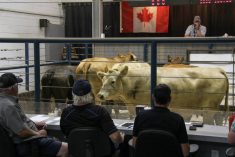
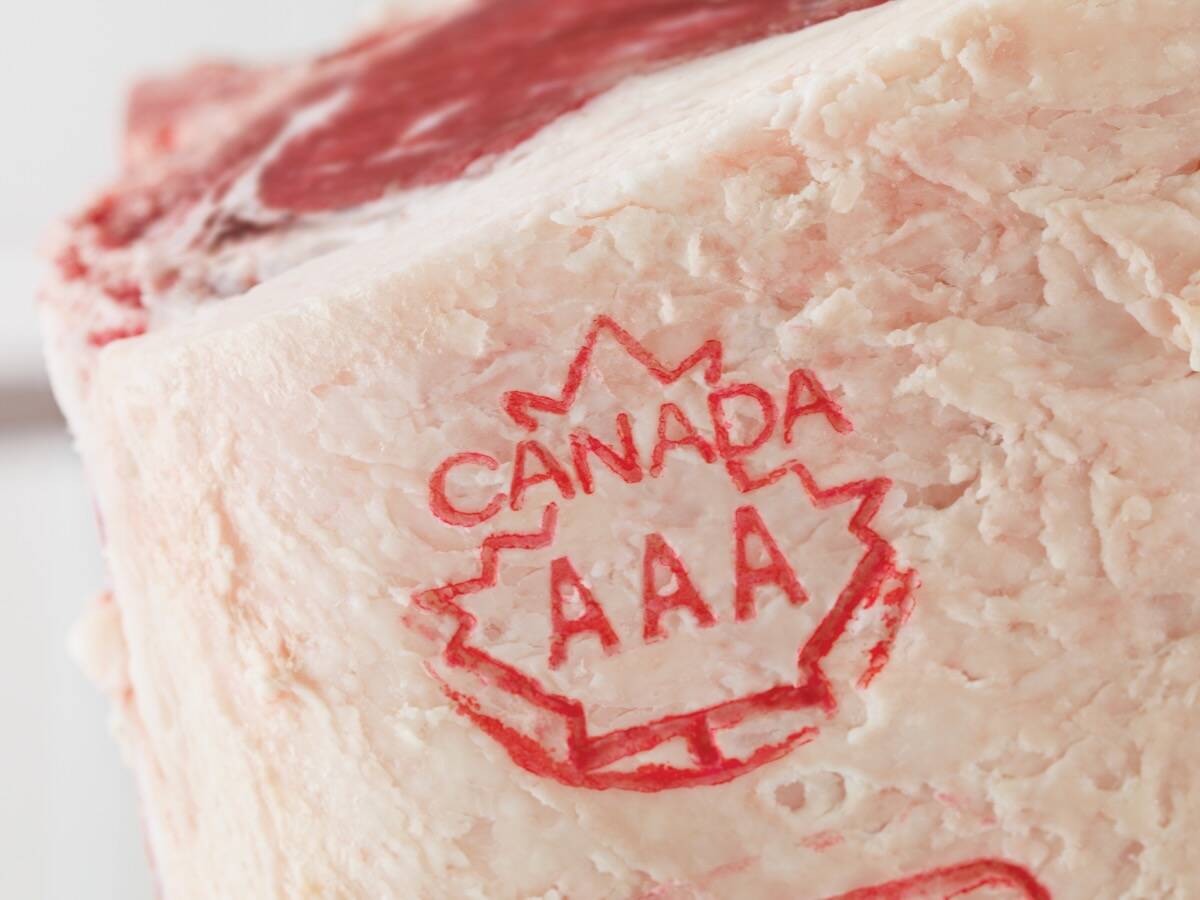
BRANDON — Canadian beef producers say ongoing uncertainty around trade with the United States remains their top worry, even with record cattle prices and new export opportunities emerging.
U.S. market remains critical to Canadian producers
About half of Canada’s beef production is exported, making tariff-free access to the U.S. market essential for producers, said Dennis Laycraft, executive vice-president of the Canadian Cattle Association.
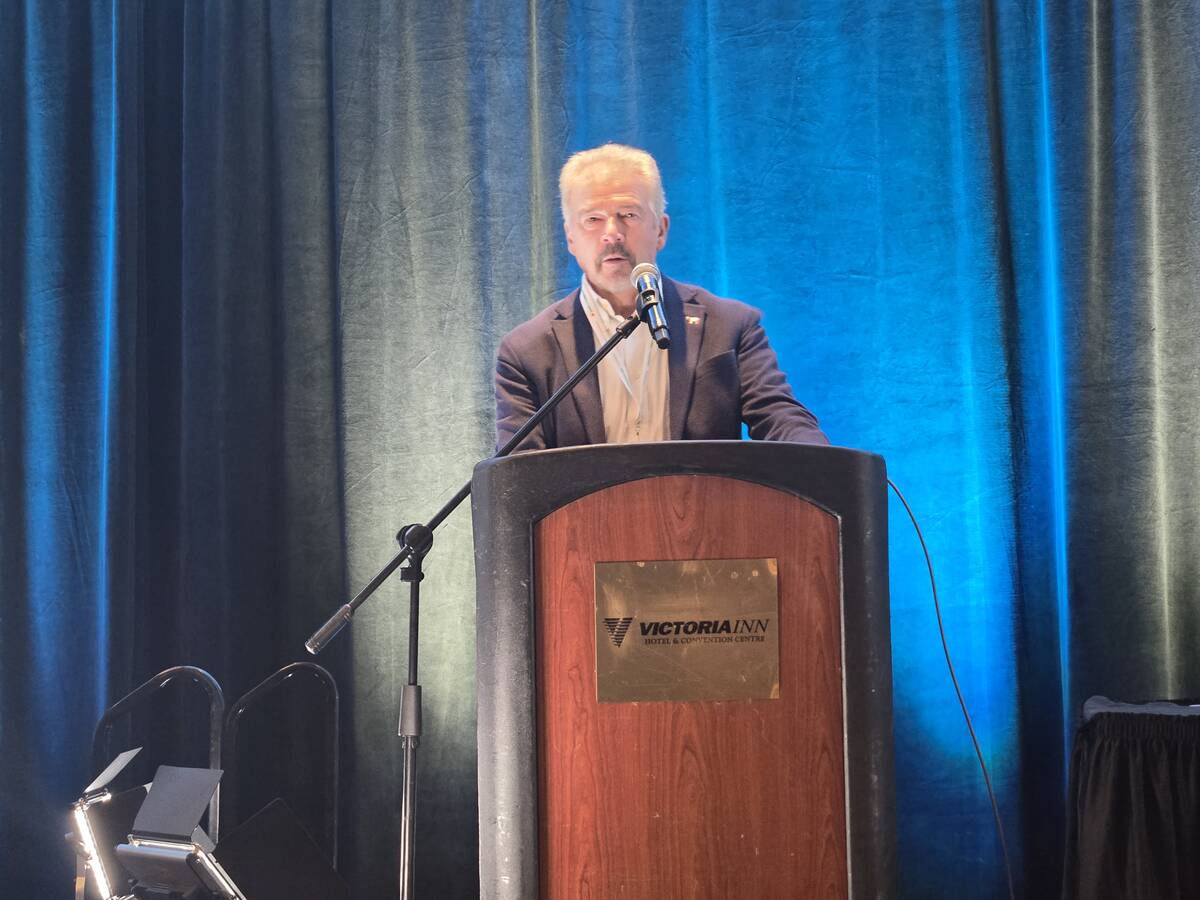
“Obviously the most critical thing for us is tariff-free access to the U.S.,” Laycraft said at the Manitoba Beef Producers (MBP) annual general meeting in Brandon on Feb. 11 and 12.
WHY IT MATTERS: Amid record prices and new export opportunities, Canadian beef producers are navigating growing risks from U.S. tariffs and shifting global markets.
The United States is Canada’s dominant beef customer, accounting for most live cattle exports and about 70 per cent of beef exports overall.
“Virtually 100 per cent of our live cow exports go to the U.S.,” Laycraft said.
Canada and the U.S. operate as a highly integrated cattle market, with cattle regularly moving both north and south. Nearly 578,000 head were exported to the U.S. between Jan. 1 and Nov. 30, 2024, up 17 per cent from the previous year, according to the Canadian Food Inspection Agency.

Canadian feedlots are also importing more American cattle than ever before, Laycraft said.
“We’re going to import over 500,000 head of feeder cattle on the U.S., just shattering any other number that we’ve seen,” he said.
Tariff threats continue to create uncertainty
Despite strong demand and record-high cattle prices driven by years of drought and a shrinking domestic herd, the threat of tariffs continues to create uncertainty.
“We briefly had tariffs in place just under a year ago, costing $40,000 a load on every load of cattle going south if there was a 10 per cent tariff on our product going south,” Laycraft said.
Canadian producers attending the National Cattlemen’s Beef Association’s CattleCon conference in San Antonio, Texas, earlier this month faced further uncertainty when U.S. President Donald Trump initially set Feb. 4 as the date for new tariffs of 25 per cent on Canadian and Mexican goods.
However, last-minute negotiations resulted in a 30-day pause on the levies.
Volatility tied to trade tensions is likely to continue, Laycraft believes.
“You’re going to hear the president talk about tearing it up. There’ll be the threat of tariffs. We’re going to see this barrage continue as we head through the year,” he said.
China reopens market to Canadian beef
At the same time, Canadian producers are seeing new opportunities abroad. China has lifted its ban on Canadian beef exports, allowing shipments to resume after a prohibition imposed in late 2021 following a case of bovine spongiform encephalopathy on an Alberta farm. Before the ban, Canadian beef exports to China totalled approximately $200 million annually.
Read Also

VIDEO: Spring weed control means plans, and back-up plans for those plans
It’s time for Manitoba farmers to get locked and loaded against spring weeds, with enough room to adapt if early 2026 field conditions don’t co-operate.
China’s reopening represents an important development, Laycraft said.
“I’m really pleased that … China finally reopened to Canadian beef and Canadian genetics,” he said. “It’s going to be an important market for us.”
CUSMA review raises stakes for producers
Maintaining strong trade agreements with the U.S. remains critical, especially with the Canada-United States-Mexico Agreement (CUSMA) up for review, said Jon Vaags, a representative with the MBP and member of the National Cattle Feeders’ Association board.
“We are very active in trying to be on any of those boards and panels and industry discussions, anything that comes to the CUSMA review, making sure that our concerns are heard,” he said.
The agreement allows cattle and beef to move across the border efficiently and reflects the “tremendous” trading partner Canada has in the U.S., and why maintaining that relationship is essential, Vaags added.
Matthew Atkinson, past president of the Manitoba Beef Producers, said industry groups continue working with governments to strengthen trade relationships.
“Cattle industry leaders have been engaging with federal and provincial governments in Canada and also across borders to reinforce the importance of trade for both North America and beyond,” Atkinson said.
Federal government focused on market access
Meanwhile, the federal government is focused on supporting producers and expanding market access, according to Heath MacDonald, minister of Agriculture and Agri-Food Canada.
“Our government is committed to ensuring our supply chains with the U.S. and our other trading partners remain strong,” he said. “I’m committed to working with all sectors across the industry to expand and diversify our markets.”