(CMEGroup.com)

U.S. livestock: CME feeder cattle limit down as corn prices jump

Chicago | Reuters — Lightly-traded Chicago Mercantile Exchange feeder cattle futures closed down their 4.5-cent per pound maximum daily limit on Thursday following double-digit corn market gains, traders said. Chicago Board of Trade corn futures surged as much as three per cent on worries heavy rainfall could reduce U.S. Midwest crop belt yield potential. High-priced



(Photo courtesy Canada Beef Inc.)

U.S. livestock: CME live cattle extend losses, hogs mixed

Chicago | Reuters –– Chicago Mercantile Exchange live cattle losses on Tuesday spilled over into Wednesday, pressured by sell stops and fund liquidation despite sharply higher wholesale beef values, traders said. June closed 1.325 cents per pound lower at 150.675 cents (all figures US$). August finished down 1.5 cents at 150.325 cents after falling below


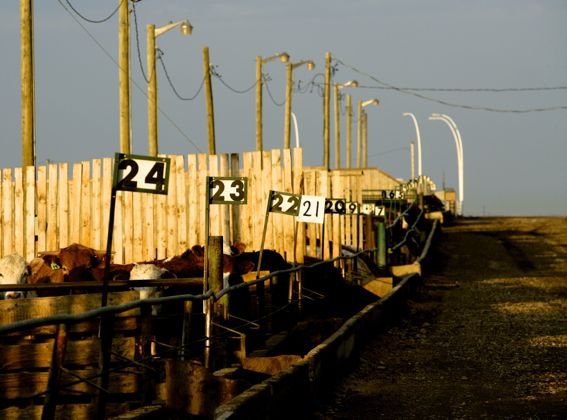
cattle in a feedlot

Health Canada reviews water quality impact of popular growth promoter

Manitoba Beef Producers says the environmental benefits of growth hormones 
in cattle production outweigh the risks

More research has emerged suggesting that growth promoters used in the cattle-feeding business may persist in the environment longer than previously thought. Researchers at Indiana University’s Bloomington School of Public and Environmental Affairs found that while the synthetic testosterone known as trenbolone acetate or TBA breaks down in sunlight, darkness allows it to revert back


(Photo courtesy Canada Beef Inc.)

U.S. livestock: CME live cattle futures turn back early selling

Chicago | Reuters — Chicago Mercantile Exchange live cattle futures closed higher on Monday, reversing initial weakness helped by short-covering and the morning’s wholesale beef price bounce, traders said. June closed up 0.55 cents per pound at 152.45 cents, and August 1.225 cents higher at 151.9 cents (all figures US$). Monday morning’s wholesale choice beef


cow receiving a vaccination

Beef 911: Preventing negative side-effects of cattle vaccinations

It is good practice to take a walk through any recently vaccinated cattle to check for reactions

There are now a multitude of vaccines on the market for all facets of the beef and dairy industry. Vaccinating has become part of the biosecurity program on your farm, ranch or dairy. It is good for our industry as it controls disease, minimizes antibiotic use, improves production, and decreases death or losses from abortion.

cattle on a pasture

McDonald’s makes progress with sustainable beef pilot project

McDonald’s is looking for cattle producers throughout Canada to 
participate in pilot project looking at the sustainable production

McDonald’s Canada representatives may soon be visiting Manitoba cattle farms as the company moves forward with a pilot program designed to increase the amount of beef it sources from sustainable suppliers. “This verification program is open to anyone across Canada who wants to participate. We have had some interest from Manitoba already. One Manitoba producer