There are two main protozoal diseases that can affect cattle producers which are are worth talking about, for several reasons.
For one thing, it’s good to review what’s available for treatment and prevention and what could happen if they were not allowed.
As well, new diseases will inevitably arise, requiring new treatments and the funding into their research and development.
It is with a heavy heart that I heard recently of the many agricultural federal research facilities that will be shut down.
Read Also

Manitoba Beef Producers targets elk surge, wildlife losses in resolutions
Resolutions at last month’s Manitoba Beef Producers meeting seek help to rein in elk and deer populations, expand fencing supports and improve compensation for wildlife damage.
How do we test new products or develop new varieties of plants and test and validate growing or harvesting techniques without qualified researchers trying to answer these difficult questions and work doggedly to make the livestock industry safe?
The two protozoal diseases I am referring to are coccidiosis and cryptosporidiosis.
Coccidiosis was once a very common disease in slightly older calves and feedlot animals.
In the last several years of practice, it was getting rarer and rarer to see a case.
The big question is why the improvement?
Both protozoal diseases have a life cycle that starts with an egg or oocyst, and then lives in the intestinal cells, destroying them before the eggs start to appear in the manure.
Coccidia
With coccidia, this whole life cycle takes about a month.
Again, prevention or control starts with treating before animals are likely to start to contract it.
This condition can be largely prevented with ionophore products such as rumensin or bovatech provided in complete feed rations in the feedlot or put into minerals for calves or mixed into pellets.
All cows carry some coccidia, but it is the calves that get clinical disease.
Cows will increase shedding before calving, which is why producers used to treat their cow herd to prevent shedding and infection of newborns.
This all has changed considerably in the last 10 to 20 years.
A product called toltrazuril (Baycox) was developed as a specific preventive for coccidiosis. It is given more as a preventive long withdrawal, but also used on young animals, and specifically for cocci in pigs and sheep as well as calves.
Veterinarians often prescribe antimicrobials such as potentiated sulphonamides If cocci get out of control, but by then the damage has already been done and calves suffer a big setback.
Prevention is key so that fewer antimicrobials are used.
My big worry is that in these antibiotic-free programs, there was talk about ionophores falling into disregard, which would be a very bad move long term.
Practices such as manure cleaning help with biosecurity, of course, but the oocysts are very small and very resistant in the environment and so a very pesky thing to totally eliminate.
Crypto
The other protozoal disease is cryptosporidiosis, which these days commonly comes to mind if you hear of a bad scours outbreak in a vaccinated herd.
Very bad diarrhea in slightly older calves is hard to treat and recover from and is very contagious because one clinical case quickly spews out millions of eggs that other calves can ingest.
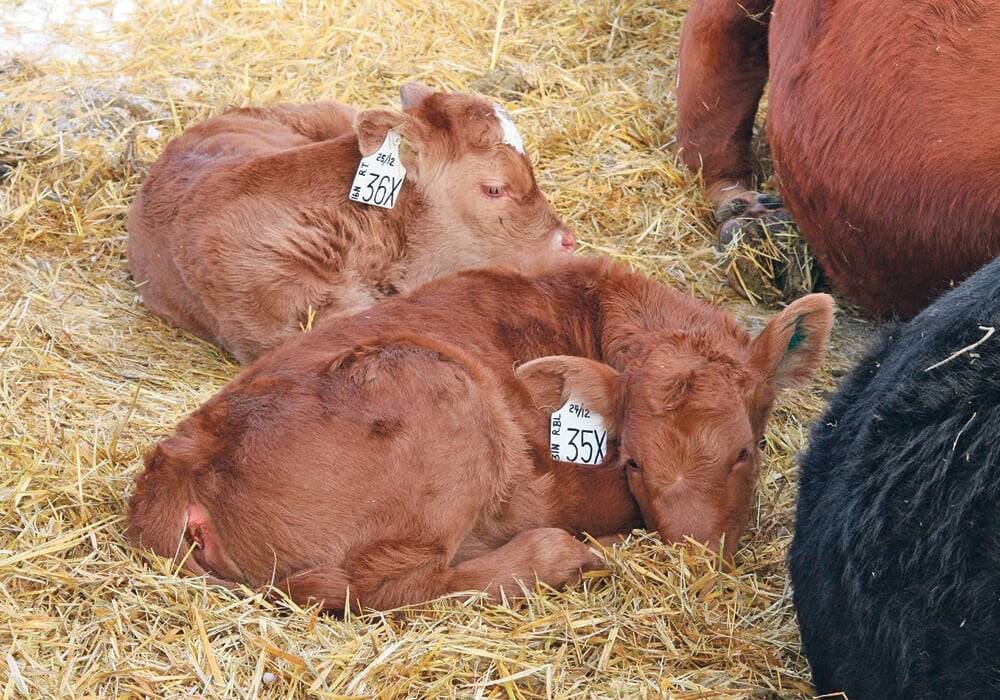
This is also the disease that people can catch from handling calves, and many a technician at a clinic or farm worker has contracted crypto over the years.
That’s another good reason to prevent this disease.
It is likely the most common zoonosis that people contract from cattle besides ringworm.
Double hit
Veterinarians in Manitoba figured out about 20 years ago that toltrazuril works to prevent cocci and crypto.
They started compounding the toltrazuril in capsules for oral use and these diseases pretty much disappeared.
I don’t know what percentage of herds have been prescribed this treatment, but it is quite high in many beef-producing regions across Western Canada.
It is now compounded by an Alberta company for veterinarians.
It is given as an oral pill at birth or shortly after.
This is something that your veterinarian would have to prescribe.
Off the label
Toltrazuril is the best example I can give of an extra label usage of a product to treat disease that went viral (word of mouth) between veterinarians.
This also means our friends in the medical profession don’t have to treat crypto in people.
The disease is still around and recently made the news when it got into the water supply of an Indigenous community.
It would be nice if research could eventually be done to allow on-label use of this medication.
However, in light of the recent closure of federal research facilities, we may need more products to go extra label through our veterinarians, which puts a lot of pressure on them.
The good news is that these medications are used only on young animals, so the long withdrawal requirement becomes a moot point because they are six months or more away from slaughter.
If you have had trouble with either crypto or cocci — even one case — ask your veterinarian for their thoughts on using toltrazuril in its many forms.