
Glacier FarmMedia – You may run a good beef farm, maybe even a great one. Making yourself remarkable, however, is another matter in the age of explosive artificial intelligence (AI) technology.
That was the message from one technology expert speaking to the Alberta Beef Industry Conference earlier this year.
Why it matters: Agriculture, like other sectors, is wrestling with how AI can benefit the business
Read Also
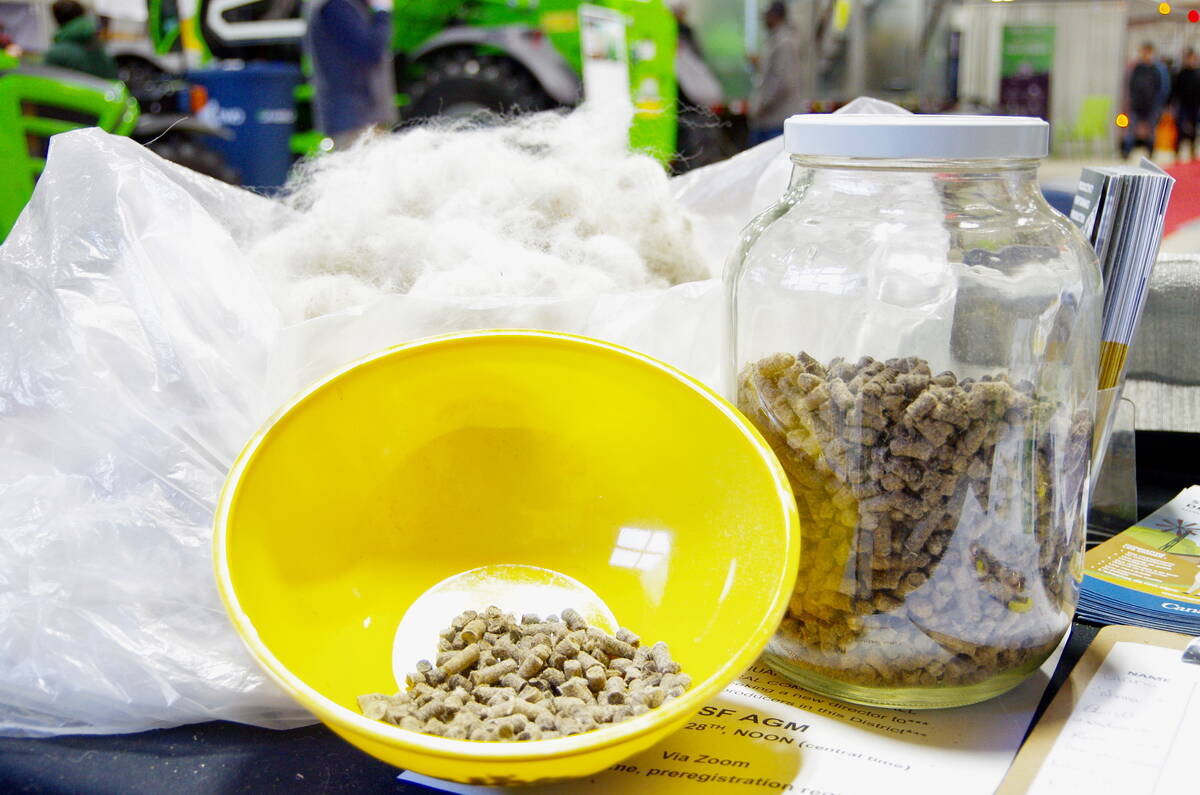
Wool pellets open new markets for Manitoba sheep farmers
Pellets from waste wool may offer new revenue for sheep farmers and a sustainable soil amendment and fertilizer for horticulture.
Shawn Kanungo, a globally recognized innovation strategist based in Edmonton, argues that the future of beef must be more than maintaining the status quo. The new business strategy, he said, should include questions like “what is our bold ambition?” or “how do we become remarkably different, a freak, or unique?”
That will require being bold and innovative and trying uncomfortable ideas, said Kanungo.
“Get up every day and ask yourself, ‘what can I do today to get myself fired?’” he suggested.
Kanungo didn’t lay out a step-by-step program for following that advice, but he said it starts by embracing AI, or at least acknowledging that its existence is now a fact of society.
“Start playing around with it,” he said. “It is here to stay.
“In the future there will be two types of leaders. There will be leaders who leverage AI in their business, and those who don’t will be leaders who are irrelevant.”
He pointed to the power of ChatGPT, an artificial intelligence app launched less than two years ago.
A chatbot developed by OpenAI and based on a large language model, ChatGPT can answer a wide range of questions, write essays or emails and comes with analytical features, all using a few user-generated prompts.
It has since become a global phenomenon and source of controversy as its use creeps into the circles of academia and beyond.
For the beef producer, though, it could provide valuable insight into farm management.
Ahead of the beef conference, Kanungo had fed a 100,000-line Microsoft Excel document with statistics on global meat consumption into ChatGPT. Then he asked the software to tease out information relevant to Canadian and Alberta beef producers.
The result was a list of the countries that produce the most meat, which meats were most popular and other analytic insights that could be put to marketing use.
“It cooked that information to come up with a summary of these facts. It is incredible,” Kanungo said.
He also talked about text to video technology — a sophisticated AI-driven process that translates written text into dynamic video content.
He demonstrated AI language technology that could use his image, but convert his words into any language in the world, which could open the door for businesses to connect with world customers in their language. A marketing project that would have taken a marketing team hundreds of hours and thousands of dollars a few years ago could now be produced in a few minutes, he said.
“With AI technology, a 10-year-old boy anywhere in rural Alberta with a computer could create this in seconds,” he said. “AI is reimagining how we look at work.”
More people in world have access to Generative AI technology on their smart phones than the global population that has access to clean water and toilets, he said. About 85 per cent, or 6.92 billion people, have smartphones, while 75 per cent, or six billion, have access to clean water, and only 55 per cent (4.5 billion) have decent sanitation.
Putting it in practice
One visit to Titan Land and Cattle Company west of Edmonton, highlighted how much data the beef industry collects on each animal’s health care, rate of gain, production costs, and more, Kanungo noted.
“This industry is all about analyzing data to optimize efficiency and that is exactly what AI technology is designed to do.”
Making use of new technology is part of the picture when it comes to attracting and keeping young people in the business, he added.
The question isn’t just about how to get young people involved in agriculture, but more specifically about “how do we show young people they can improve their status” by working in ag?
Ag must present itself as an avenue where those young people are valued and improve or appreciate their self-worth, he said. That involves encouraging them to use new technology, be innovative, be creative and sometimes allowing this new thinking to be disruptive.
One of the uncomfortable but important characteristics of being a good leader is stepping aside and saying “I don’t know” and asking others for help, he said.
“Being a good leader today, being disruptive, is not about thinking, it is about acting,” said Kanungo. “Use the technology. It is about deliberately and consciously exposing yourself to challenges. It’s about waking up every day and asking ‘how do I make use of that AI technology that guy was talking about?’ It is about sending that moon-shot email to that client you’ve been waiting to work with … it is about waking up every day and not worrying about whether you look like a joke today.
“The most dangerous person in the room is the one who is the most afraid but bold enough to move forward.”
Shawn Kanungo is the author of a bestselling book, “The Bold Ones.”