
While organic crops are often called more sustainable than their conventional counterparts, there’s not actually much data on the crops’ net greenhouse gas emissions. A team of researchers are working to fix that.
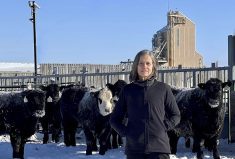
“Organic field cropping systems are severely under-studied,” said Emily Laage, a researcher and graduate student at Dalhousie University.
“We have a good idea of the emissions behind conventional practices, but when we look at organic we don’t have quite as clear of a picture,” she added.
Laage was one of several students who gave video presentations on their research during the University of Manitoba’s Sustainability of Canadian Agriculture Conference on March 18.
Read Also

Manitoba gaining ground on wild pigs
Squeal on Pigs Manitoba reports progress on eradicating invasive wild pigs, but public sighting tips are key to keeping the effort moving.
She’s working with other researchers from Dalhousie University, the University of Waterloo and the University of British Columbia to add up the net life cycle greenhouse gas emissions of Canadian organic field crops from coast to coast for the first time.
A big hope for the team is to just add good data to a very small pool of Canadian organic cropping data, said Laage.
“There’s hardly anything out there in terms of organic numbers,” she told the Co-operator on March 22.
She added that when researchers began collecting information there wasn’t much in the way of historic yields, acreage, and other data.
This means current attempts toward emissions modelling, while out there, don’t have a lot of data behind them. The aim is to create “more robust future modelling,” Laage said.
Over the last year and a half, Laage and her colleagues scoured the internet and provincial organic groups Canada-wide for organic farmers and asked them to complete a detailed survey — so detailed, Laage said, that it scared off a lot of the farmers.
Fifty farmers completed the survey. It’s too few completed surveys to characterize Canadian crops to the degree the researchers wanted. Results may come down to more specific brackets (e.g. Manitoba organic corn emissions), Laage said. They’ll have to wait and see what trends emerge as they run the data through their software.
They also hope to integrate the data into farm emissions modelling software HOLOS.
One challenge is the incredible variability between organic farmers’ practices, Laage said. Most of this came in the way of nutrient application.
“Farmers are getting very creative,” she said.
Laage said that if they find emissions are much higher in a particular area, like nutrient application, they’ll work to describe where some of those variations come in. This may help farmers identify where they can improve, if desired.
What if real numbers show organic crops actually produce more emissions than conventional, the Co-operator asked Laage.
“That’s a real concern,” she said.
They aren’t looking to compare conventional and organic, she said — they’re working to produce good data.
Organic agriculture is among the fastest-growing subsector of Canadian agriculture, says a project explainer on Dalhousie University’s website.
“Though not established to address climate change, organic agriculture is often perceived to be, and promoted as, a climate-friendly alternative,” the article says. “While some specific organic practices may be relatively climate friendly, others may not be. The implications of this (farming practice) heterogeneity for the GHG (greenhouse gas) emissions of Canadian organic field crops are not well understood.”
Researchers should have preliminary results by July of this year, Laage said, with final results slated to be published late this year or early in 2023.