
Farmers and the federal government must work together to reduce emissions of greenhouse gas nitrous oxide (N2O), says one advocacy group following the publication of a new study showing global increase in the gas.
N2O can ‘gas off’ nitrogen fertilizer applied to fields.
“There are many promising ways to reduce nitrogen fertilizer use that are being employed on Canadian farms, but despite this, overall nitrogen fertilizer use is increasing across the country,” said Darrin Qualman in a news release from Farmers for Climate Solutions on Oct. 8.
Read Also

Manitoba gaining ground on wild pigs
Squeal on Pigs Manitoba reports progress on eradicating invasive wild pigs, but public sighting tips are key to keeping the effort moving.
Qualman is a member of Farmers for Climate Solutions and director of climate crisis policy and action at the National Farmers Union (NFU).
“If we’re serious about reducing agricultural emissions, we urgently need government programs that support farmers to scale up and expand these practices,” said Qualman.
The organization made the call for change based on a paper quantifying global nitrous oxide sources published in the British scientific journal Nature on Oct. 8.
Why it matters: Agriculture’s environmental footprint is under increasing scrutiny, making farmer-led solutions important.
The multi-author paper says increasing N2O has contributed to ozone depletion and climate change. Human-caused emissions of the gas have increased by 30 per cent in the past 40 years, predominantly from nitrogen fertilizer used in agriculture.
Emissions from emerging economies like Brazil, China and India are going up, contributing to the overall increase, however, North America is by no means the smallest offender.
“The recent growth in N2O emissions exceeds some of the highest projected emission scenarios, underscoring the urgency to mitigate N2O emissions,” the paper states.
In August, Farmers for Climate Solutions called on the federal government to build on-farm climate friendliness into its COVID-19 economic recover strategy. Among others, the organization asked the government to provide farmers financial incentives to decrease farm emissions and to try new environmentally friendly farming practices.
These incentives would help farmers reduce N2O emissions from nitrogen fertilizer, said Karen Klassen, a member of Farmers for Climate Solutions and farmer in the Manitou area.
“Farmers aren’t just randomly applying nitrogen because they like nitrogen,” she said. “They’re applying it so we can increase yields and make money, and if we’re reducing it, what’s our income going to be?”
This year Klassen experimented with reducing her nitrogen application.
“This year, I just said, ‘we’re going to do 20 per cent less,’” she said. The number was chosen somewhat at random, somewhat because it didn’t sound too scary. The idea was to take a hit financially if need be to see how it affected yields.
“That was the scary part,” she said.
Klassen said next year she plans to plant some of the land to a ‘green manure’ — something she experimented with this year on land she’s transitioning to organic.
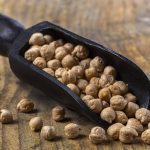
Her farm has also diversified its crop rotation in part by adding field peas and fava beans, which Klassen said fix nitrogen at a better rate than soybeans.
The idea is to see how far they can wean the farm off nitrogen fertilizer, she said.
“Because in the end, it will improve our own soils,” said Klassen. “This is actually improving our own land as well in the long term… it’s not altruistic motives behind it.”
While the study may give a more fulsome picture of emissions worldwide, it’s not news that agriculture is a large contributor to N2O gas emissions.
Researchers out of the University of Manitoba, headed by Mario Tenuta, have been studying how farming practices can reduce N2O emissions for several years. Tenuta was named Natural Sciences and Engineering Research Council of Canada (NSERC) Industrial Research Chair in 4R Nutrient Stewardship this September.
Under the program, Tenuta will study how 4R (right fertilizer, right rate, right time, right place) farming practices can reduce emissions, develop new 4R practices, and evaluate how nitrification inhibitors stabilize fertilizers and reduce N2O emissions and N losses, according to a University of Manitoba news release.
“Fertilizer nitrogen is the highest operating cost in field crop production in Canada,” Tenuta said in the release. “Our research and outreach are aimed at providing practical and feasible ways to improve crop productivity and reduce direct and indirect emissions of N2O and nitrate leaching.”