Planting a cover crop is a new idea this far north.
It has its agronomic advantages, it keeps roots in the soil after the harvest, although it comes with its problems as well, especially in Western Canada.
Prairie farmers were historically skeptical about cover cropping. Some say it’s purposely growing “weeds” that will deplete your soil moisture before winter. And, the region’s short post-harvest growing season leads them to wonder if the northern autumn is long enough to produce any of the benefits.
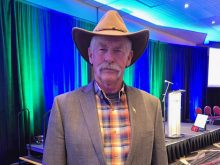
Getting a fix on how many Prairie farmers are growing cover crops, why they grow them and how well it works for them is the focus of a survey conducted by University of Manitoba plant science grad student Callum Morrison and his adviser Dr. Yvonne Lawley.
“We wanted to find out the extent of cover cropping on the Prairies, how and why farmers are using them, the benefits and problems farmers have experienced and what could be done to enable them to grow cover crops,” Morrison said.
Right now most farmers seem to think the risks outweigh the benefits.
“Because of this there’s really only a small number of enthusiastic early adopters on the Prairies,” Morrison said. “Every year these adopters, and other interested farmers, hear the success stories coming out of Ontario and the northern United States so more farmers are thinking, ‘How can we integrate cover crops?’”
Morrison conducted his survey from October 2020 to April 2021 and used a variety of social and traditional media to gather his respondents.
The survey asked about: farm type and size, what cover crops were grown, the agronomy of both cash crops and cover crops, the benefits and problems as well as what incentives would encourage farmers to grow cover crops.
Of the farmers who responded, 281 grew cover crops and 247 did not. The survey showed a full 102,500 acres were put under cover crops with a little over half, 55 per cent, grown during “shoulder season” — post-harvest to the next seeding — while the remaining 45 per cent were grown full season.
The majority of cover crop growers, 62 per cent of them, were cattle farmers, principally beef cattle, while 56 per cent said they were annual grain farmers. Thirty-seven per cent said they were regenerative farmers, 32 per cent were growing perennial crops and 26 per cent were organic growers.
“In case you’re thinking this does not add up to 100 per cent I should mention that with the questions we asked farmers they could select the options that applied to them,” Morrison said. “So you can see the people growing cover crops represent many different types of farms.”
One of the big questions asked was: Why would a farmer grow cover crops?
Eighty per cent of respondents said soil health. Keeping roots in the soil beyond the harvest feeds soil microbes, improves water infiltration and helps prevent erosion. Of course it also builds soil organic matter, the second most popular reason given at 76 per cent. A little over 55 per cent wanted to increase soil nitrogen which may explain why the most popular cover crop was clover. This brings the next big question: What cover crops did farmers like growing?
“Of the top 15 species that we found in our survey, five were annual grasses, four were legumes, two were brassicas,” Morrison said. “The most common species grown were clovers and they were grown by 57 per cent of respondents.”
Clover came out on top for a couple of reasons. It fixes nitrogen and it can be grazed. The seed can be broadcast or drilled giving farmers options such as seeding with the cash crop and letting the clover grow as an intercrop. Then, after harvest, you can let it grow until spring. Some of them, particularly cereal varieties such as oats or barley, were grown to scavenge soil nitrogen and hold it as a green manure. Many, such as fall rye, were also able to suppress weeds. Peas, hairy vetch and radish were also very popular.
Most respondents, that is 30 per cent of them, grew a single species. Mixes of two to three different species were not uncommon and some farmers grew four to five. More complex mixtures of 10 or greater were seen but not very often. Mixtures this complicated are tricky so a farmer has to have a good reason for it.
“We observed many, many different benefits by our growers,” Morrison said. “We saw increased soil organic matter, less erosion and increased infiltration. Most commonly we saw improved soil health followed by increased biodiversity.”
Seventy-one per cent of farmers said that they saw benefits in the first three years and over 35 per cent of them said they saw it within just one year. A number of them saw no real benefits but Morrison said it takes time to develop the technique, up to one or two years.
“We can’t talk about cover crops without addressing many challenges,” he said. “Two of the most common reasons were due to our Prairie climate, which is very much what we expected.”
Thirty per cent of the respondents talked about that short growing season and 27 per cent mentioned the lack of fall moisture. It’s not easy to establish a field of plants in a cool, dry regime.
“We also saw other challenges such as additional costs, the choice of herbicide farmers had available and cover crop failure,” Morrison added. “There’s also sparse cover crop, a late harvest of a cash crop that might prevent establishing a cover crop. Then there’s the lack of equipment, lack of support from crop insurance and there’s the increased labour.”
Still, Morrison said there were a number of farmers looking for information and technical assistance along with scientific data on planting cover crops.
“We really need more information on how farmers can grow cover crops on the Prairies,” Morrison said. “My report can be accessed on our website. It’s free to use and I encourage everyone to have a look.”
The 2020 survey report is available for downloading online.