Reuters — Republican presidential candidate Donald Trump on Tuesday promised to renegotiate international trade deals, withdraw from them if he is not satisfied and use executive power to remedy trade disputes with China if he wins the White House.
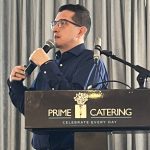
Trump, speaking at an aluminum scrap metal factory in Monessen, Pa., south of Pittsburgh, said he saw no way to fix the pending 12-nation Trans-Pacific Partnership (TPP) and that he was willing to withdraw from the decades-old North American Free Trade Agreement (NAFTA) with Canada and Mexico if it was not renegotiated to his satisfaction.
Read Also

India, Japan canola crops to be steady in 2026/27 – USDA
Canola supplies for India and Japan are expected to remain relatively stable in the 2026/27 crop year, the United States Department of Agriculture said.
“The TPP, as it’s known, would be the death blow for American manufacturing,” Trump said.
Trump was unveiling his trade agenda in Pennsylvania and Ohio on Tuesday, manufacturing states in which he and presumptive Democratic nominee Hillary Clinton are battling for working-class voters ahead of the Nov. 8 election.
Democratic President Barack Obama won Pennsylvania and Ohio in 2008 and 2012, but those states have been hard hit by manufacturing job losses. Clinton struggled with these voters in her Democratic primary race against U.S. Senator Bernie Sanders, who criticized her for supporting trade deals and said she was too close to Wall Street.
Trump echoed Sanders’ criticism in Pennsylvania, saying Clinton supported the TPP while she was U.S. secretary of state and only opposed it once she was running for president.
Clinton’s campaign called the presumptive Republican nominee’s remarks an attempt to distract from “his dangerous economic policies.”
— Reporting for Reuters by Emily Stephenson and Amanda Becker; additional reporting by Adam DeRose and Alana Wise.