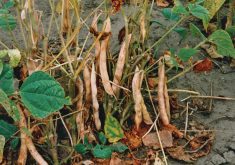
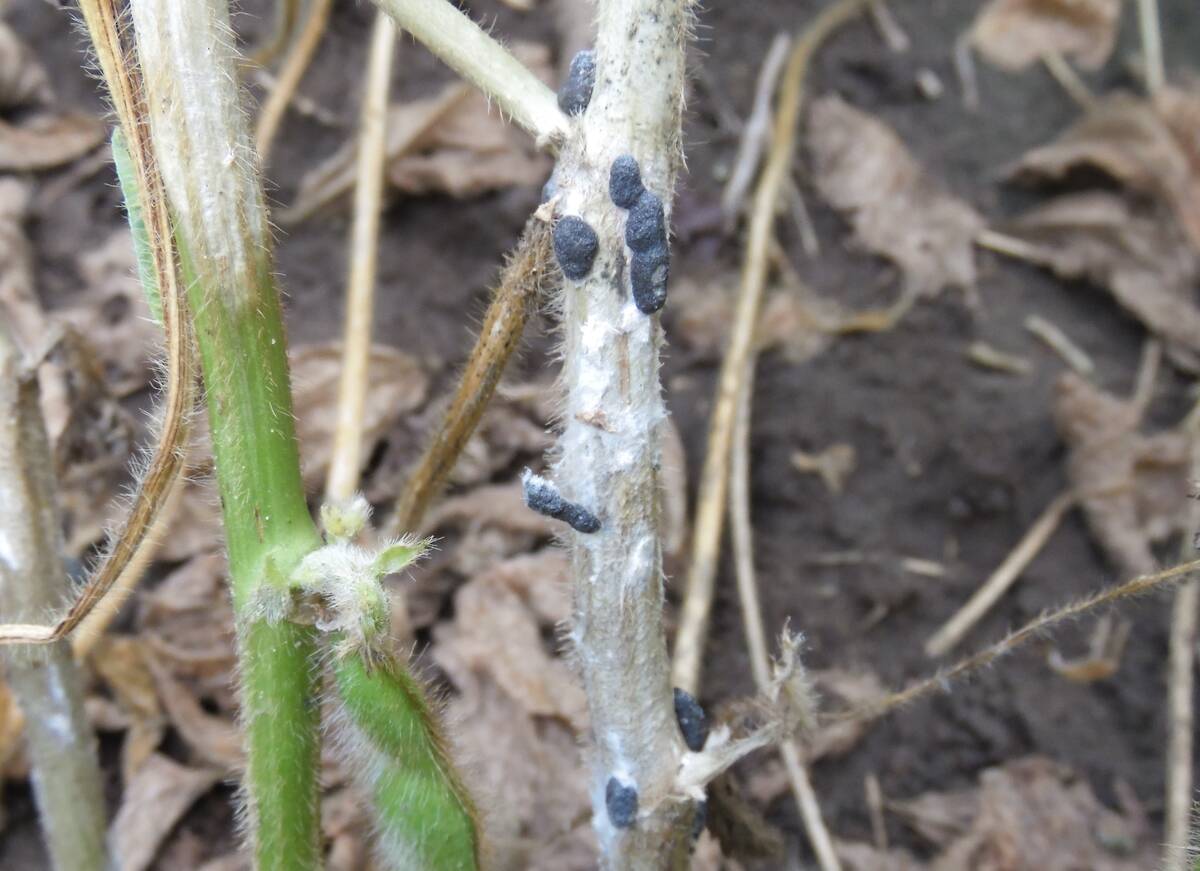
BRANDON — White mould was found in nearly two-thirds of Manitoba soybean fields last growing season, but the severity was relatively low in most cases.
Ahmed Abdelmagid, a research scientist with Agriculture and Agri-Food Canada (AAFC), shared survey results at Manitoba Ag Days 2026 in Brandon earlier this winter.
WHY IT MATTERS: As white mould has become more common, it’s crucial for growers to pinpoint when and where the disease is likely to hit.
Read Also
Double cropping trial targets cattle feed boost in Alberta’s irrigation belt
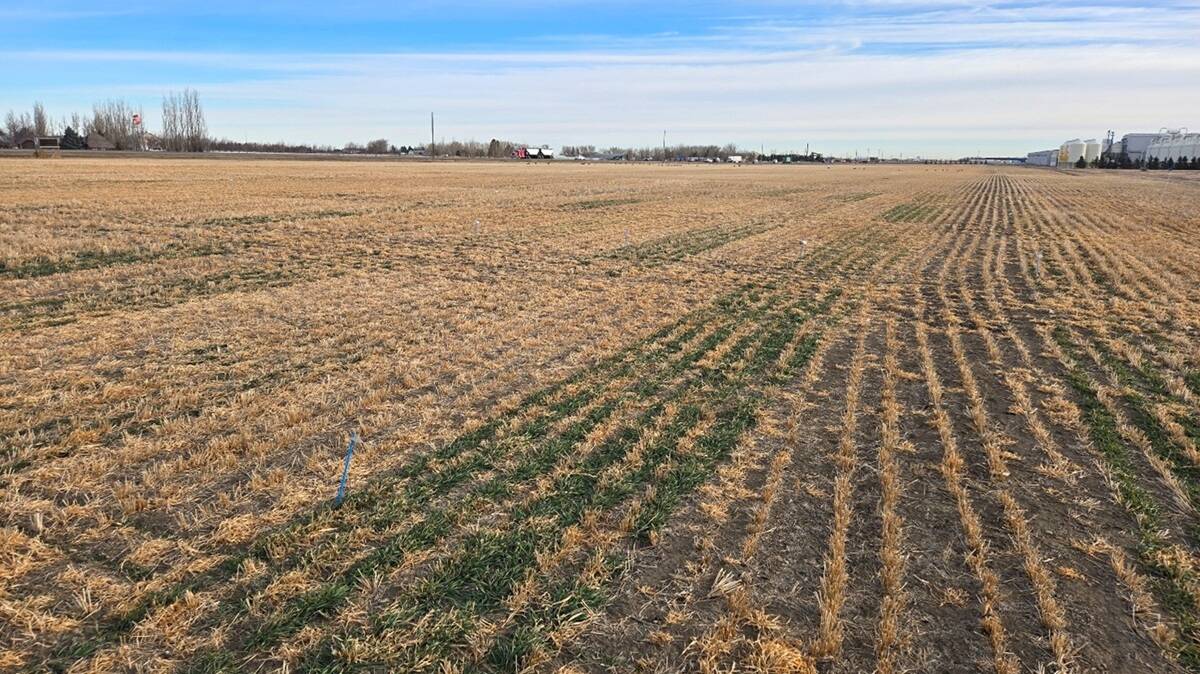
A new five-year Farming Smarter study is testing double cropping systems for cattle feed production under irrigation in southern Alberta.
He said the disease, also known as sclerotinia, has emerged as the primary concern found during late-season field assessment, but noted that overall the intensity of the disease wasn’t high.
“White mould emerged as a most common one in 65 per cent of the fields surveyed … but the intensity was about 20 per cent,” Abdelmagid said.
The eastern region showed the highest severity at 72 per cent, while the southwest region saw the disease in 80 per cent of surveyed fields, though intensity remained relatively low at eight per cent.
The survey covered 72 fields across Manitoba’s six regions, with assessments conducted at both mid-season and late-season to capture diseases that appear at different growth stages. Manitoba producers seeded 1.6 million acres of soybeans in 2025, with 98 per cent precision seeded, achieving average yields of 45 to 50 bushels per acre.
Long-term challenge
White mould presents particular management issues because the fungus produces “survival structures” called sclerotinia that can persist in soil for up to 10 years.

“If it existed in one … field, this means it will last,” Abdelmagid said.
The disease requires specific environmental conditions to develop: temperatures between 15 and 25 degrees Celsius and high humidity. Weather prediction and field history are critical for determining fungicide timing.
“If you have seen it recently, like in the previous season, for example, or previous two seasons, this means you have duration,” Abdelmagid said.
The survey was conducted by Manitoba Agriculture field staff including Dennis Lange, provincial pulse and soybean specialist with Manitoba Agriculture.
While mould pressure was more severe in the later part of the 2025 growing season, Lange said.
“In that August time period, we had lots of growth in a number of fields, and we saw more white mould this year than we have in previous years.”
Management options limited
Looking forward, it’s important for producers to assess exactly where in their fields white mould is likely to show up, usually in fields that do not have a lot of air movement or have very dense canopy.
“Growers may want to adjust their seeding rates down a little bit, just to compensate for that excess growth,” Lange said.
If the canopy is wet at the time of flowering, that increases the potential for white mould, he added.
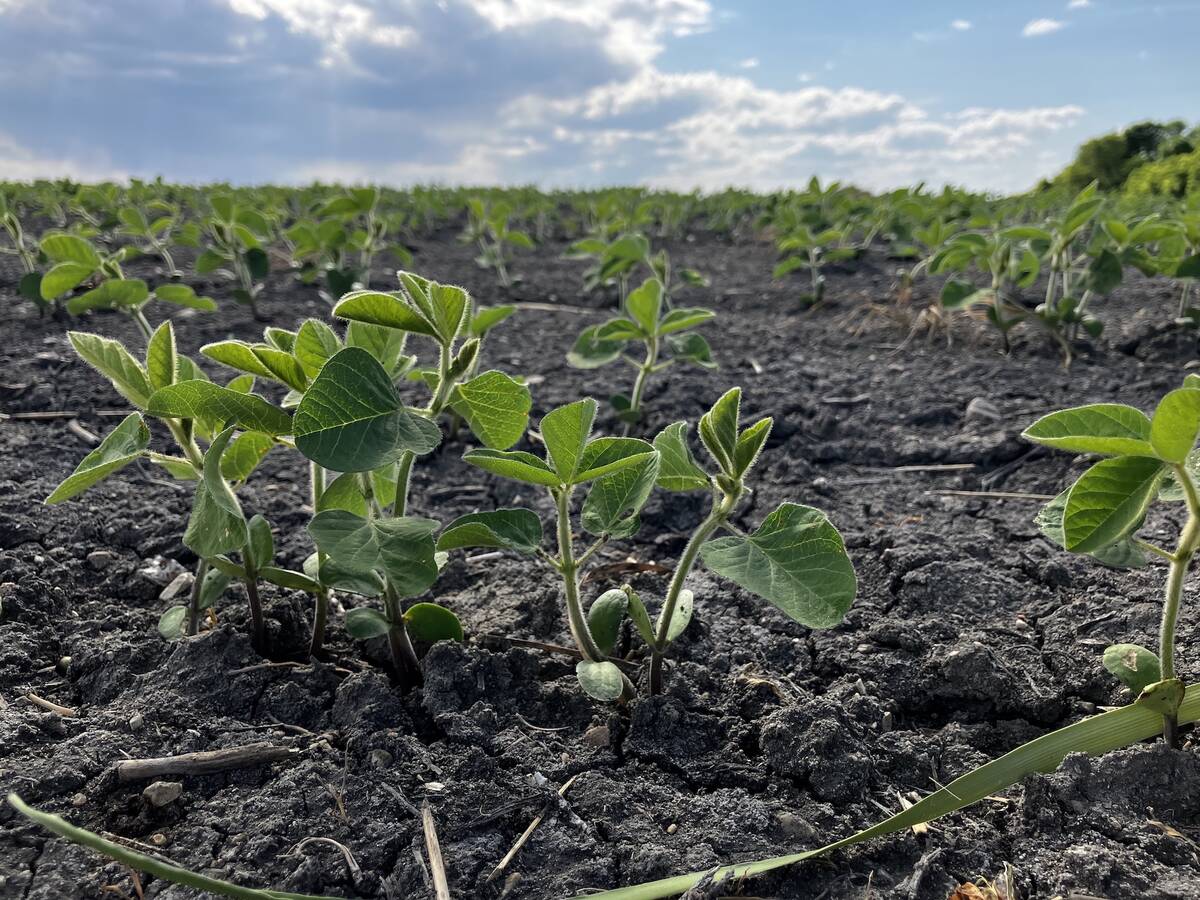
Producers should apply fungicides just before flowering if the field has a white mould history and weather forecasts predict high rainfall and humidity during that critical window.
Management strategies include crop rotation, using tolerant varieties, reducing seeding rates and implementing wider row spacing, though Abdelmagid said no soybean varieties currently offer complete resistance to the disease.
Other diseases
Beyond white mould, the survey identified other key diseases affecting Manitoba soybeans. Bacterial blight and septoria brown spot were common during mid-season surveys, appearing in 85 per cent of fields, though their overall impact on yield remained minimal.
Northern stem canker and frogeye leaf spot continued to appear throughout the season. Phytophthora root rot, while less prominent in the survey, remains a critical disease requiring both genetic resistance and seed treatments for effective management.
“Genetic resistance, in combination with the seed treatments, is so critical to manage Phytophthora root rot,” Abdelmagid said.
Abdelmagid said he hopes to work with North Dakota on developing a weather-based prediction system for white mould similar to systems used in Ontario, which would help producers determine optimal spray timing.