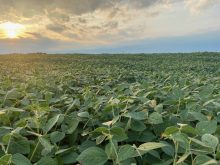
With canola seed costs high, many farmers have looked at lowering seeding rates to trim input costs.
It’s an idea that’s been floating around crop research plots for years.
Now, trials from Bourgault have become the latest field research to throw weight behind the idea.
Read Also
LS Tractor signs inventory financing deal with Mitsubishi HC Capital America
Mitsubishi HC Capital America will provide inventory financing for LS Tractor’s dealer network in Canada and the U.S.
WHY IT MATTERS: Canola plants are good about filling space, a trait that has been increasingly informing conversations around seeding rate, stand density and possible reseeding decisions.
Today, the Canola Council of Canada advises farmers to plan for a target stand density of five to eight plants per foot. There are issues that complicate that equation though —things like drought, cool springs, soil crusting and the ever-present problem of hungry flea beetles that have plagued canola emergence and seedling survival.
Curtis De Gooijer, in-house agronomist with Bourgault, shared results from several side-by-side strip trials examining canola seeding rates during a presentation at Manitoba Ag Days in Brandon earlier this year.
All of the work was conducted at Bourgault’s research farm near St. Brieux, Sask., using full-scale seeding equipment.
Real farm knowledge
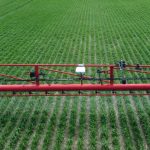
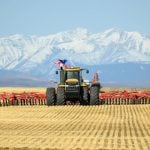
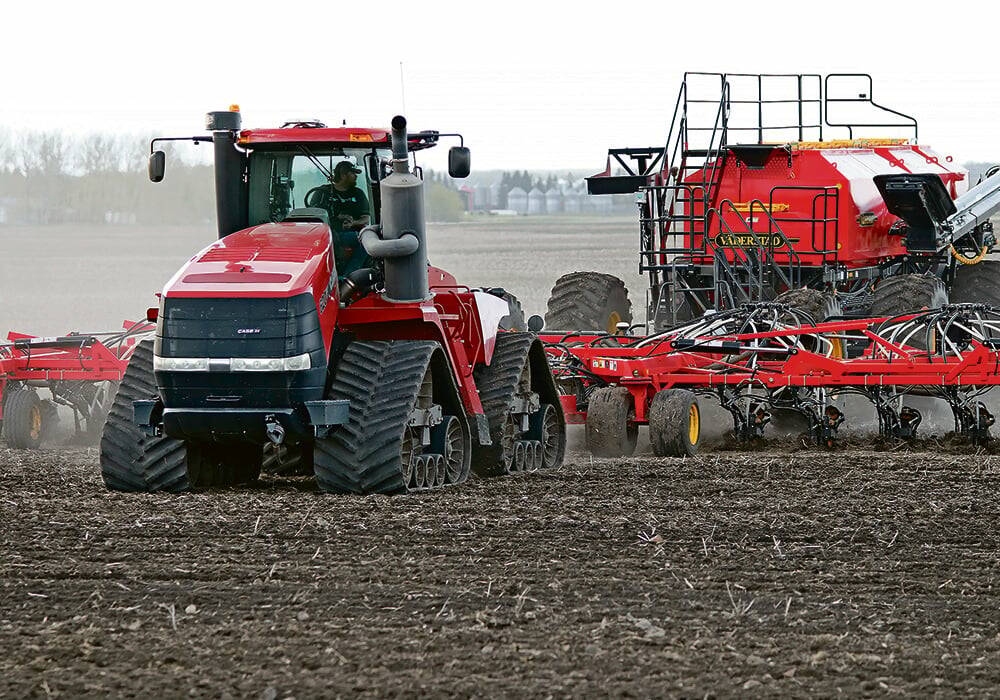
The trials are designed to combine the rigour of small-plot research with real farm equipment. Using a Bourgault 7550 cart and a 30-foot drill, fields are divided into replicated strips roughly 400 feet long and 30 feet wide.
“The big thing that I want to show today is the information we’re getting from side-by-side comparison trials,” De Gooijer said.
Each strip is harvested by taking the middle 25 feet of the pass. The grain is weighed and then adjusted for dockage and moisture to generate yield data.
Singulation offers little advantage
One three-year trial conducted at the site between 2020 and 2022 compared two different seed metering approaches:
Singulation, which uses a plate system similar to a planter.
Volumetric metering, which is typical of air drills.
The goal was to see whether the more precise seed placement from singulation would justify the added cost. Both systems were tested at three seeding rates: high, mid and low.
“The advantage is that we can use the same equipment, keep the metering the same and keep the products the same, while changing individual components such as the drill or opener,” said De Gooijer.
Across the trials, singulation offered little advantage over conventional volumetric metering.
Plant stands and yields were broadly similar between the two systems across the different seeding rates. Instead, the most noticeable differences came from plant competition as seeding rates increased.
De Gooijer said interest in singulation systems for canola spiked several years ago as farmers looked for ways to reduce seeding rates. Around 2018 and 2019, some Prairie growers began experimenting with planters in hopes that more precise seed placement would allow them to cut seed costs.
Interest in that approach has cooled somewhat in recent years, he said, as trials show that conventional air drills can achieve similar results. However, the work still provides useful insight into how flexible canola seeding rates can be.
Lower populations change plant structure
Higher seeding rates produced denser stands but also increase the number of unproductive plants. At lower populations, plants had more space and responded by branching more heavily from the base.
That branching allowed plants to fill in gaps in the canopy, producing larger individual plants.
Lower seeding rates also tended to delay maturity slightly because the additional branches had to catch up with the main stem. That delay can carry some risk in shorter Prairie growing seasons.
De Gooijer said later-maturing crops may be more exposed if a killing frost arrives before the crop is fully ripe, something that did not materialize during the trials.
“That might have changed things significantly,” he said.
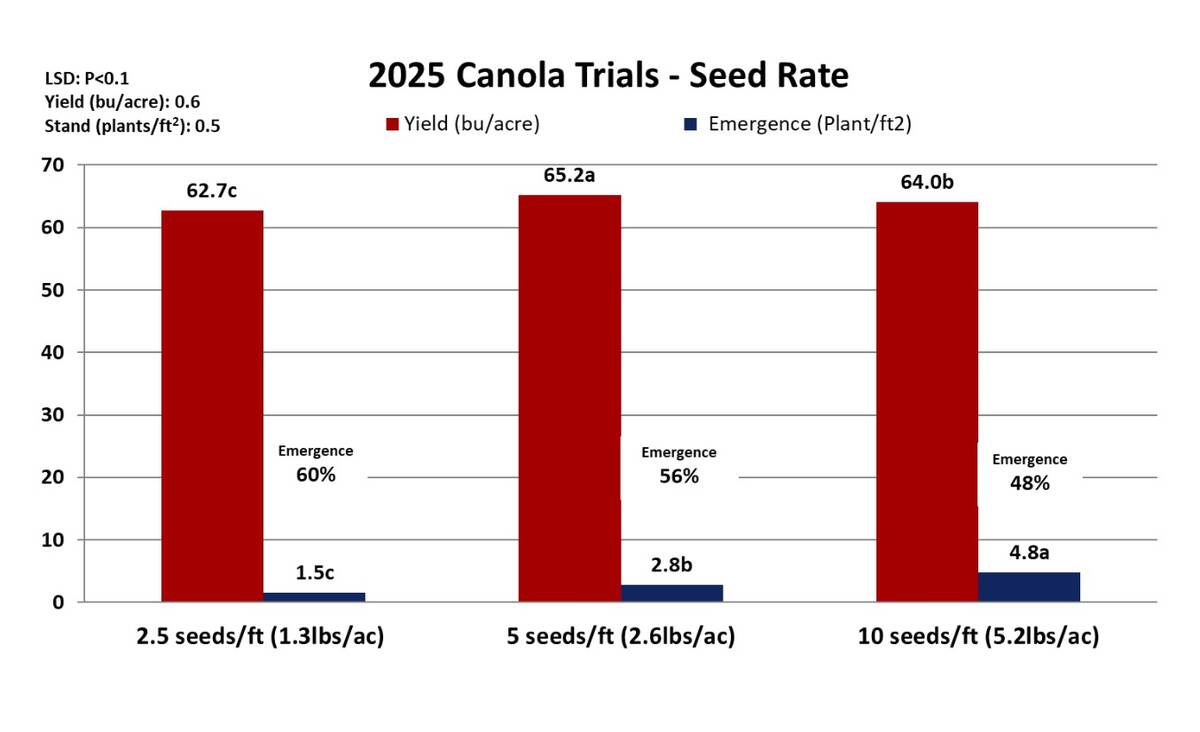
Emergence also shifted with population. In some trials, higher seeding rates reduced emergence, even though opener and fertilizer placement stayed the same.
For example, emergence in higher-rate treatments of 4.8 to 5.2 pounds per acre averaged about 59 per cent, while lower seeding rates reached about 72 per cent emergence under the same conditions.
A separate Bourgault agronomy trial in 2025 produced similar results when comparing three seeding rates using the same drill configuration.
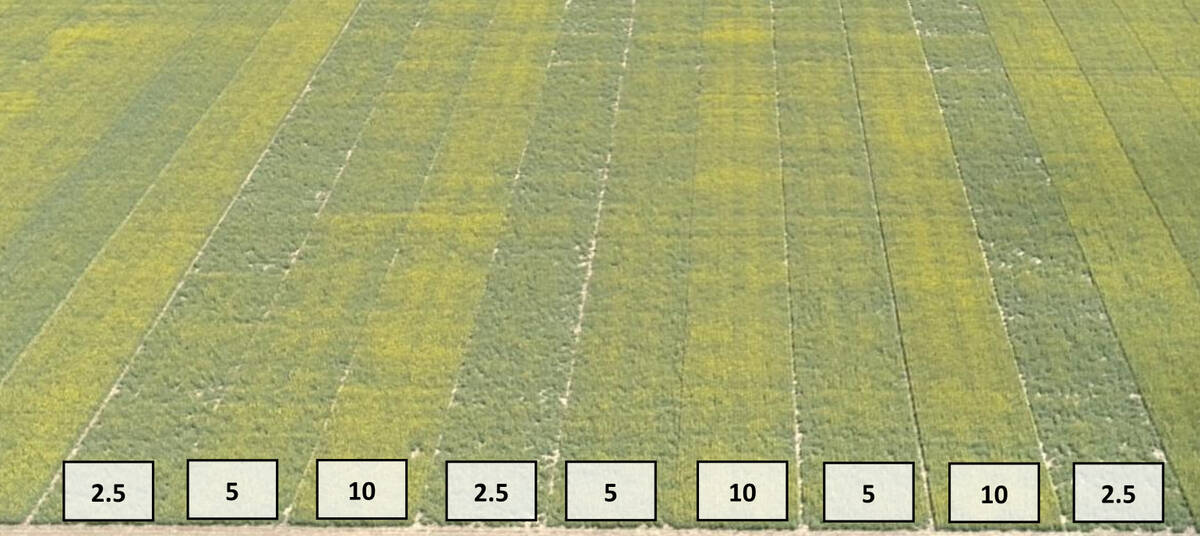
The trial, also conducted near St. Brieux, tested seeding rates of 1.3, 2.6 and 5.2 lb. per acre, targeting plant populations of roughly 2.5, five and 10 plants per sq. foot.
Plant stands increased as seeding rates rose, but yield differences were less predictable.
In that trial, the mid-rate treatment produced the highest yield, followed by the highest seeding rate, while the lowest rate yielded the least.
Weather shifts the optimal population
However, De Gooijer noted that weather plays a major role in determining which population performs best.
The volumetric/singulation trials included years with very different growing conditions, including the widespread Prairie drought of 2021.
In dry years, lower plant populations can sometimes yield more. The larger plants produced at lower densities develop bigger root systems that help them scavenge moisture and nutrients.
In wetter seasons, higher plant populations may perform better because plants do not need to invest as much energy into building large root systems.

Across multiple years of trials, the optimal seeding rate shifted depending on growing conditions.
In the 2025 trial, the highest yield came from a seeding rate of about 2.5 lb. per acre, targeting roughly three plants per sq. foot.
Variable-rate seeding puts the principle to work
De Gooijer said the same principle can apply within fields using variable-rate seeding.
Drier hilltops may benefit from lower plant populations that encourage larger plants and deeper rooting, while wetter areas can support higher plant densities and better use available moisture.
“We tried it last year for the first time and it seemed to work,” said De Gooijer.
“Maybe it’s something you can look at and utilize on your farm.”