
The beef industry has anted up in a big way to fund forage research through the Beef Cattle Research Centre.

Canadian forage research on the rise

The Beef Cattle Research Council has increased forage research funding from $40,000 to $6 million since its inception

The forage industry has begun to see a promised increase in research funding from the beef industry. According to Reynold Bergen, science director with the Beef Cattle Research Council (BCRC), more of Canadian cattle producers’ checkoff dollars are being put towards research and the piece of the pie that had been allocated towards forages has
The Canadian Forage and Grassland Association held its national conference in Winnipeg on November 14 and 15.

CFGA focuses on increased forage production

The Canadian Forage and Grassland Association showcased the adoption of high-performance 
production systems at its national conference held last week

The forage industry is looking to increase productivity on Canada’s forage acres by showcasing the adoption of high-performance production systems. “If every pasture, piece of pasture or piece of native rangeland increased its productivity by 15 per cent with good forage management, we could make some massive impacts environmentally and economically,” said Cedric McLeod, executive


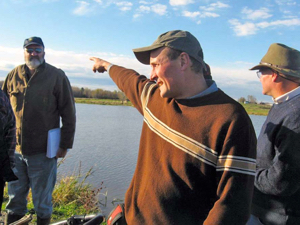
Graziers from across Canada visited the Manitoba Beef and Forage Initiative recently.

MBFI collaboration draws accolades from visiting graziers

Tour participants said the model performs extension, something Canada has begun to fall behind on

Around 40 delegates to the Canadian Forage and Grasslands Association annual conference, recently held in Winnipeg, arrived a day early to get a look at how Manitoba does it. They enjoyed unseasonably warm and sunny weather as they took a close-up look at the action at the Manitoba Beef and Forage Initiative (MBFI) operations around

Manitoba is developing a reputation for its grazing research efforts.

Showcasing the value of the forage industry

The Canadian Forage and Grassland Association will highlight Manitoba’s 
unique forage research initiatives at the organization’s national conference

If you want to talk about grasslands and forage, go to where the action is — and lately a lot of that action is in Manitoba. In the eyes of the Canadian Forage and Grassland Association (CFGA), Manitoba has been a standout in its efforts towards forage research and the ideal place to hold this


Larry Wagner, a Virden-area producer discusses his management strategies in a pasture on his operation last summer.

Bale grazing – benefiting the pasture and your wallet

Bale grazing has the potential to reduce overwintering costs and leaves substantial 
nutrients behind, promoting increased forage production and quality

Not only can bale grazing reduce costs and time in the tractor, it can also boost forage growth and overall production. “The advantages of bale grazing are that you are able to save money and reduce operating cost by lowering yardage, tractor use and removing the need to haul manure,” said Shawn Cabak, livestock specialist

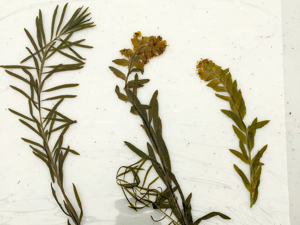
The three worst forage weeds

The three worst forage weeds

The benefit of attending of Saskatchewan Agriculture’s Crop Diagnostic School at Swift Current last July was having the opportunity to get an up-close look at problems farmers face every season. One of the experts on hand was Rachel Turnquist, a regional forage specialist with Saskatchewan’s Ministry of Agriculture. Turnquist gave us a look at what


Six limiting factors in your soil that will make or break your operation

Six limiting factors in your soil that will make or break your operation

Without these six key ingredients, your soil — and your farm — could be in trouble

Farms and grazing operations — organic or otherwise — are only as good as their worst resource, according to Oregon-based grazier Abe Collins. “Soil is our primary infrastructure on the farm,” said Collins, who spoke at the recent Organic Alberta conference. “Biologically, chemically, and physically, you need to be looking at the limiting factors in


Young graziers need to do more with less, and cover crop cocktail mixes are a way they can do that, says grazier Graeme Finn.

This ain’t your grandad’s grazing system

Innovative producers, especially younger ones, are looking to cover crop cocktail mixes to get more production per acre

Nearly 150 people — some from as far away as Manitoba — converged on a farm near Hardisty recently to learn more about cover crop cocktail mixes. But tour organizer Graeme Finn noticed something a little different about the crowd at the event in late August — it was mainly young farmers. “Young people can’t

South African holistic management specialist, Ian Mitchell-Innes from South Africa, discussed management tactics with a group of Manitoba producers in Lenore on July 12.

Focusing on nutrition will also help the pasture

World-renowned holistic management specialist 
says green is not the only right colour for grass

Many graziers have a theory that if you look after the soil, the rest of the operation will take care of itself, but Ian Mitchell-Innes looks at it the other way around. “The biggest mistake that people make after learning about holistic management is they try and save the ground. I did this also when