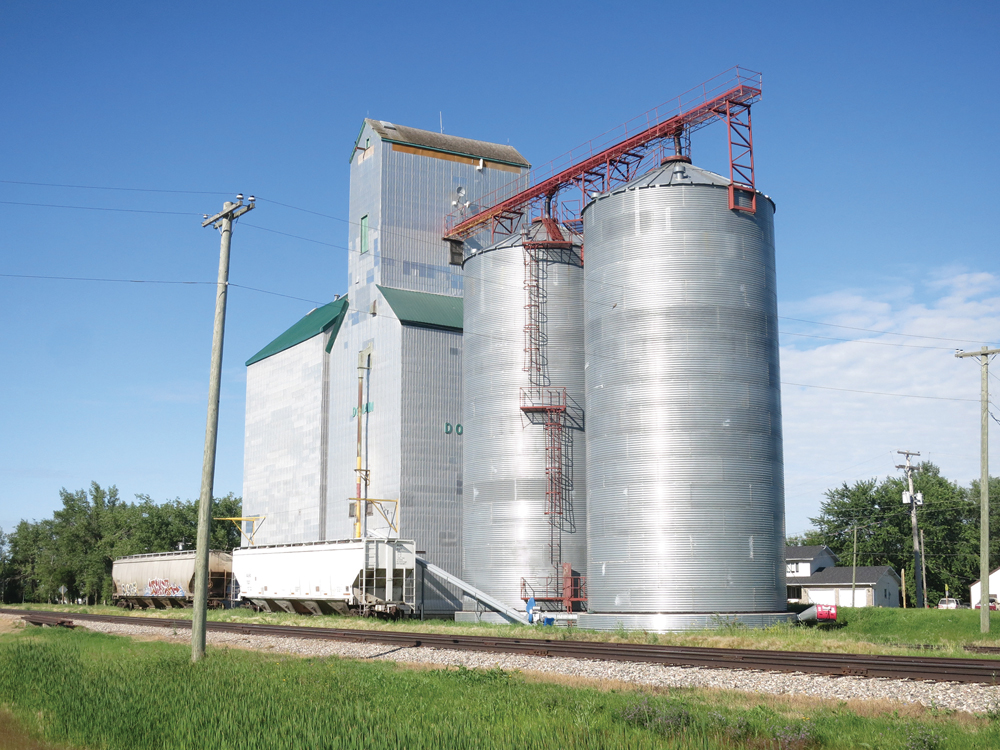
Domain_Pool_cmyk.jpg
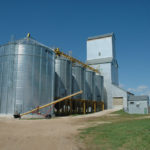
An elevator at Domain was built in 1928 by Manitoba Pool Elevators. Nine years later, a collapsing foundation forced it to close until repairs could be made. Initially rated with a 40,000-bushel capacity, it was enlarged with temporary balloon annexes in 1951 then with a 60,000-bushel, 18-bin crib annex in 1966. The facility was fully renovated in 1992. Closed by Agricore in 2001, it was sold into private ownership that oversaw the addition of two steel tanks on its north side.
Photo: Gordon Goldsborough
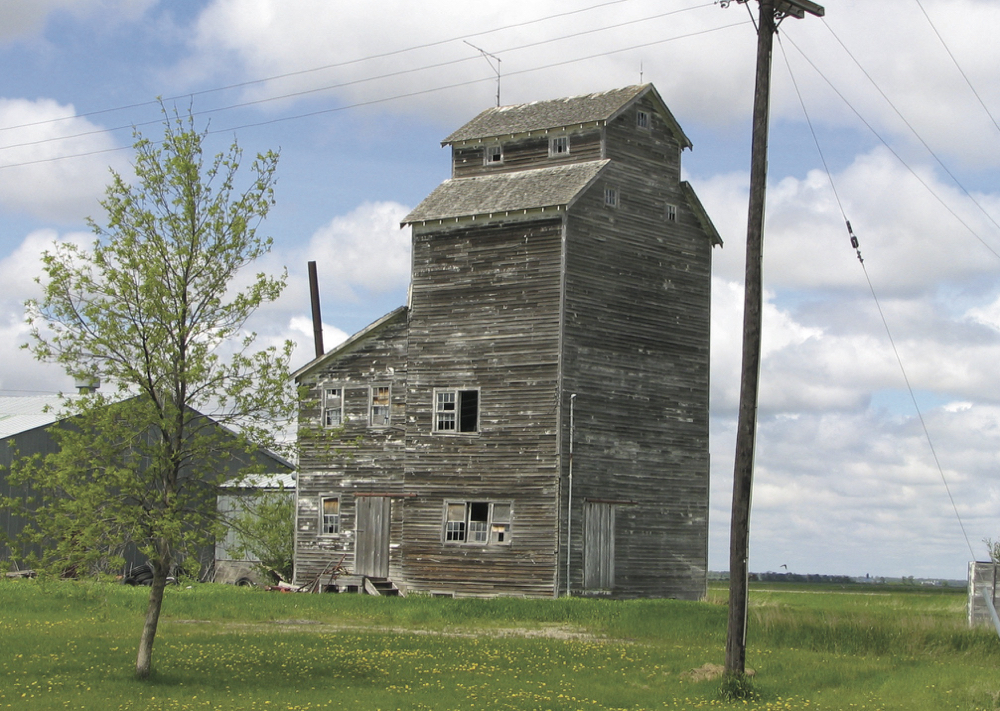
RMstanley-thisoldelevator-MBC05232019
An elevator in the RM of Stanley was built in 1943 as a seed-cleaning plant for George G. Elias (1914-2012), on the former site of the Eichenfeld German School. A crew of 16 men built the state-of-the-art facility crib structure, which could process up to 1,000 bushels of grain each day, using 2x6 timbers at a cost of about $8,000. In 1946, Elias’s barley won first prize at the Royal Winter Fair in Brandon and, later that year, captured first prize in a national contest sponsored by the newly formed Barley Improvement Institute of Canada. It won the national award again in 1950 and Elias was proclaimed the “Barley King” of Manitoba. An active member of the Canadian Seed Growers Association for over 65 years, he continued to sell certified seed throughout Canada until retirement in 2000. The elevator was moved to the Pembina Threshermen’s Museum in February 2015 where it houses grain- milling demonstrations and a display of Elias family history.
Photo: Ken Jacobs

petreljunction-thisoldelevator-05162019
A composite-style elevator at the siding of Petrel Junction, on the CNR Rivers Subdivision about 12 km (seven miles) north of Carberry, was built in 1975 by United Grain Growers to replace older elevators at Fairview and Wellwood. On April 19, 1990, it was destroyed by fire caused by an overheated bearing at the top of the elevator.
Photo: University of Manitoba Archives and Special Collections
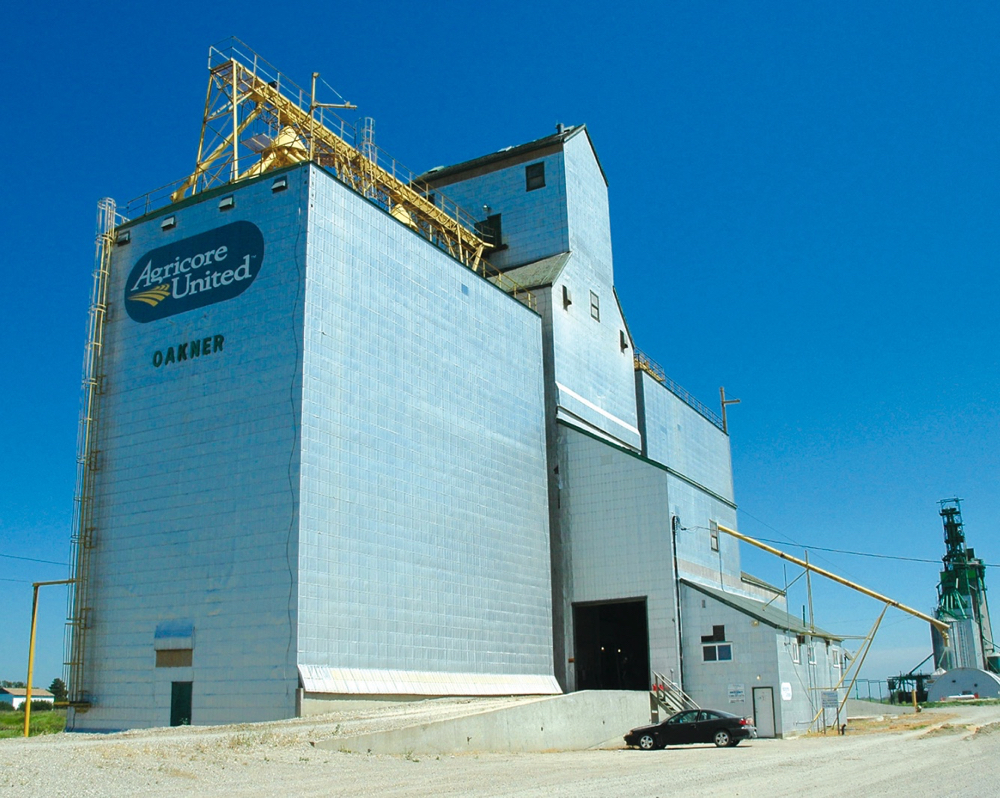
oakner-ManitobaPool-05092019
The elevator and crib annex in the foreground of this 2006 photo was built by Manitoba Pool at Oakner between 1978 and 1979. A second annex was added on the west (left) side in 1985, raising its total capacity to 205,000 bushels. It replaced an elevator purchased in 1973 from the Scottish Co-operative Wholesale Society that dated from 1913. Closed by Viterra in 2007, it was demolished around 2010.
Photo: Bernie Freeman

Fork_River_Pool_cmyk.jpg
A 40,000-bushel elevator at Fork River, on the CNR Winnipegosis Subdivision, was built in the fall of 1950 by Manitoba Pool. A balloon annex constructed the following year increased its capacity to 85,000 bushels. Completely renovated in 1985, the annex was replaced by four steel tanks in 1993. The adjacent rail line was abandoned in early 1997 and the facility was closed by Agricore in March 2001. The building continues in use for private grain storage.
Photo: Bernie Freeman

In the 1950s, there were over 700 grain elevators in Manitoba. Today, there are fewer than 200. You can help to preserve the legacy of these disappearing “Prairie sentinels.”
The Manitoba Historical Society (MHS) is gathering information about all elevators that ever stood in Manitoba, regardless of their present status. Collaborating with the Manitoba Co-operator it is supplying these images of a grain elevator each week in hopes readers will be able to tell the society more about it, or any other elevator they know of.
MHS Gordon Goldsborough webmaster and Journal editor has developed a website to post your replies to a series of questions about elevators. The MHS is interested in all grain elevators that have served the farm community.
Read Also

Manitoba sunflower plant gets local owners
Scoular’s sunflower and bird feed plant in Winkler, Man., bought by Orenda Commodity Services Ltd. out of Ste. Agathe.
Your contributions will help gather historical information such as present status of elevators, names of companies, owners and agents, rail lines, year elevators were built — and dates when they were torn down (if applicable).
There is room on the website to post personal recollections and stories related to grain elevators. The MHS presently also has only a partial list of all elevators that have been demolished. You can help by updating that list if you know of one not included on that list.
Your contributions are greatly appreciated and will help the MHS develop a comprehensive, searchable database to preserve the farm community’s collective knowledge of what was once a vast network of grain elevators across Manitoba.
Please contribute to This Old Grain Elevator website here.
You will receive a response, by email or phone call, confirming that your submission was received.
Goldsborough is interested in hearing all sorts of experiences about the elevators — funny, sad, or anything in between. Readers willing to share their stories can leave messages at 204-474-7469.