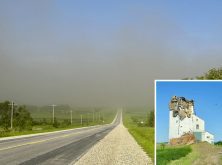
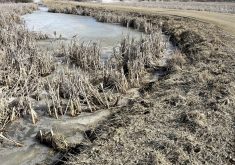
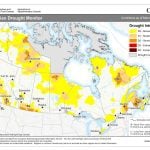
This year the Interlake has been the driest part of the province, but during the late 2000s it went through some unusually wet years, and 2009 was the second in a row. This aerial photo from our Sept. 10, 2009 issue was taken Aug. 22 and showed the area around Arnes north of Gimli. That month Arborg received 151 mm of rain, including 61 mm Aug. 24. MASC reported that 38 per cent of the land in the Interlake was not seeded that year.
A generally cool growing season that year was being reflected in prospects for the Roland Pumpkin Festival — our weather columnist Daniel Bezte’s potential entry had only reached 75 pounds.
Read Also
Manitoba winter 2025-26 outstays its welcome
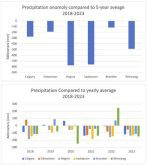
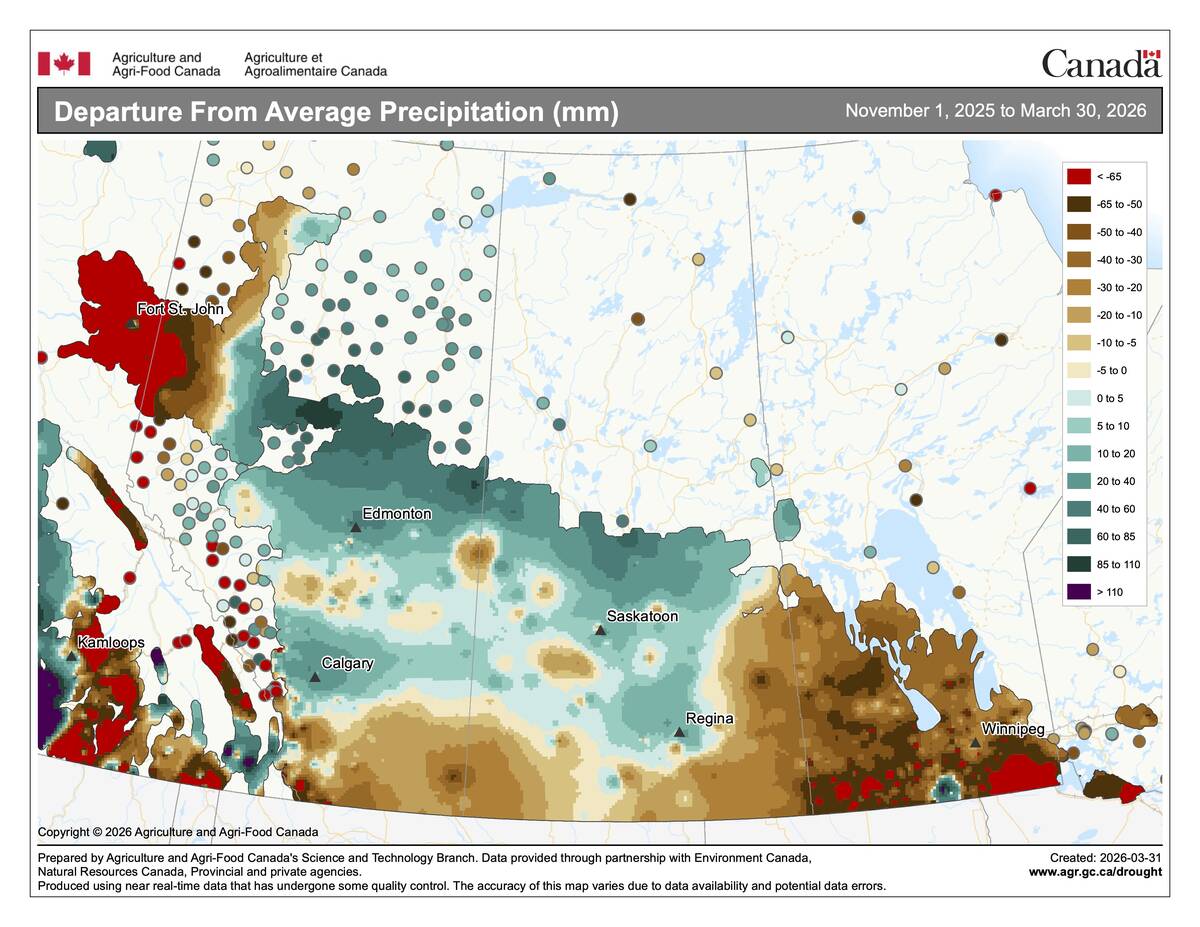
March ran 2 to 3 C below average across central Saskatchewan and southern Manitoba, capping a winter that was drier than normal nearly everywhere but Calgary.
That week the first news was emerging of the refusal of European buyers to accept flax contaminated with a genetically modified variety. While it was never licensed, some seed somehow made it into the system. In a bizarre move, the variety’s breeder had named it Triffid after a science-fiction novel’s plant which came from outer space and travelled around blinding the population with its stinger. Flax cash bids of around $10 per bushel had plunged to as low as $6.78 on news that a cargo had been rejected in Europe. It took several years to clear Triffid out of the system.
In livestock news, hogs in a few barns around the province had tested positive for the H1N1 flu virus, which was believed to have spread from human handlers. The barns had not been quarantined but earlier in the year an infected herd in Alberta had been slaughtered for animal welfare reasons.