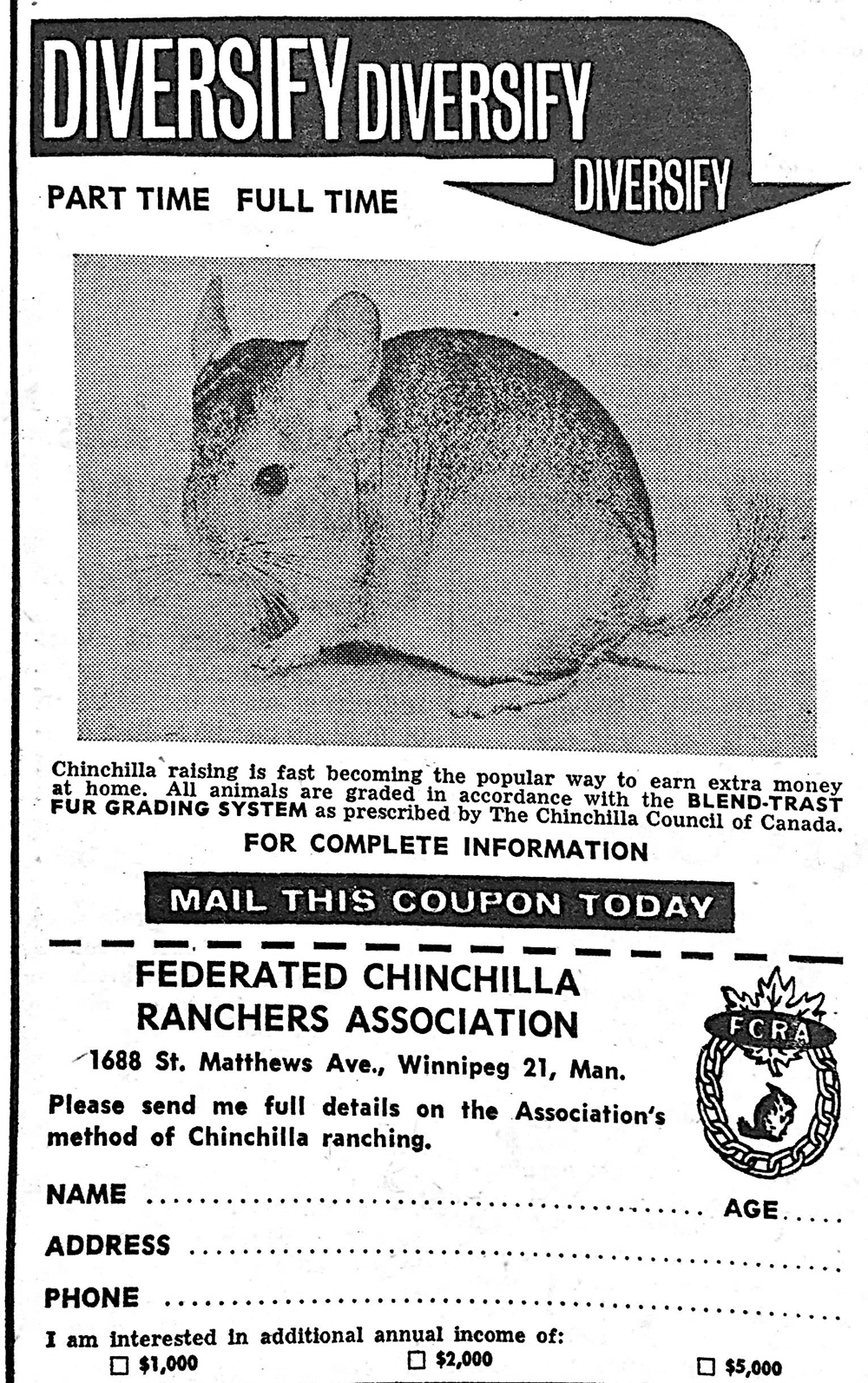
A combination of low prices and low quotas resulting from a huge Canadian and world wheat carryover in 1969 meant tough times for farmers, and this ad in our Nov. 13 issue invited them to diversify by getting into the Chinchilla ranching business.
However, Saskatchewan Wheat Pool president E.K. Turner told his annual meeting that while some farmers might diversify into feed grains, specialty crops, livestock and poultry, “there simply isn’t enough income from the alternatives available for all of us to make a living on the farm today at existing costs and prices.”
Read Also
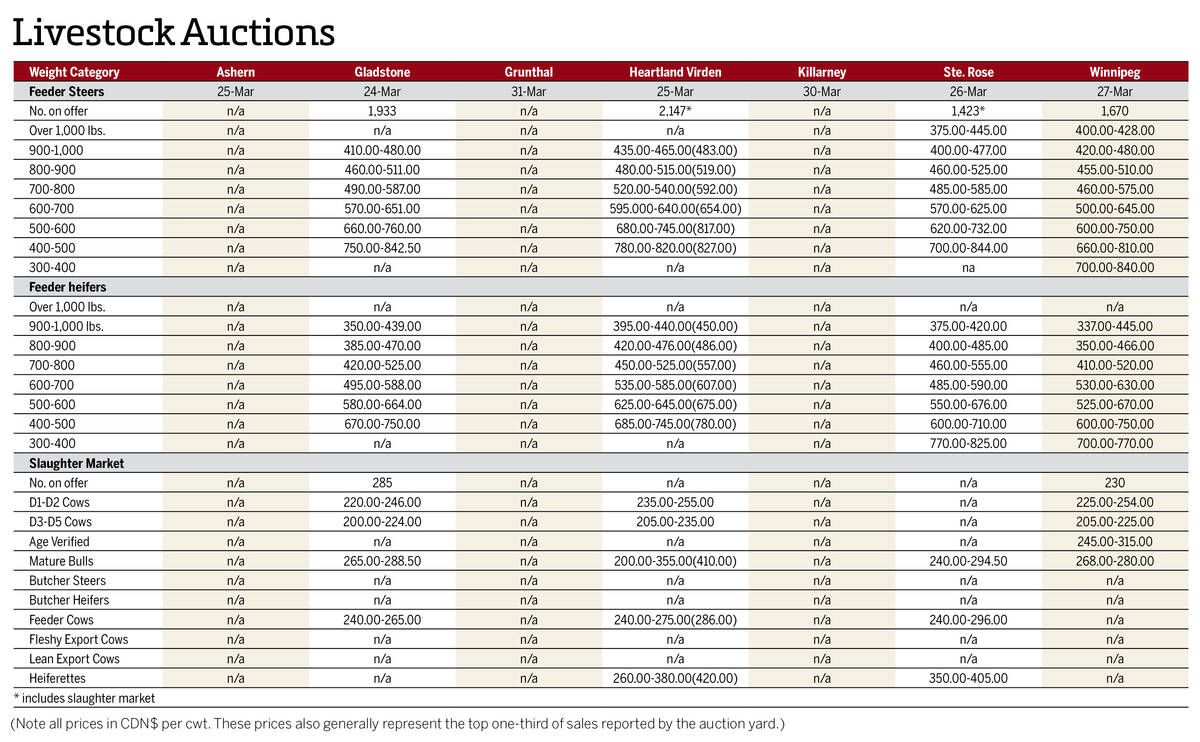
Manitoba cattle prices April 1
Here’s what cattle were selling for in Manitoba from March 24-31, 2026. Four of the seven main livestock auction marts held sales.
At the annual meeting of Manitoba Pool Elevators, Canada Grains Council secretary-general Don Dever said farmers would have to tailor production to the market. “If we continue to produce wheat, or any other grain, without production guidelines, no marketing agency we can conceive will be able to merchandise our total production.”
In a major policy speech in Ontario, federal Agriculture Minister H.A. (Bud) Olson said that while there would be no rigid controls on agriculture, voluntary programs could be developed to compensate farmers if they agreed to limit production, similar to programs in the U.S.
Harvest had not gone well — in another report Olson announced a plan for cash advances against the large amount of grain left unthreshed by an early winter.
On the same page was a story that may not have gone over well with cash-strapped farmers — grain workers in Vancouver were seeking a $1 per hour which would result in an overtime rate of $9 per hour.